CertifiedNIST SP 800-88 Rev. 2 · DoD 5220.22-M · IEEE 2883

Standard 08 Of 25 · Legacy Algorithms

Random Overwrite — Secure Random Data Erasure & Disk Wiping Software

Random Data Overwrite For Secure Media Sanitization

No formal standard1 PassVerification Available
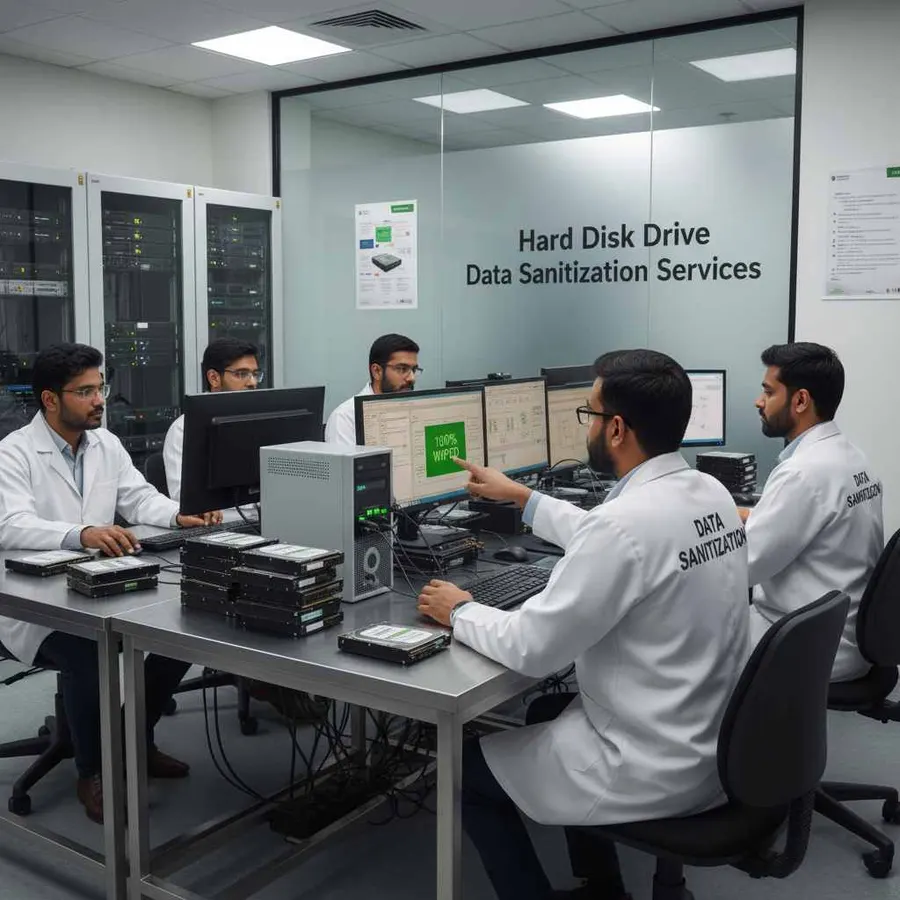
Hard drive being overwritten with random data

At A Glance

Published By
Not a published standard
Reference
General purpose method
Region
No formal standard
Passes
1
Verification
Available On Every Run
Relative Run Time
1× a single pass

What The Software Writes

  1. Pass 1 Random data
  2. Verify Read back of the final pass, available on every run.
  3. Certify Signed certificate with device, method, result and operator

Random Overwrite is a data sanitization technique that replaces existing data on addressable storage locations with generated random data, making the original information unavailable through ordinary data-recovery techniques applicable to the selected sanitization scope.

Unlike named historical methods such as Gutmann, Schneier, DoD 5220.22-M or RCMP TSSIT OPS-II, Random Overwrite is not itself a single government standard with one mandatory pass sequence.

The number of passes, verification procedure and applicability depend on the organization's sanitization policy, storage technology and required level of assurance.

Data Sanitization Pro (DSP) provides a dedicated Random Overwrite Sanitization Method through the DSP Sanitization Engine, with controlled execution, progress monitoring, verification and audit-ready documentation.

01

What Is Random Overwrite?

Random Overwrite replaces existing data with generated random values.

Conceptually:

  1. 01Original Data
  2. 02Random Data
  3. 03Random Data
  4. 04Random Data
  5. 05Verify
  6. 06Document

The purpose is to overwrite user-addressable storage locations so that the previously stored logical data is no longer directly available through ordinary recovery techniques.

NIST's current glossary defines overwrite as writing data on top of the physical location where data is stored.

Random Overwrite can therefore be used as a configurable sanitization technique where overwriting is appropriate for the target storage technology and security requirement.

02

Random Overwrite Is Not A Fixed Standard

One of the most important distinctions for this method is that Random Overwrite does not inherently mean 1-pass, 3-pass, 7-pass, 35-pass or any other fixed number of passes.

Different software products may provide configurations such as:

  • Single Random-Data Pass
  • Multiple Random-Data Passes
  • Random Data Followed By Verification
  • Random Data With Configurable Pass Count
  • Full-Device Random Overwrite
  • Partition-Level Random Overwrite
  • Free-Space Random Overwrite

The actual configuration should be clearly recorded in the sanitization report.

DSP therefore documents the specific Random Overwrite configuration actually executed, rather than presenting the generic method name as proof of a particular pass count.

03

Random Overwrite In Data Sanitization Pro

DSP includes a dedicated Random Overwrite Sanitization Method in the DSP Sanitization Engine.

04

DSP Workflow

IDENTIFY Identify the target storage device.

CLASSIFY Determine media type, interface and addressable storage.

ASSESS Evaluate device accessibility, health and sanitization suitability.

SELECT Select Random Overwrite.

CONFIGURE Select the applicable overwrite scope and configured pass profile.

EXECUTE Write generated random data across the selected target area.

VERIFY Verify the completed operation according to the configured verification process.

VALIDATE Determine whether the resulting state satisfies the applicable organizational requirement.

DOCUMENT Record the device, method, configuration and results.

CERTIFY Generate an audit-ready sanitization certificate.

05

How Random Overwrite Works

A professional Random Overwrite process consists of several controlled stages.

01

Device Identification

DSP identifies the target device and records information such as:

  • Manufacturer
  • Model
  • Serial number
  • Capacity
  • Interface
  • Firmware
  • Media type

This creates a traceable connection between the physical device and the sanitization operation.

02

Target Selection

The operator selects the applicable sanitization scope.

DSP can support sanitization workflows for:

  • Full device
  • Disk
  • Partition
  • Selected storage area
  • Free space
  • Supported removable media
03

Random Data Generation

DSP generates random data for the configured overwrite operation.

The generated data is written to the selected addressable storage locations.

04

Continuous Monitoring

The operation can display:

  • Current progress
  • Data processed
  • Write rate
  • Elapsed time
  • Estimated remaining time
  • Device status
  • Errors
  • Active operation
05

Verification

After the overwrite operation, DSP performs the configured verification process and records the result.

06

Random Overwrite For HDD Data Erasure

Random Overwrite is particularly straightforward to understand when applied to conventional magnetic HDDs.

A full-device overwrite can replace the data stored across the addressable sectors of the target disk.

DSP can simultaneously record:

  • HDD Manufacturer
  • Model
  • Serial Number
  • Capacity
  • Interface
  • Firmware
  • SMART Information
  • Temperature
  • Power-On Hours
  • Reallocated Sectors
  • Bad Sectors
  • Read/write Errors
  • Sanitization Progress
  • Verification Result

For an HDD that can be fully addressed and successfully written, Random Overwrite can provide a controlled software-based data erasure workflow.

07

Random Overwrite And SSD / NVMe Storage

Random Overwrite requires additional consideration on modern flash-based storage.

SSDs and NVMe devices can use:

  • Flash Translation Layers
  • Wear Leveling
  • Spare Blocks
  • Over-Provisioning
  • Garbage Collection
  • Remapped Blocks
  • Controller-Managed Storage

A host-level overwrite therefore does not automatically guarantee that every physical flash location containing historical data has been overwritten.

NIST's media-sanitization guidance has specifically recognized the limitations of conventional overwriting for flash storage and current SP 800-88 Rev. 2 emphasizes selecting applicable sanitization techniques according to media technology and organizational requirements.

For SSD/NVMe devices organizations may need to consider device-specific sanitization capabilities such as appropriate sanitize commands or Cryptographic Erase rather than assuming that repeated host-level random overwriting provides equivalent physical coverage.

08

Random Overwrite vs Secure Erase

These are not necessarily the same operation.

Random Overwrite

Writes generated random data through the applicable storage interface to the selected addressable storage locations.

Secure Erase / Device Sanitize

Uses a storage-device command or controller-level mechanism designed to sanitize storage within the device's architecture.

The appropriate technique depends on the media technology and security requirement.

For modern storage, device-native sanitization can address architectural limitations that conventional host-level overwriting may not fully address.

Random Overwrite vs Cryptographic Erase

Cryptographic Erase is fundamentally different from overwriting.

09

Random Overwrite

Replace Stored Data With New Data.

Cryptographic Erase

Render encrypted data inaccessible by securely sanitizing the cryptographic keys.

NIST SP 800-88 Rev. 2 identifies Cryptographic Erase as a media-sanitization technique and emphasizes selecting appropriate techniques based on media and information sensitivity.

Therefore, Random Overwrite should not be marketed as a replacement for Cryptographic Erase on every encrypted SSD, NVMe or other modern storage device.

Random Overwrite And Verification

A professional sanitization operation should distinguish the write process from the verification process.

DSP can record:

Write Information

  • Selected target
  • Configured pass count
  • Data processed
  • Write rate
  • Start time
  • Completion time
  • Errors

Verification Information

  • Verification status
  • Verification errors
  • Failed locations
  • Completion state
  • Device condition

This creates a documented relationship between the sanitization process and its observed result.

10

Random Overwrite Pass Configuration

DSP can use a configurable Random Overwrite profile according to the organization's operational requirement.

ConfigurationDescription
1 PassOne complete random-data overwrite
Multiple PassesRepeated random-data overwriting
Full DeviceProcesses the selected addressable device space
PartitionProcesses the selected partition
Free SpaceProcesses available free-space regions where applicable
VerifyChecks the resulting operation

The pass count should be treated as a configuration, not as the definition of Random Overwrite itself.

This distinction prevents the method from being incorrectly presented as another fixed historical algorithm.

11

Random Overwrite And Modern Sanitization Standards

Random Overwrite can be used as a technique within a broader sanitization program where the selected media and security requirements permit it.

12

NIST SP 800-88 Rev. 2

NIST's current publication defines media sanitization as rendering access to target data infeasible for a given level of effort and emphasizes selecting applicable techniques and controls according to information sensitivity.

IEEE 2883-2022

IEEE 2883-2022 is an active standard covering methods for sanitizing logical and physical storage and providing technology-specific requirements and guidance for eliminating recorded data.

Therefore, Random Overwrite should be understood as a sanitization technique/profile, while NIST and IEEE provide broader frameworks and technology-specific guidance.

13

Random Overwrite For ITAD

Random Overwrite can be useful in controlled IT Asset Disposition workflows where the storage technology and organizational sanitization policy permit logical overwriting.

Typical applications include:

  • Enterprise Hardware Retirement
  • HDD Refurbishment
  • IT Recycling
  • Equipment Resale
  • Data-Center Decommissioning
  • Computer Refurbishment
  • Storage-Device Reuse
  • Secure Asset Disposition

Each device can maintain its own sanitization record:

  1. 01Device ID
  2. 02Random Overwrite Configuration
  3. 03Execution
  4. 04Verification
  5. 05Result
  6. 06Certificate
14

Device Health Before Sanitization

DSP can assess the target device before executing the Random Overwrite operation.

Relevant information can include:

  • SMART Health
  • Temperature
  • Power-On Hours
  • Read Errors
  • Write Errors
  • Reallocated Sectors
  • Pending Sectors
  • Bad Sectors
  • Device Accessibility
  • Firmware
  • Model And Serial

This is important because a failing device may not be capable of reliably processing a complete overwrite.

15

Bad Sectors And Failed Areas

Random Overwrite should not be interpreted as successful merely because the software started writing data.

A device containing:

  • Unreadable Sectors
  • Physical Media Damage
  • Persistent Write Failures
  • Unaddressable Areas
  • Controller Errors

may not be capable of completing a reliable sanitization operation.

DSP can identify and document such conditions.

If the required sanitization cannot be successfully completed and verified, the organization's media-disposition policy may require a different sanitization technique or physical destruction.

16

Full-Device Random Overwrite

For applicable HDDs and other addressable media, full-device Random Overwrite can be used to replace data throughout the selected logical storage space.

17

Process

  1. 01Select Device
  2. 02Select Full Device
  3. 03Select Random Overwrite
  4. 04Configure Passes
  5. 05Start Sanitization
  6. 06Monitor
  7. 07Verify
  8. 08Validate
  9. 09Generate Certificate

This provides a straightforward workflow for controlled disk-wiping operations.

18

Random Overwrite For Removable Media

Random Overwrite can also be relevant to supported removable storage such as:

  • USB Drives
  • Pen Drives
  • SD Cards
  • microSD Cards
  • CompactFlash
  • CFexpress

However, flash-based removable media have many of the same architectural limitations as SSDs.

The method should therefore be selected based on the device architecture and the required security outcome rather than simply assuming that a successful overwrite equals complete physical sanitization.

19

Offline Random Data Erasure

DSP can execute Random Overwrite in controlled offline environments.

This can be valuable for:

  • Government Departments
  • Defense Environments
  • Police And Law-Enforcement Facilities
  • Secure Laboratories
  • Data Centers
  • ITAD Facilities
  • Restricted Enterprise Environments

The sanitization operation can be performed locally without requiring the target device to have Internet connectivity.

20

Multi-Device Random Overwrite

DSP can support controlled processing of multiple supported devices while maintaining individual device records.

Each device can retain:

  1. 01Device Information
  2. 02Random Overwrite Profile
  3. 03Progress
  4. 04Verification
  5. 05Final Result
  6. 06Audit Record

This makes the method practical for professional ITAD and enterprise environments.

21

Audit-Ready Random Overwrite Certificate

DSP can generate an audit-ready sanitization certificate documenting the actual Random Overwrite operation performed.

Device Information

  • Manufacturer
  • Model
  • Serial number
  • Capacity
  • Interface
  • Media type

Method Information

  • Random Overwrite
  • Target scope
  • Configured pass count
  • Operation start
  • Operation completion
  • DSP software version

Verification

  • Verification status
  • Errors
  • Failed locations
  • Device-health observations

Operator & Audit Information

  • Operator
  • Workstation/system
  • Date/time
  • Audit metadata
  • Case/reference information where configured

Final Status

Sanitization Completed — Verified — Documented

The certificate documents the operation performed by DSP. It is not certification issued by NIST, IEEE, a government agency or another external standards organization.

22

Random Overwrite vs Historical Multi-Pass Methods

MethodBasic ConceptFixed Profile?Primary Characteristic
Random OverwriteRandom-data overwriteNoConfigurable technique
GutmannHistorical multi-pass sequenceCommonly 35-passSpecific historical methodology
SchneierHistorical multi-pass sequenceCommonly 7-passSpecific historical methodology
PfitznerHistorical random-data sequenceCommonly 33-passSpecific historical methodology
DoD 5220.22-MHistorical DoD overwrite profileHistorical defined profileGovernment legacy methodology
RCMP TSSIT OPS-IIHistorical Canadian overwrite profileCommonly 7-passCanadian legacy methodology
HMG IS5Historical UK sanitization profilesBaseline/EnhancedUK legacy methodology

Random Overwrite should therefore be presented as a general sanitization technique, not as another named government standard.

23

Random Overwrite vs Modern Media Sanitization

The evolution of storage technology means that the number of overwrite passes is not, by itself, a universal measure of sanitization effectiveness.

For modern sanitization programs organizations should consider:

  • Information Sensitivity
  • Storage Architecture
  • Addressability
  • Device Capabilities
  • Encryption
  • Sanitization Technique
  • Verification
  • Validation
  • Intended Reuse
  • Disposal Requirements

NIST SP 800-88 Rev. 2 explicitly frames media sanitization around the applicable technique and control requirements rather than a universal fixed overwrite recipe.

24

DSP Random Overwrite Sanitization Method

The DSP implementation provides a dedicated workflow:

IDENTIFY Identify the storage device.

CLASSIFY Determine the storage technology.

ASSESS Evaluate device condition and sanitization suitability.

SELECT Select Random Overwrite.

CONFIGURE Set the applicable overwrite profile.

EXECUTE Write generated random data.

VERIFY Verify the completed operation.

VALIDATE Assess the result against the applicable requirement.

DOCUMENT Record the operation.

CERTIFY Generate the audit-ready certificate.

25

Why Use A Dedicated Random Overwrite Method?

A dedicated Random Overwrite method provides a controlled and documented alternative to an unspecified generic “wipe” operation.

DSP provides:

  • Random-Data Overwrite
  • Configurable Pass Profile
  • Full-Device Sanitization
  • Partition Sanitization
  • Free-Space Sanitization
  • Progress Monitoring
  • Write-Rate Monitoring
  • Verification
  • SMART/device-Health Information
  • Bad-Sector Reporting
  • Error Tracking
  • Offline Operation
  • Multi-Device Processing
  • PDF/HTML Reports
  • Audit-Ready Certification
26

Random Overwrite — Secure Data Erasure With DSP

Random Overwrite is a flexible software-based sanitization technique that replaces existing data with generated random data across the selected addressable storage area.

Its correct application depends on the storage technology and security requirement.

For conventional addressable media, it can provide a controlled overwrite-based sanitization workflow. For modern SSD, NVMe and flash architectures organizations should consider device-specific sanitization capabilities and the limitations of host-level overwriting.

Random Overwrite Configurable Random-Data Sanitization Executed through the DSP Sanitization Engine Verified and Documented with an Audit-Ready Sanitization Certificate

FAQ

Random 1 pass Questions

What Is Random Overwrite?

Random Overwrite is a data sanitization technique that replaces existing data with generated random data across selected addressable storage locations.

Is Random Overwrite A NIST Standard?

No. Random Overwrite is a sanitization technique. NIST SP 800-88 Rev. 2 provides broader media-sanitization guidance and defines overwrite as writing data over the physical location where data is stored.

How Many Passes Does Random Overwrite Use?

There is no universal pass count. A Random Overwrite implementation may use one or multiple passes depending on the configured sanitization profile and organizational requirements.

Is One Random-Data Pass Enough?

That depends on the storage technology, sanitization scope, security requirement and applicable organizational policy. Pass count alone should not be treated as a universal measure of sanitization assurance.

Is Random Overwrite Suitable For HDDs?

It can be appropriate for addressable HDD storage where overwriting is an approved sanitization technique and the required storage locations can be successfully processed and verified.

Is Random Overwrite Suitable For SSDs?

Host-level overwriting has limitations on SSDs because of wear leveling, spare areas and controller-managed storage. Device-specific sanitization methods may be more appropriate depending on the device and requirement.

Is Random Overwrite The Same As Secure Erase?

No. Random Overwrite writes data through the applicable storage interface. Secure Erase or device sanitize operations use device-level capabilities.

Is Random Overwrite The Same As Cryptographic Erase?

No. Cryptographic Erase sanitizes the cryptographic keys associated with encrypted storage rather than overwriting every storage location with random data.

Does DSP Provide A Random Overwrite Certificate?

Yes. DSP can generate an audit-ready certificate documenting the Random Overwrite operation actually performed, including device, configuration, execution and verification information.

Is The DSP Certificate A Government Certification?

No. It is an audit record generated by DSP documenting the sanitization operation performed by the software.

Run Random 1 Pass With A Certificate For Every Drive

Data Sanitization Pro runs all 25 standards offline and verifies the result.