
Certificate of Destruction & Data Erasure Certificates
Verified Proof for Secure Data Disposal
A data erasure certificate shows that a specific asset was processed. A certificate of destruction documents that the asset was physically destroyed. Both provide important evidence when organizations retire, recycle, resell or dispose of data-bearing equipment.
Our data erasure certificate services in India provide per-asset documentation of permanent data erasure for HDDs, SSDs, NVMe drives, laptops, servers, mobile devices and other supported storage media.
Each record can capture the asset identity, sanitization method, verification result, processing details and final outcome.
- Per-Asset Certificates
- Data Erasure Verification
- Digital Signatures
- Audit Documentation

Why Data Erasure Certificates Matter
Deleting data is only part of secure asset disposal. Organizations also need to demonstrate what was processed, how it was processed and what the result was.
A general disposal letter may confirm that a batch was handled, but it may not answer an auditor's question about one particular laptop, hard drive or SSD.
A data erasure certificate connects the processing result to the individual asset.
The Risks of Poor Data Erasure Documentation
One Certificate for an Entire Batch
A report stating that 500 drives were processed does not provide the same visibility as an individual certificate for each asset.
Per-asset documentation makes individual asset verification and reconciliation easier.
No Verification Record
A certificate should provide more than a statement that a drive was wiped.
Recording the applicable data erasure verification result provides additional evidence about the completed operation.
Manually Created Reports
Recreating processing information after the job is completed can introduce transcription errors.
Generating records from the actual erasure workflow helps keep the certificate connected to the processing event.
Missing Asset Identification
Without serial numbers, asset tags or other identifiers, it can be difficult to establish which physical device a certificate represents.
Automatically Generated Data Erasure Certificates
Certificates can be generated from information captured during the data sanitization process.
The record can include the device identity, selected erasure method, processing information, verification outcome and other relevant details.
This reduces manual data entry and creates a more consistent data erasure documentation process.
One Asset, One Certificate
Every processed asset can have its own certificate instead of relying only on a batch-level report.
This is useful for:
- Corporate IT asset retirement
- ITAD operations
- Data center decommissioning
- Hardware resale
- Refurbishment
- Recycling
- Government asset disposal
- Internal audits
- Customer reporting
Data Erasure Certificate Process
- 01
Identify the Asset
Capture available information such as make, model, capacity, serial number, asset tag, IMEI or other relevant identifier.
- 02
Record the Method
The applicable sanitization or erasure method is recorded as the processing takes place.
- 03
Perform Verification
The completed operation is checked according to the selected workflow and the result is recorded.
- 04
Generate the Certificate
The certificate is created using the information captured during processing.
- 05
Protect Certificate Integrity
Where supported, the document can be hashed and digitally signed so subsequent modifications can be detected.
- 06
Reconcile the Asset
The certificate can be matched with the processed asset list and associated records before final handover.
What Does a Data Erasure Certificate Include?
Depending on the device and processing workflow, a certificate can contain:
- Device make and model
- Storage capacity
- Serial number
- Asset tag or customer reference
- Erasure standard
- Sanitization method
- Pass count where applicable
- Processing operation
- Start time
- Completion time
- Processing location
- Operator information
- Verification result
- Failure or exception details
- Destruction outcome where applicable
- Certificate reference
- Digital signature information
The exact fields can vary according to the selected process.
Data Erasure Certificate vs Certificate of Destruction
These documents are used for different outcomes.
Data Erasure Certificate
Used when data is erased using an appropriate sanitization method and the required result is verified.
- Device
- Erasure
- Verification
- Certificate
Certificate of Destruction
Used when physical destruction is performed on the storage media.
- Device
- Destruction
- Outcome
- Certificate
Keeping the two outcomes separate helps prevent physical destruction and logical data erasure from being incorrectly represented as the same process.
HDD, SSD & NVMe Data Erasure Certificates
Certificate documentation can be associated with different storage technologies, including:
- HDD
- SATA SSD
- SAS HDD/SSD
- NVMe
- M.2 SATA
- M.2 NVMe
- External hard drives
- USB storage
- Supported removable media
The certificate can identify the method used for the specific storage technology rather than applying a generic "wiped" description.

Laptop, Server & Mobile Data Erasure Certificates
Asset-level certificates can also support:
- Laptop data erasure
- Desktop data erasure
- Server data erasure
- Storage system sanitization
- Mobile phone data erasure
- Tablet data erasure
- USB data wiping
- Memory card erasure
This helps connect the data erasure report to the actual physical asset.
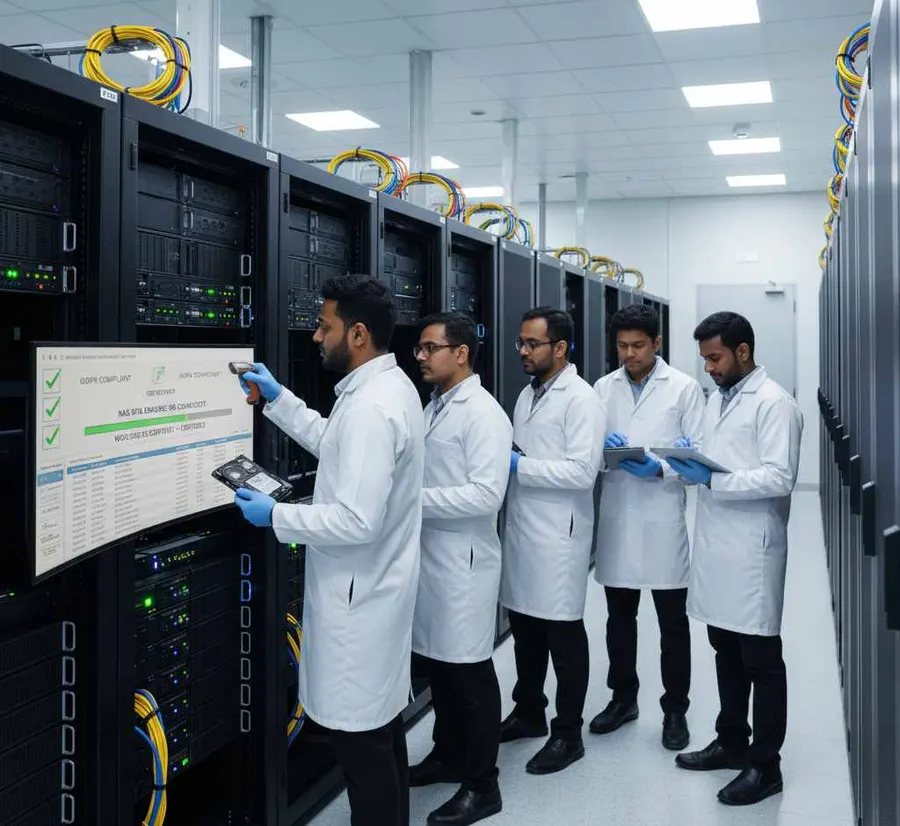
Data Erasure Certificates for ITAD
For IT asset disposition (ITAD), secure data erasure documentation is an important part of the asset lifecycle.
A typical workflow is:
- Asset Collection
- Identification
- Data Erasure
- Verification
- Certificate
- Resale / Reuse / Recycling
When combined with chain of custody, the certificate documents the processing outcome while the custody record documents the asset's movement.
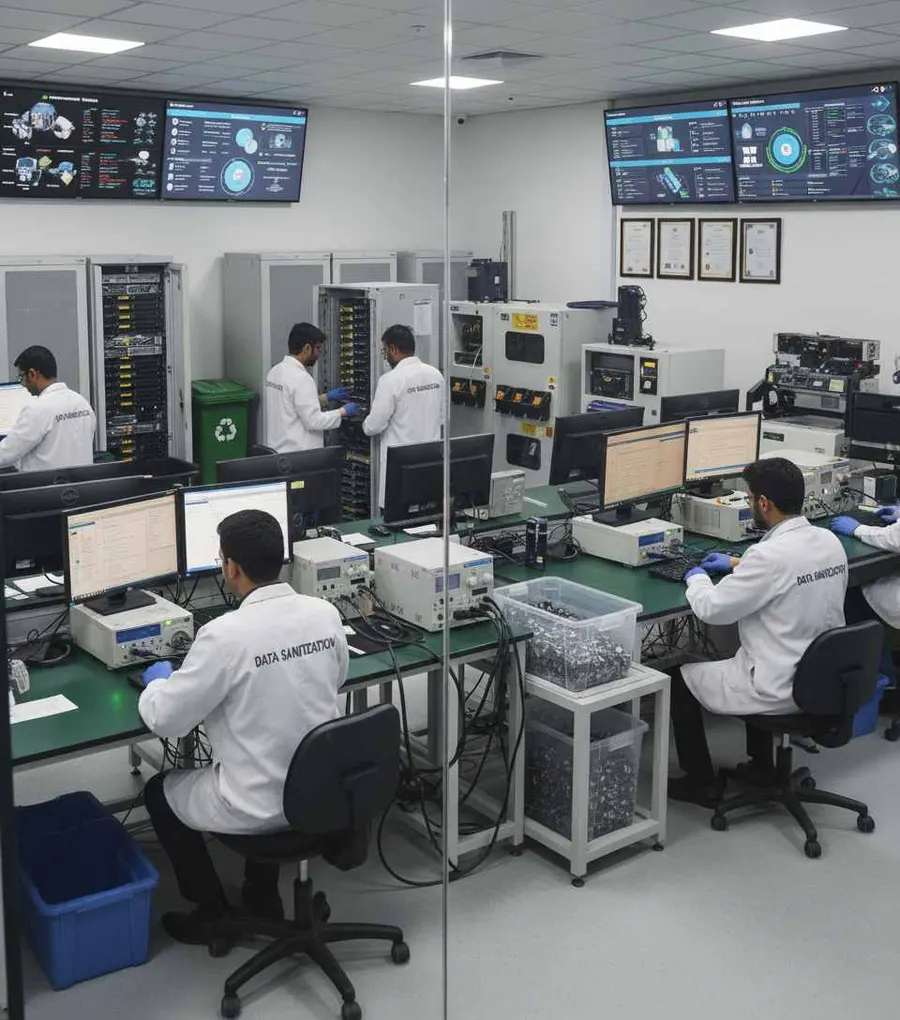
Bulk Data Erasure Certificates
Large organizations may process hundreds or thousands of devices during an IT refresh or asset disposal project.
Per-asset certificates help reconcile:
- Assets Received
- Assets Processed
- Certificates Issued
This can be useful for:
- Enterprise IT departments
- ITAD companies
- Data centers
- Government organizations
- Recyclers
- Refurbishers
- Leasing companies
- Corporate hardware refreshes

Digital Signatures & Certificate Integrity
A digitally signed certificate can provide an additional layer of document integrity.
Where digital signing is supported, changes made to the signed document can be detected during validation.
This is particularly useful when data erasure certificates need to be stored for long-term audit, customer or compliance purposes.
Data Erasure Reports for Audit & Compliance
Secure data disposal is not only about removing information. Organizations may also need records showing how their assets were processed.
Data erasure reports can support internal procedures and frameworks associated with:
- NIST SP 800-88
- IEEE 2883
- ISO/IEC 27001
- PCI DSS
- HIPAA
- DPDP Act
- GDPR
- ITAD and secure recycling programs
The certificate itself does not make an organization compliant. It provides supporting evidence for the organization's documented data sanitization and asset disposal process.
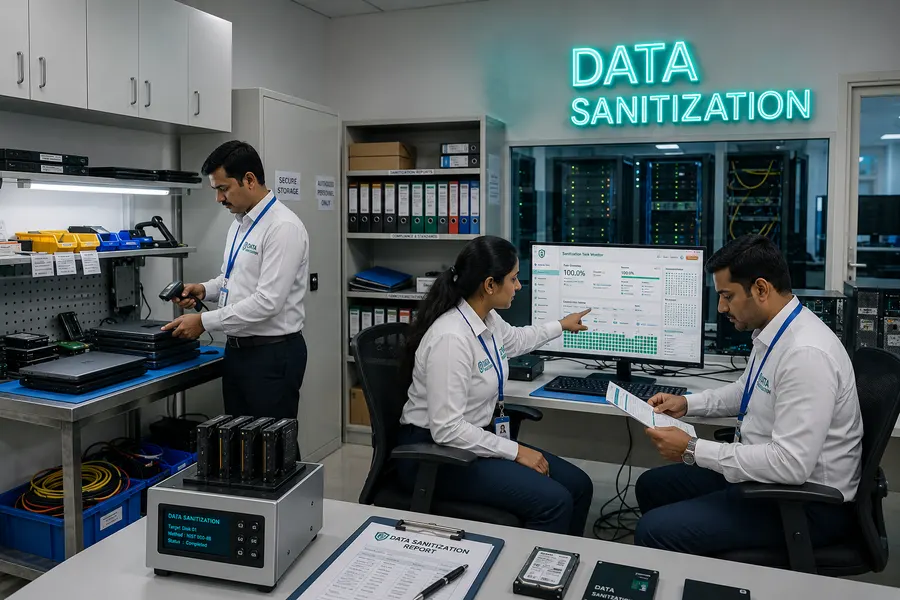
What You Receive
Depending on the service, your documentation can include:
- Per-asset data erasure certificate
- Device identification
- Customer asset reference
- Sanitization method
- Erasure operation
- Verification result
- Processing timestamps
- Operator information
- Processing location
- Destruction outcome where applicable
- Certificate reference
- Digital signature
- Asset reconciliation information
Why Choose Our Data Erasure Certificate Service?
One Certificate Per Asset
Individual certificates make it easier to identify and verify specific devices.
Generated From the Process
Documentation is based on information captured during the actual processing workflow.
Verification Included
Record the applicable verification result instead of simply reporting that a device was erased.
Asset-Level Identification
Serial numbers and asset references connect documentation to the physical equipment.
Digital Integrity
Digitally signed certificates can help identify unauthorized document changes.
Built for ITAD & Enterprise
Suitable for individual devices, corporate hardware refreshes, bulk processing and IT asset disposition.
Key Certificate Features
1 Certificate Per Asset
Individual documentation for each processed device.
Device-Level Identification
Serial number, model, capacity and asset reference.
Erasure Method Recorded
Document the sanitization method applied.
Verification Result
Record the applicable verification outcome.
Processing Details
Capture relevant timestamps, operator and location information.
Digital Protection
Support certificate integrity through hashing and digital signatures where enabled.
Standards & Documentation
NIST SP 800-88
NIST guidance addresses media sanitization and emphasizes selecting an appropriate method along with verification and documentation.
IEEE 2883
Provides guidance for sanitizing storage devices according to their technology and intended disposition.
ISO/IEC 27001
Documented asset handling and disposal processes can provide supporting evidence within an information security management system.
PCI DSS
Organizations handling cardholder data need appropriate controls for sensitive media and secure disposal.
HIPAA
Healthcare environments need appropriate safeguards for media containing protected health information.
DPDP Act & GDPR
Organizations handling personal data may need to demonstrate appropriate data handling and deletion practices. Erasure records can support that accountability.
Specific compliance obligations depend on your organization's policies, contracts and applicable regulations.
Frequently Asked Questions
What is a data erasure certificate?
A data erasure certificate is a document that records the processing of a specific storage device, including relevant device information, erasure method and verification result.
What is a certificate of destruction?
A certificate of destruction documents the physical destruction of a storage device or other data-bearing media.
Do you provide one certificate for every drive?
Yes. Per-asset certificates can be generated so individual devices can be identified and reconciled with processing records.
Can our asset number be included?
Yes. Your internal asset number or asset tag can be associated with the device record where supplied.
Does the certificate show the erasure method?
Yes. Relevant sanitization or erasure method information can be recorded.
Does the certificate show verification?
The applicable verification result can be recorded as part of the processing documentation.
Can certificates be used for ITAD?
Yes. ITAD data erasure certificates can support corporate asset retirement, resale, refurbishment and recycling workflows.
Can you provide certificates for bulk data erasure?
Yes. Individual certificates can be combined with asset reconciliation and broader reporting for large projects.
Can certificates be digitally signed?
Where supported, certificates can be digitally signed to help detect subsequent modification.
Can I review a sample certificate?
Yes. Reviewing a sample certificate before selecting a data erasure provider is a practical way to check whether the documentation meets your requirements.
Where People Go from Here
Sample Certificates
The actual PDFs the software produces, published in full. No form, no email address.
Read MoreWhat Belongs on a Data Erasure Certificate
The longer version, for anyone who has to judge a vendor's document against their own framework.
Read MoreChain of Custody
The record that says which asset, whose it was, and who held it — the certificate's other half.
Read MoreGet Proof for Every Processed Asset
Our data erasure certificates and certificates of destruction connect the physical asset with its processing method, verification result and final outcome.
Permanent data erasure, a checked result and a certificate for every drive.