
- Home
- Company
- Partners
Partners
Partner With Data Sanitization India for Secure Data Erasure
Sell secure data erasure software. Subcontract specialist media processing. Or offer white-label certificates under your own brand.
Data Sanitization India works with resellers, ITAD companies, recyclers, MSPs, IT service providers and technology partners that need a reliable way to deliver secure and permanent data erasure, verification, reporting and media destruction to their customers.
Whether you need software for your own technicians, additional processing capacity or certificates that carry your brand, our partner programme is designed around the way you already work.
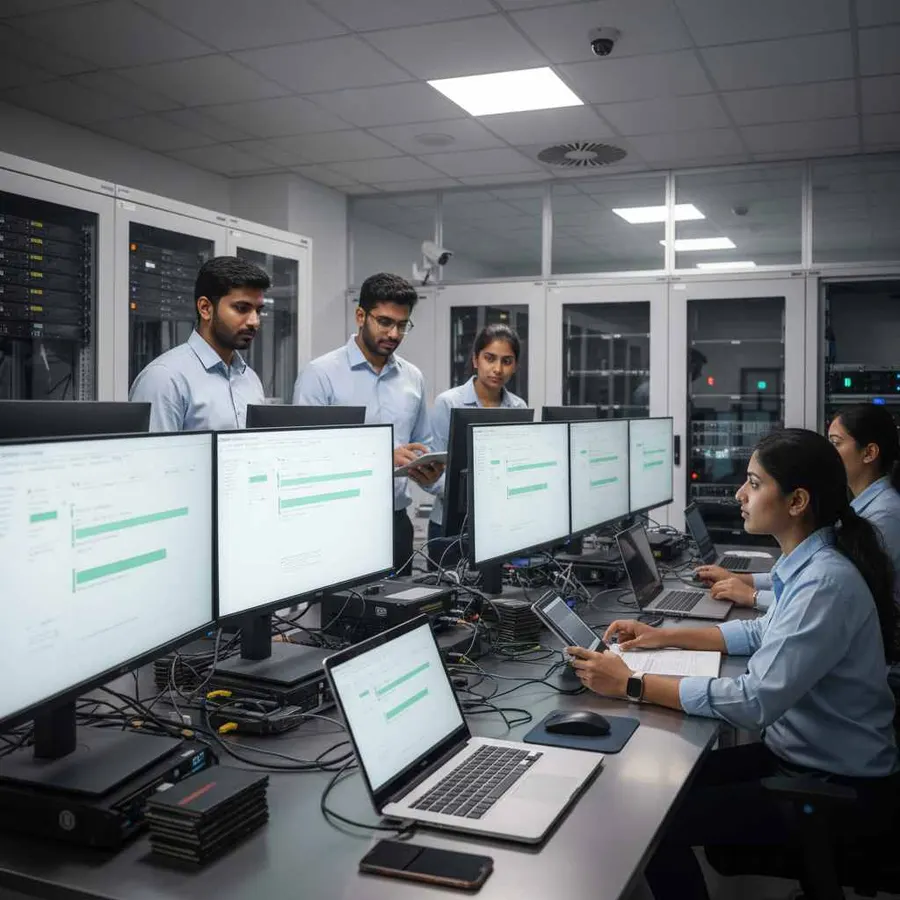
Three Ways to Work With Us
Choose the partnership model that fits your business.
| Partner model | What you do | What we provide |
|---|---|---|
| Data Erasure Reseller | Sell Data Sanitization Pro to your customers | Partner licensing, product support and deployment assistance |
| ITAD & Recycling Partner | Send media you cannot process in-house | Secure erasure, verification, destruction and documentation |
| White-Label Partner | Deliver erasure services under your own brand | Branded certificates and reports |
You can also combine these models as your business grows.
Data Erasure Reseller Partnership
Sell Data Erasure Software to Your Customers
If you already sell IT hardware, cybersecurity products, IT services or asset management solutions, Data Sanitization Pro can become part of your portfolio.
Your team can offer customers a professional solution for securely and permanently erasing HDDs, SSDs, NVMe drives, removable media and other supported storage devices before equipment is reused, resold, redeployed or retired.
Built for Your Customer Accounts
With device-based licensing, partners can purchase the capacity they actually need instead of managing traditional seat-based licensing.
Your customers can use the software to:
- Securely erase supported storage devices
- Select appropriate data erasure methods
- Process multiple drives
- Verify completed erasure
- Generate asset-level certificates
- Produce detailed erasure reports
- Record device identification and results
- Perform hardware diagnostics and drive health checks
- Deploy through bootable environments and PXE where supported
Your customer relationship stays yours.
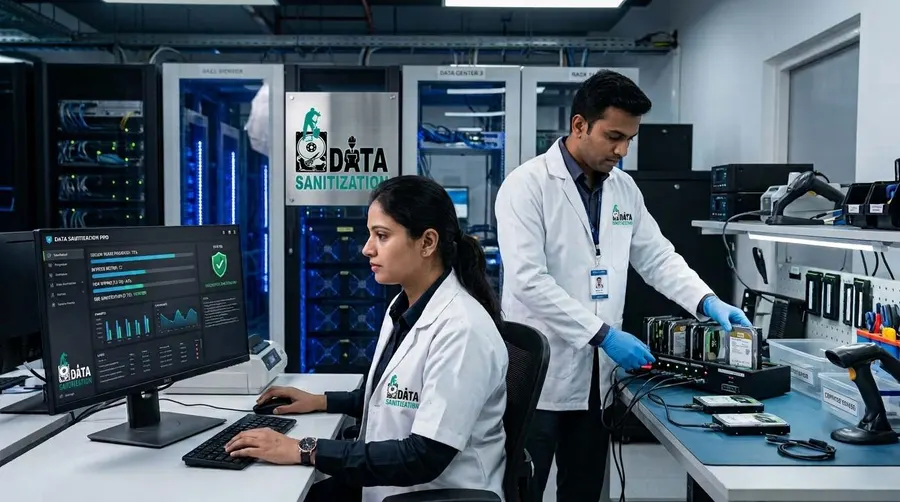
ITAD & Recycler Partnership
Process the Media You Cannot Handle In-House
Not every asset is practical to process internally.
You may receive a self-encrypting SSD, enterprise drive, RAID component, SAN/NAS storage, server media, locked mobile device or failed drive that requires specialist handling.
Instead of holding the asset indefinitely or sending the customer elsewhere, use our processing capability when appropriate.
Secure Processing for Complex Assets
Depending on the device and requirement, media can be:
- Identified
- Collected
- Processed
- Verified
- Documented
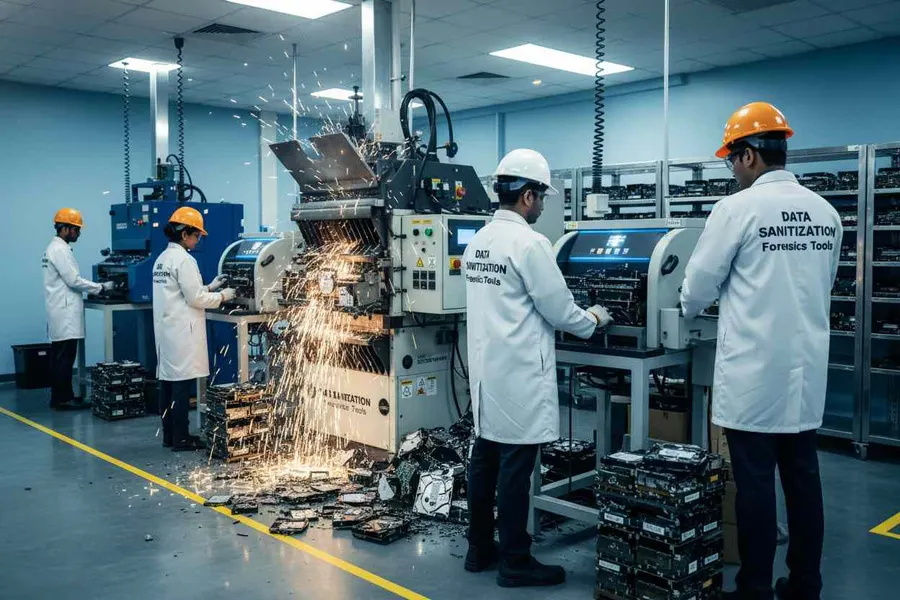
If secure erasure is not technically appropriate or the media cannot be successfully processed, physical destruction can be considered.
Each completed asset can be supported with the relevant data erasure certificate, destruction documentation and chain-of-custody records.
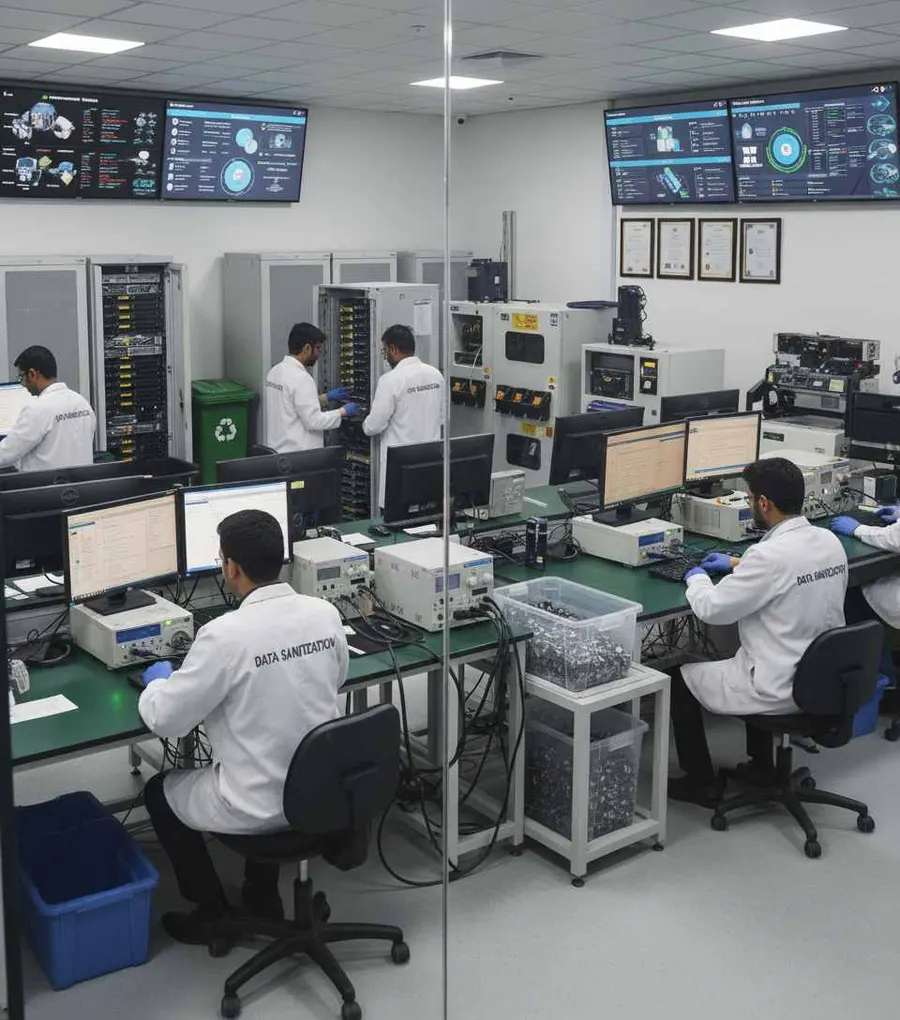
White-Label Data Erasure Partnership
Put Your Brand on the Certificate
Your customer knows your company.
Your certificate should reinforce that relationship.
With our white-label partnership model, eligible partners can provide branded data erasure certificates and reports to their customers.
Your branding can appear on the customer-facing documentation while the underlying erasure method, verification result and asset information remain tied to the actual processing record.
Ideal for
- ITAD companies
- IT service providers
- MSPs
- Data destruction companies
- Computer recyclers
- Refurbishers
- Technology resellers
- Enterprise service providers
Deliver the service under your brand without building the entire erasure platform yourself.

What Partners Get
Everything You Need to Deliver Professional Data Erasure
Partner access can include:
- Device-based licensing at partner pricing
- Central allocation of licences across customer deployments
- Full Data Sanitization Pro functionality
- HDD, SSD and NVMe data erasure
- Removable and external media support
- Verification and result tracking
- Hardware diagnostics and drive health information
- Bootable deployment
- PXE deployment where supported
- Data erasure certificates
- Detailed erasure reports
- White-label documentation for eligible partners
- Specialist subcontracted processing
- Chain-of-custody documentation
- Technical assistance from our team
A Partnership Built Around Your Business
Resell, Process or Deliver Under Your Brand
You do not need to change your entire business model to work with us.
If You Sell Technology
Add secure data erasure software to your existing portfolio.
If You Run an ITAD Business
Use specialist processing when an asset falls outside your internal capabilities.
If You Are a Recycler
Offer verified data erasure before equipment moves to its next destination.
If You Are an MSP
Add secure data wiping and reporting to your managed IT services.
If You Provide Data Destruction
Combine software-based erasure with physical destruction when the media requires it.
If You Want Your Own Customer-Facing Brand
Use the white-label model to provide branded certificates and reports.
Secure Data Erasure for Your Customers
Give Customers More Than a Wipe
Customers increasingly need evidence that data was actually removed from retired technology.
A professional erasure workflow can provide:
- 01
Asset Identification
Device model, serial number and capacity are recorded.
- 02
Erasure
The appropriate supported method is selected for the media.
- 03
Verification
The completed operation is checked according to the configured process.
- 04
Documentation
The asset receives its corresponding certificate and report.
- 05
Customer Handover
Your customer receives documented evidence of the completed work.
This makes data erasure easier to include in IT asset disposition, refurbishment, resale, recycling and technology refresh workflows.
Support for Different Storage Media
One Partner Platform for Multiple Asset Types
Data Sanitization Pro supports a broad range of storage technologies, including:
- HDDs
- SATA SSDs
- SAS drives
- NVMe SSDs
- M.2 storage
- U.2 drives
- USB drives
- Pen drives
- SD and microSD cards
- CF and CFexpress media
- External storage
- Server storage
- RAID environments
- SAN/NAS infrastructure
- Other supported digital storage media
For SSDs and NVMe devices, the appropriate device-supported erasure approach should be selected rather than assuming that traditional HDD overwrite is always the right method.
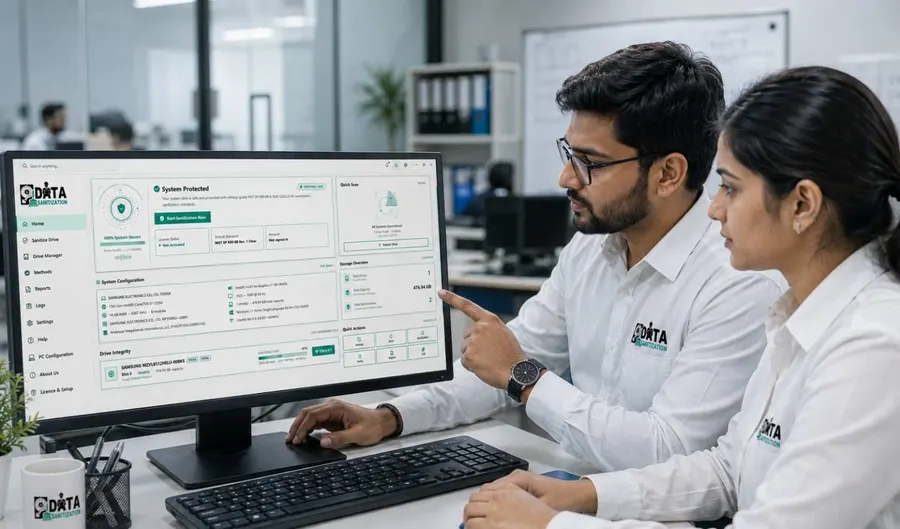
Verification and Documentation
Give Your Customers Evidence They Can Keep
Data erasure is more valuable when the result can be demonstrated.
Data Sanitization Pro records information associated with the erasure process and can generate documentation containing details such as:
- Asset or device identification
- Serial number
- Storage capacity
- Selected erasure method
- Processing result
- Verification result
- Start and completion information
- Operator information
- System and audit metadata
This documentation can support your customer's asset retirement, internal controls, audit records and ITAD processes.
Subcontracted Data Destruction
When Erasure Is Not the Right Answer
Some media cannot be successfully erased or may require physical destruction based on its condition, technology or security policy.
In those cases, partners can use specialist destruction services where appropriate.
This can include media that is:
- Physically damaged
- Failed during erasure
- Not reliably accessible
- Technically unsuitable for secure erasure
- Required by policy to undergo physical destruction
The objective is simple:
Do not pass an unresolved storage device back to your customer.
Chain of Custody
Keep the Asset Traceable From Collection to Completion
When physical media moves between locations, documentation matters.
Our partner workflow can support chain-of-custody records covering relevant stages such as:
- Collection
- Identification
- Secure Transfer
- Processing
- Verification
- Certificate
- Customer Handover
This is particularly useful for ITAD companies, recyclers, enterprise service providers and organizations handling sensitive equipment for customers.
Why Partner With Data Sanitization India?
Built for Real-World Data Erasure Operations
India-Based Technology
Data Sanitization Pro is developed in India, giving organizations and technology partners access to a locally developed data erasure platform.
Software + Services
Partners can use the software themselves or access specialist processing and destruction capabilities when required.
Device-Level Evidence
Erasure results can be associated with individual assets rather than relying only on a general job-level record.
Multiple Deployment Options
Use bootable workflows, offline environments and PXE deployment where supported by your operating model.
Flexible Partnership Models
Start with resale, subcontracted processing or white-label delivery and expand as your requirements change.
Technical Support
Get direct technical assistance for deployment, erasure workflows and supported storage technologies.
Who Can Become a Partner?
Our partner programme is suitable for organizations such as:
- ITAD companies
- Computer recyclers
- Data destruction companies
- IT resellers
- Hardware resellers
- MSPs
- Managed IT service providers
- Refurbishers
- Data recovery companies
- Enterprise IT service providers
- Cybersecurity providers
- System integrators
- Technology distributors
If your business handles equipment containing data, there may be a practical way to integrate secure data erasure into your existing services.
Frequently Asked Questions
Is there a minimum volume for reseller partners?
The reseller model uses device-based licensing, allowing partners to work with the volume that matches their deployment requirements. Larger or specialized requirements can be discussed with the team.
Can our technicians operate Data Sanitization Pro?
Yes. The platform is designed for professional IT teams, technicians, ITAD operators and service providers. Training and technical assistance can be provided based on the deployment.
Can we sell the software under our own company?
The reseller model allows you to offer Data Sanitization Pro to your customers while maintaining your customer relationship. White-label options can be discussed separately where applicable.
Can certificates carry our branding?
Yes, eligible white-label partners can provide customer-facing certificates and reports using their own branding.
Can you process media that we cannot erase ourselves?
Yes. Partners can discuss subcontracted processing for supported media and situations where specialist erasure or physical destruction is required.
Can we use both the reseller and subcontracting models?
Yes. These models can complement each other. For example, you can use Data Sanitization Pro for routine customer projects and subcontract specialist media that falls outside your internal capabilities.
Do you provide chain-of-custody documentation?
Chain-of-custody documentation can be provided for applicable media movement and processing workflows.
Do you sell directly to our customers?
The partnership model is designed to support your customer relationship. Commercial arrangements and account handling should be agreed with our partner team before deployment.
Become a Data Sanitization Partner
Build Secure Data Erasure Into Your Existing Services
Whether you want to resell data erasure software, outsource specialist media processing or provide white-label certificates, we can help you build the right model around your business.
Permanent data erasure, a checked result and a certificate for every drive.