
- Home
- Solutions
- Regulated Sectors
- Banking And Finance Data Erasure
Data Sanitization for Banking & Finance Businesses
Secure Financial Data Before IT Assets Change Hands
Banks and financial organizations handle sensitive data every day.
When laptops, desktops, servers, hard drives or SSDs are replaced, the data should be secured before the asset is reused, resold, returned or retired.
Data Sanitization Pro (DSP) provides professional data sanitization software for banking and finance businesses to securely erase supported storage, verify the result and generate data erasure certificates.
- Identify
- Erase
- Verify
- Certify
- HDD
- SSD
- NVMe
- Laptops
- Desktops
- Servers
- Storage
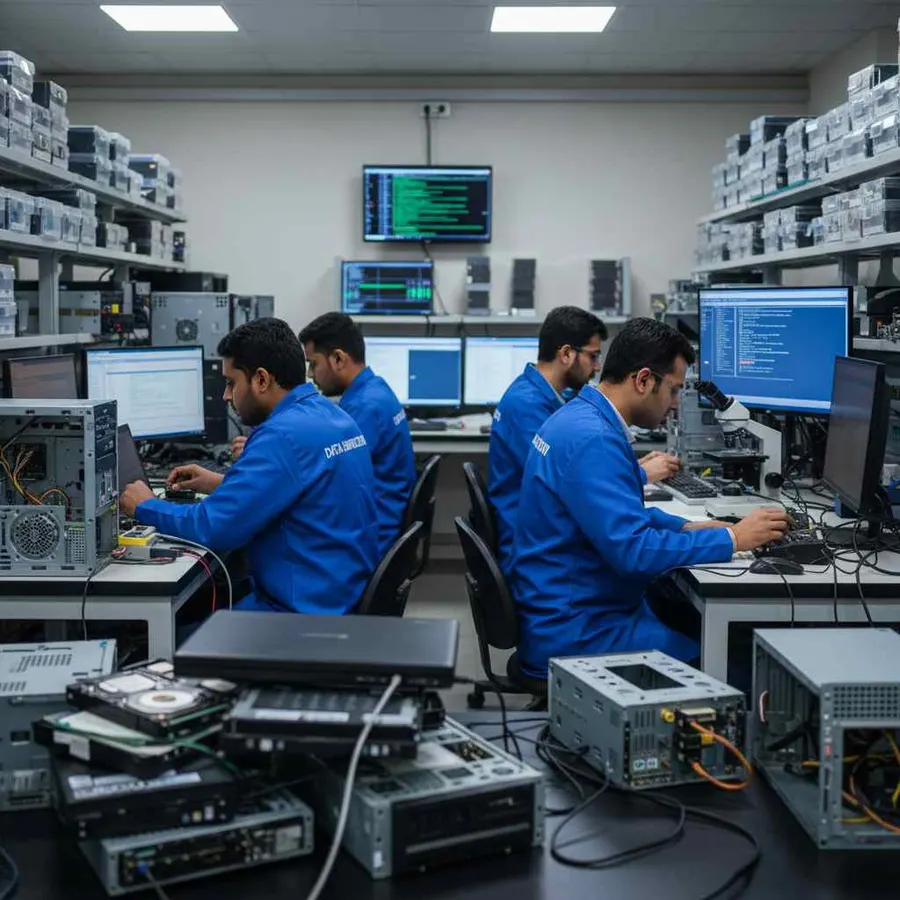
Overview
Data sanitization for banking and finance businesses with secure HDD, SSD and NVMe erasure, verification, certificates and asset tracking.
Why Data Sanitization Matters in Banking & Finance
A retired computer can still contain sensitive information.
A replaced hard drive can still contain old business records.
A decommissioned server can still hold customer or application data.
And a device sent for recycling can leave your physical control before its storage has been properly sanitized.
Financial organizations may handle:
- Customer information
- Account records
- Transaction data
- Payment information
- KYC and identity records
- Employee information
- Financial documents
- Internal business data
That is why professional banking data sanitization should be part of the IT asset lifecycle.
- Delete
- Format
- Reuse is not the same as a controlled:
- Erase
- Verify
- Document
Data Sanitization Software for Banks & Financial Institutions
Data Sanitization Pro is designed for organizations that need a structured data erasure workflow rather than basic file deletion.
Secure Data Erasure
DSP performs software-based logical data destruction on supported storage devices.
25 Data Erasure Methods
DSP supports 25 data erasure methods, allowing organizations to choose an appropriate method according to the storage media, internal policy and intended outcome.
Verification
The completed sanitization process can be verified and the result recorded.
Data Erasure Certificates
DSP can generate self-certified, auditable data erasure reports and certificates with relevant device and processing information.
Asset Identification
Available information can include:
- Manufacturer
- Model
- Serial Number
- Capacity
- Interface
- Firmware
Multi-Drive Processing
DSP supports up to 8 supported drives simultaneously in suitable configurations.
Offline Operation
Supported offline workflows can be used in restricted environments.
USB & PXE Workflows
Supported USB and PXE deployment can help with system-drive and larger computer-fleet sanitization.
What Is Banking Data Sanitization?
Banking data sanitization is the controlled process of removing stored information from supported data-bearing media before the asset moves to another lifecycle stage.
This can apply when equipment is:
- Reused
- Redeployed
- Refurbished
- Resold
- Returned
- Retired
The method should be selected according to the actual storage technology and required security outcome.
An HDD, SSD and NVMe drive should not automatically be treated as identical media.
Data Sanitization for Bank Branches
Banks may operate hundreds or thousands of branches.
A branch computer can contain sensitive information even after it has been removed from service.
A structured bank branch data erasure workflow can connect:
- Branch
- Asset ID
- Storage
- Erasure
- Verification
- Certificate
This makes it easier for central IT and security teams to reconcile retired devices across locations.
For large organizations, asset-level documentation can be especially useful when equipment is collected in batches.
Data Sanitization for ATMs & POS Systems
Financial organizations also manage specialized equipment such as:
- ATMs
- POS terminals
- Payment devices
- Service terminals
- Branch systems
The storage architecture varies by device.
For this reason, the sanitization process should focus on the supported data-bearing storage actually used by the equipment.
Data Sanitization Pro can support the sanitization workflow when the underlying storage is accessible and compatible with the supported environment.
For organizations subject to PCI DSS, payment-card data that is no longer required must be securely deleted or otherwise rendered unrecoverable in accordance with the applicable requirements.
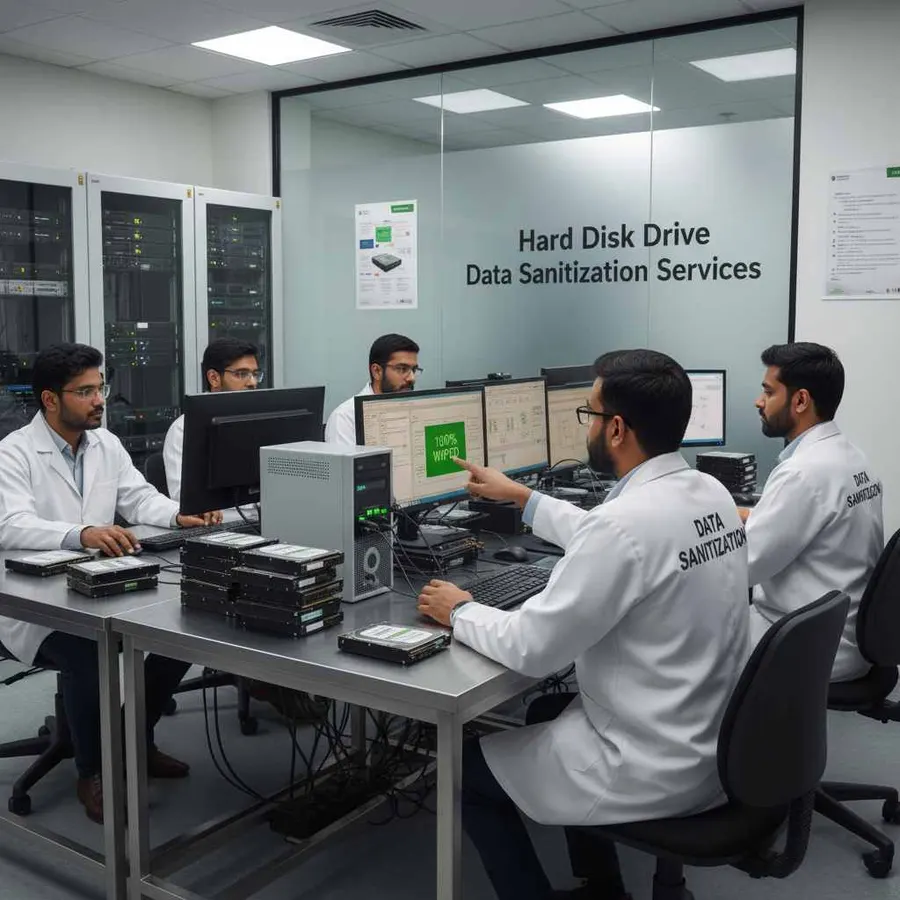
Secure HDD Data Erasure for Banking
Hard disk drives are still found in many enterprise systems, storage environments and older banking equipment.
DSP can support banking HDD data erasure workflows for supported drives.
Typical process:
- Detect
- Select Method
- Erase
- Verify
- Certify
Available device information can be associated with the final report.
This creates a clearer record than relying only on a drive-formatting message.
SSD & NVMe Data Sanitization for Financial IT
Modern financial infrastructure increasingly uses SSD and NVMe storage.
These devices need storage-appropriate sanitization.
SSDs use NAND flash and controller-managed data placement, so a generic HDD-style overwrite should not automatically be treated as equivalent to a device-appropriate SSD sanitization process.
For supported configurations, DSP can support appropriate SSD and NVMe erasure workflows based on the device's capabilities.
The principle is simple:
Use the right method for the right media.

Secure Data Wiping Before Banking Equipment Resale
Banks and financial businesses may recover value from retired IT equipment through reuse, refurbishment, resale or ITAD.
Before equipment changes ownership, the storage should go through the organization's approved secure data wiping process.
Reuse
Sanitize storage before assigning the device to another employee or department.
Redeployment
Erase previous data before moving equipment between branches or facilities.
Refurbishment
Sanitize used equipment before it enters refurbishment.
Resale
Complete and document the data erasure before ownership changes.
Return
Sanitize leased or returned equipment before it leaves organizational control.
Retirement
Complete the approved sanitization process and retain the documentation.
Banking Data Erasure Verification
A financial organization should be able to answer more than:
“Was the device wiped?”
It may also need to know:
Which device?
Which serial number?
Which erasure method?
When was it processed?
What was the verification result?
Which certificate belongs to the asset?
Data Sanitization Pro separates the erasure operation from the verification result and the resulting documentation.
This provides a clearer connection:
- Asset
- Erasure
- Verification
- Certificate
Banking Data Erasure Certificates & Reports
A professional banking data erasure certificate provides documentation for an individual asset and its completed processing.
Relevant information can include:
- Manufacturer
- Model
- Serial number
- Capacity
- Interface
- Selected method
- Processing status
- Verification result
- Start time
- Completion time
- Operator information
- Asset reference
- Certificate or report number
For financial organizations, this can simplify internal review, asset reconciliation and audit preparation.
Industry financial-services reporting also emphasizes verified sanitization, traceability and audit-ready documentation as important parts of end-of-life data management.

Banking Asset Tracking & Reconciliation
Financial organizations may manage devices across:
- Branches
- Offices
- Data Centers
- Vendors
- ITAD
That creates an asset-tracking challenge.
A strong banking data sanitization workflow should allow each physical asset to be matched with its final outcome.
For example:
Asset ID: FIN-2048
Serial Number: XXXXX
Erasure: Completed
Verification: Passed
Certificate: CERT-XXXXX
Disposition: Reuse
This type of asset-level record makes large projects easier to reconcile.
Data Sanitization for Banking Data Centers
Financial data centers can contain large numbers of HDDs, SSDs, NVMe drives, servers and storage systems.
During a data-center refresh, assets may move through:
- Production
- Decommissioning
- Staging
- Sanitization
- Verification
- Disposition
The physical storage should remain identifiable during the process.
Relevant tracking information may include:
- Rack
- Asset ID
- Drive serial number
- Manufacturer
- Model
- Capacity
- Sanitization method
- Verification result
- Certificate
Data-center decommissioning projects in the financial sector commonly emphasize asset reconciliation, documented media handling and verified destruction or sanitization.

Banking ITAD & Secure Asset Disposal
IT Asset Disposition (ITAD) is a major part of financial hardware retirement.
Retired equipment may move to:
- ITAD providers
- Refurbishers
- Recyclers
- Hardware resellers
- Disposal partners
A structured workflow can be:
- Asset Intake
- Identification
- Data Erasure
- Verification
- Certificate
- Final Disposition
This gives the organization a clearer record of what happened to each supported data-bearing asset.
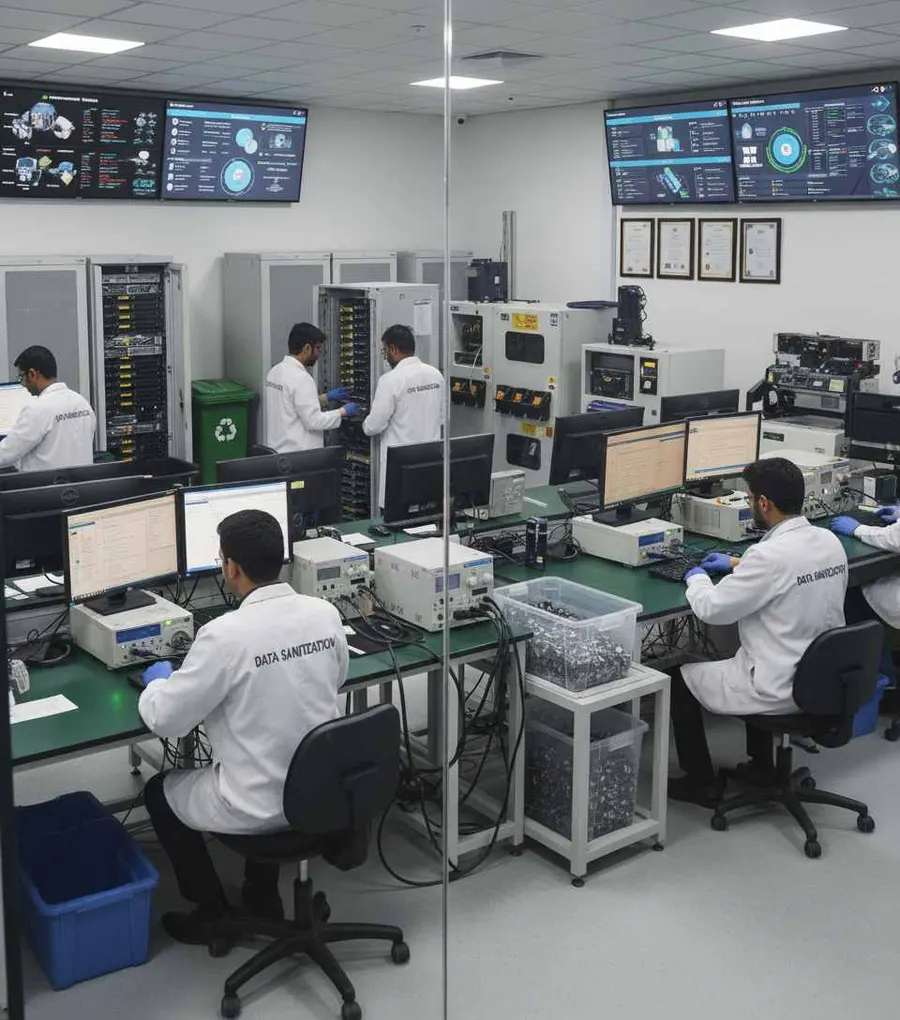
Offline Data Erasure for Financial Institutions
Some financial environments have restricted network access.
Data Sanitization Pro supports offline data sanitization workflows for suitable deployments.
This can be useful for:
- Secure banking facilities
- Data centers
- Restricted IT rooms
- Air-gapped environments
- Controlled asset-processing areas
The goal is to keep the sanitization process within the organization's controlled environment where required.
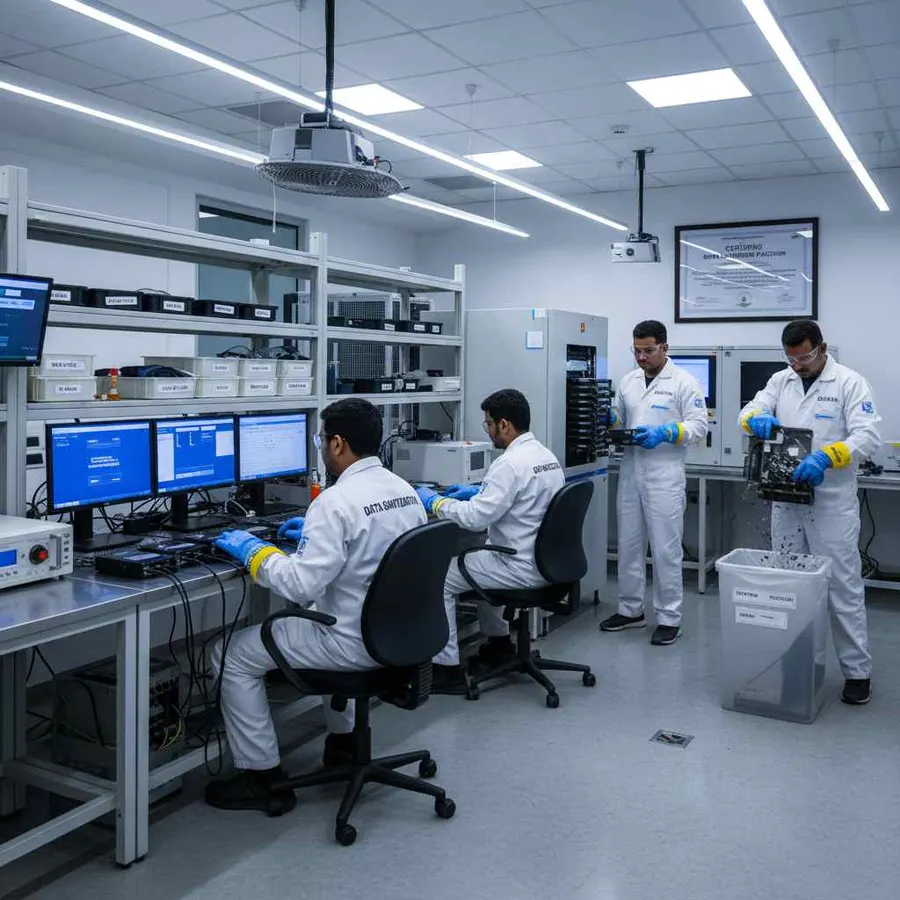
On-Site Data Erasure for Banks
Some financial institutions do not want unprocessed data-bearing equipment transported to another facility.
For suitable projects, on-site data erasure can provide an alternative.
Typical workflow:
- Identify
- Erase
- Verify
- Certify
- Release
This can be useful for:
- Bank branches
- Offices
- Server rooms
- Data centers
- ATM locations
- Secure storage areas
On-site processing can also reduce unnecessary movement of data-bearing assets before sanitization is completed.
Banking Data Sanitization Standards & Compliance
Financial organizations operate under different regulatory and contractual requirements.
NIST SP 800-88 Rev. 2
NIST SP 800-88 Rev. 2 is the current NIST media-sanitization publication. It defines media sanitization as a process intended to make access to target data infeasible for a given level of effort and emphasizes appropriate techniques and controls based on media characteristics and information sensitivity.
PCI DSS
PCI DSS contains requirements for protecting and securely disposing of cardholder data when it is no longer required.
GLBA
In the United States, the Gramm-Leach-Bliley Act requires financial institutions to safeguard sensitive customer financial information and the FTC Safeguards Rule includes secure disposal of customer information as part of the information-security program.
RBI Requirements
For Indian banking environments, RBI guidance includes controls around removable media and secure erasure of data on such media, as well as controls concerning third-party access to critical assets.
Global Privacy Requirements
Organizations operating across jurisdictions may also have obligations under laws such as GDPR and other local privacy frameworks.
The important distinction is:
- Regulation / Standard
- Defines the requirement or guidance
- Sanitization Method
- Performs the technical operation
- Verification
- Records the result
- Certificate
- Documents the completed process
Using the name of a standard does not by itself make an organization compliant.
When a Financial Storage Device Cannot Be Erased
Not every storage device can successfully complete every sanitization process.
A drive may:
- Fail detection
- Have severe read/write errors
- Have hardware problems
- Have firmware limitations
- Not expose the required sanitization capability
- Fail verification
The correct response is to record the exception.
- Failed
- Assessed
- Further Action
A device that does not meet the required erasure and verification criteria should not be incorrectly certified as successfully sanitized.
Where required, the organization can evaluate physical destruction or another approved disposition method.

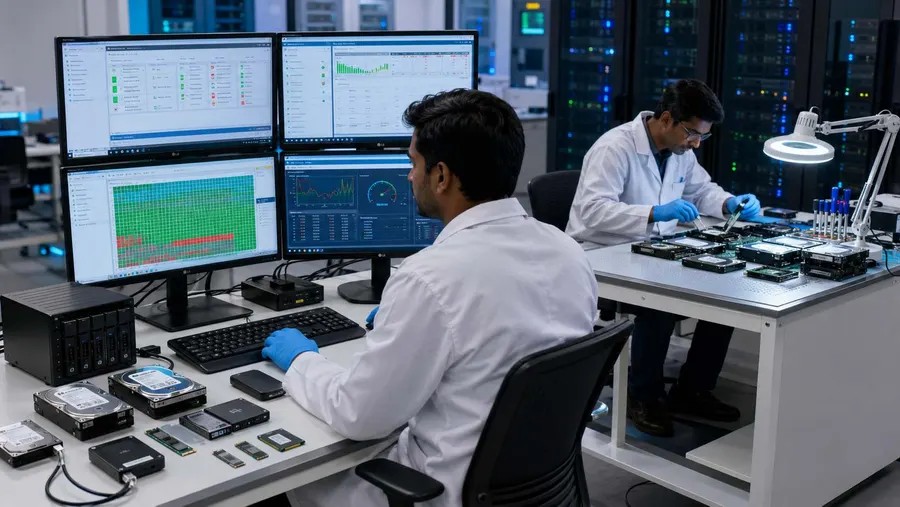
Banking Drive Health Assessment Before Reuse
Data security and hardware condition are different decisions.
A drive can successfully complete data erasure and still be unsuitable for reuse.
Available information can help teams review:
- SMART data
- Drive health
- Bad sectors
- Read errors
- Storage status
- Device information
This allows the organization to make separate decisions:
Sanitization Result: Was the data successfully addressed?
Asset Condition: Is the hardware suitable for another lifecycle?
Bulk Data Erasure for Banking IT
Large financial organizations can have significant volumes of retired equipment.
Typical projects include:
- Branch refresh
- Employee laptop replacement
- Server retirement
- Data-center upgrades
- Storage migration
- Lease returns
- ITAD projects
DSP supports up to 8 supported drives simultaneously in suitable configurations.
For larger computer fleets, supported PXE deployment can also help organizations deploy a controlled sanitization environment across multiple systems.
Actual throughput depends on the hardware, storage interfaces, controllers, drive performance, network and deployment configuration.

Banking Data Sanitization Across the Asset Lifecycle
A financial organization's data-erasure process should continue throughout the asset lifecycle.
Deploy
Equipment enters operational use.
Redeploy
The asset moves to another user or location.
Refresh
The old system is replaced.
Refurbish
The hardware is prepared for another lifecycle stage.
Resell
The asset changes ownership.
Return
Leased equipment is returned.
Retire
The organization completes the required sanitization and documentation.
Data Sanitization Pro can support the secure data erasure stage across these workflows for supported storage.
Who Uses Banking & Finance Data Sanitization Software?
Banks
For branch, endpoint, server and storage retirement.
NBFCs & Lending Companies
For secure handling of retired IT equipment.
Fintech Companies
For modern endpoint, server and storage lifecycle management.
Insurance Companies
For customer and business information stored on retired IT assets.
Payment Service Providers
For supported systems containing payment-related data.
Credit Unions & Financial Institutions
For structured media sanitization and asset retirement.
ATM & POS Service Providers
For supported storage removed from financial equipment.
ITAD & Refurbishment Companies
For sanitizing financial-sector assets before reuse, resale or recycling.
Why Choose Data Sanitization Pro for Banking & Finance?
Built for Professional Data Erasure
A controlled software workflow rather than simple file deletion.
25 Erasure Methods
Multiple supported methods for different storage and organizational requirements.
HDD, SSD & NVMe
Support different storage technologies using appropriate workflows.
Verification
Record the applicable result after processing.
Data Erasure Certificates
Generate self-certified, auditable reports and certificates.
Up to 8 Drives Simultaneously
Process multiple supported drives in suitable configurations.
USB & PXE
Support system-drive and larger endpoint sanitization workflows.
Offline Operation
Useful for controlled environments with restricted connectivity.
Asset-Level Documentation
Connect device identity, processing details and verification results.
Lifecycle Support
Support reuse, redeployment, refurbishment, resale, return and retirement.
Frequently Asked Questions
What is data sanitization for banking and finance?
It is the controlled process of securely removing information from supported data-bearing storage before financial IT assets are reused, redeployed, resold, returned, recycled or retired.
Why do banks need data sanitization software?
Banks and financial businesses handle sensitive customer and business information. Retired laptops, hard drives, SSDs and servers can still contain that information unless the storage is properly sanitized.
What devices can Data Sanitization Pro process?
DSP supports sanitization workflows for supported HDDs, SSDs, NVMe drives, laptops, desktops, servers and removable storage.
Can banks use DSP for ATM and POS storage?
Yes, where the underlying storage is supported and accessible through the sanitization environment.
Can DSP erase banking HDDs and SSDs?
Yes. DSP supports applicable data-erasure workflows for supported HDD and SSD configurations.
Does DSP support NVMe data erasure?
Yes, supported NVMe configurations can be processed according to the capabilities exposed by the device.
Can multiple banking drives be erased together?
Yes. DSP supports up to 8 supported drives simultaneously in suitable configurations.
Can DSP generate bank data erasure certificates?
Yes. DSP can generate self-certified, auditable data erasure reports and certificates containing relevant device and processing information.
Can banking organizations use DSP offline?
Supported offline deployments can be used for appropriate restricted environments.
Can banks use on-site data erasure?
Yes. Suitable projects can use on-site sanitization so supported data-bearing equipment can remain at the organization's location while processing is performed.
Does DSP make a bank PCI DSS compliant?
No. DSP provides technical data-erasure, verification and reporting capabilities that can support an organization's controls. PCI DSS compliance depends on the organization's complete environment and applicable requirements.
Does NIST SP 800-88 Rev. 2 apply to banking data sanitization?
NIST SP 800-88 Rev. 2 provides general media-sanitization guidance for organizations and system owners. The applicable technique should be selected according to media characteristics and information sensitivity.
What happens when a banking drive fails verification?
The failed result should be recorded and the asset should be assessed for another approved disposition method. It should not be certified as successfully sanitized.
Related Solutions
Government
Erase, verify and certify before assets leave your control
Read MoreDefence
Offline erasure with verification and certificates
Read MoreInsurance
For insurers, brokers and TPAs retiring IT assets
Read MoreHealthcare
Secure patient data before devices move on
Read MoreEducation & Research
For schools, colleges, universities and research centres
Read MoreSecure Financial Data Before Your Assets Move On
Before a laptop, server, HDD or SSD leaves your organization, make the outcome clear: