
- Home
- Company
- About Us
About Data Sanitization Pro
Secure Data Erasure. Verified Results. Clear Evidence.
Data Sanitization Pro is a professional data erasure and data sanitization software platform, developed in India for organizations that need to securely and permanently erase, verify and document data from supported storage devices.
We help businesses manage data securely when IT assets are reused, redeployed, refurbished, resold, returned or retired.
- Identify
- Erase
- Verify
- Certify
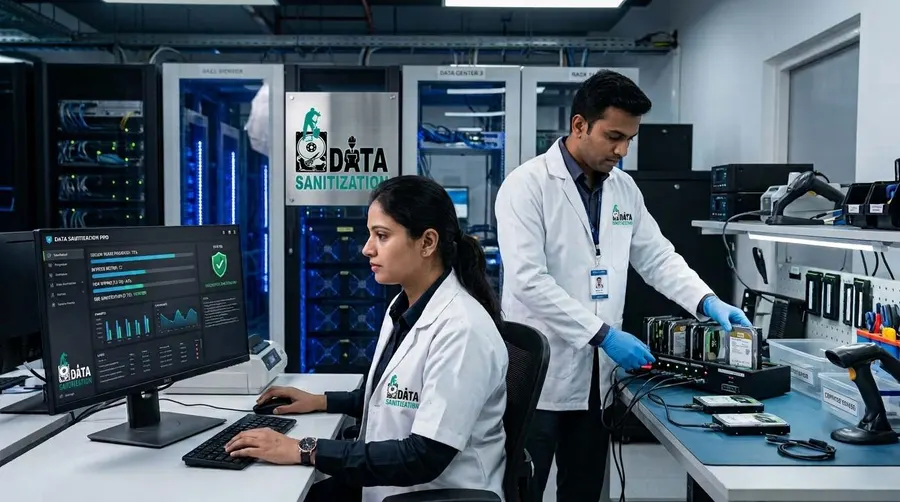
Who We Are
Data Sanitization Pro is part of Data Sanitization India, focused on secure and permanent data erasure, data sanitization and media destruction.
Our work combines data erasure software with professional sanitization services for organizations that need a controlled and documented approach to IT asset disposal.
Our focus is simple:
Erase the data. Verify the result. Keep the evidence.
We support organizations across different industries and operational environments, including enterprise IT, ITAD, data centres, government, banking, healthcare, education, repair, refurbishment and resale.
What We Do
We help organizations securely handle data-bearing IT assets throughout their lifecycle.
Data Erasure Software
Data Sanitization Pro provides software-based logical data erasure for supported storage devices.
Data Sanitization
We support controlled sanitization workflows for HDDs, SSDs, NVMe drives and other supported media.
Verification
Completed erasure operations can be verified and the result recorded.
Erasure Certificates
The software can generate self-certified, auditable data erasure reports and certificates with relevant device and process information.
On-Site Data Sanitization
For organizations that want their assets to remain at their facility during processing, professional on-site data sanitization is available.
Media Destruction
When a storage device cannot be reliably sanitized or requires physical destruction, it can move through an appropriate media-destruction process.
About Data Sanitization Pro
Data Sanitization Pro was built around a simple idea:
Data erasure should be controlled, verifiable and easy to document.
Instead of treating data wiping as a basic formatting task, DSP brings important parts of the sanitization workflow together:
- Identify
- Select
- Erase
- Verify
- Certify
The platform is designed to help organizations create a more consistent process for supported storage devices.
Built for Real IT Asset Lifecycles
Data does not disappear just because a computer is no longer in use.
A device may move through several stages:
- Employee Use
- Device Replacement
- Data Sanitization
- Verification
- Reuse / Resale / ITAD / Recycling / Retirement
Our software helps organizations make the sanitization stage more structured and easier to document.
Supported Storage Technologies
Data Sanitization Pro supports data-erasure workflows for supported:
- HDD
- SSD
- NVMe
- Removable Storage
- Supported Enterprise Storage
The exact workflow depends on the device, hardware configuration and available device capabilities.
Secure and Verifiable Data Erasure
A data erasure process should produce more than a simple completion message.
For supported workflows, DSP can associate relevant information with the sanitization operation, including:
- Manufacturer
- Model
- Serial number
- Capacity
- Interface
- Drive type
- Firmware information
- Selected sanitization method
- Operation result
- Verification result
- Processing date and time
- Operator information
- Asset reference
This creates a clear connection between:
- Asset
- Storage Device
- Erasure
- Verification
- Certificate

26 Data Erasure Methods
Data Sanitization Pro supports 26 data erasure methods for supported workflows.
The appropriate method should be selected according to the storage technology, device capabilities, information sensitivity and the organization's approved requirements.
Our approach is not to use one method for every situation.
The right method depends on the media and the required outcome.
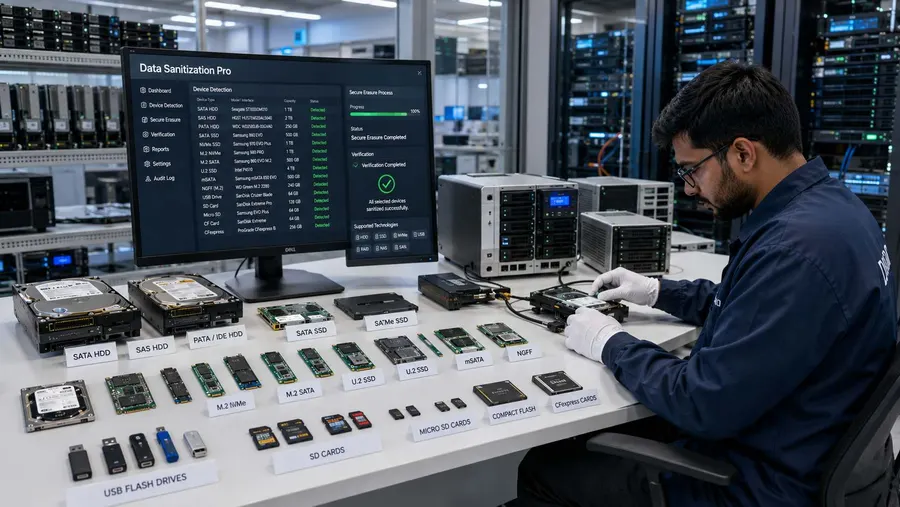
Verification Matters
A drive can be processed without the result being properly documented.
We believe verification should be part of the workflow.
DSP provides verification for completed erasure operations in supported workflows and records the resulting status.
This helps organizations maintain a clearer record of what happened to the storage device.
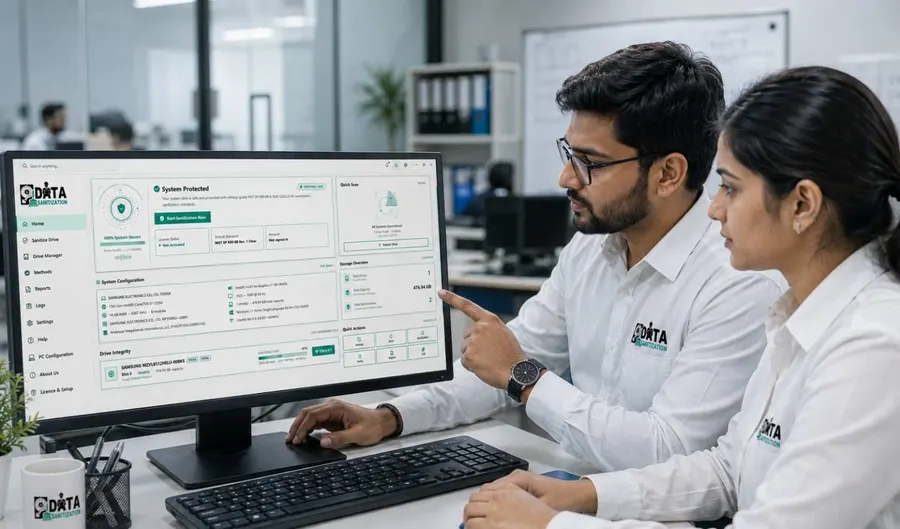
Certificates & Reports
Data Sanitization Pro can generate self-certified, auditable data erasure reports and certificates.
These records can help organizations document:
- What device was processed?
- Which method was used?
- When was it processed?
- Was the process completed?
- Was the result verified?
This documentation can be useful for asset records, customer reporting and audit preparation.
Offline Data Sanitization
Some organizations work in restricted or controlled environments.
DSP supports offline data sanitization workflows, making it suitable for environments where continuous internet access is not required or preferred.
This can be useful for:
- Enterprise IT
- Government
- Data Centres
- Secure Processing Areas
- Controlled Asset Retirement
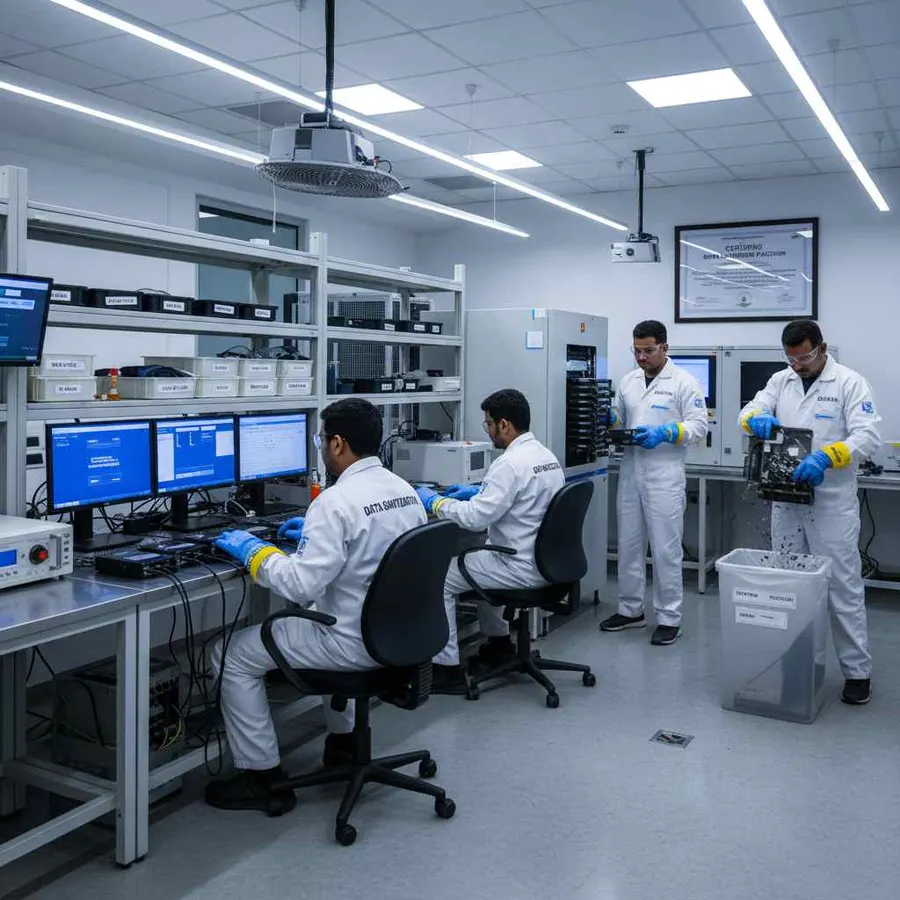
USB & PXE Boot Support
DSP supports USB and PXE boot workflows.
This is useful when the target storage device is the active system drive.
A Windows system drive generally cannot be erased while Windows is actively using it. For suitable supported systems, operators can use an appropriate boot environment to perform the sanitization process.
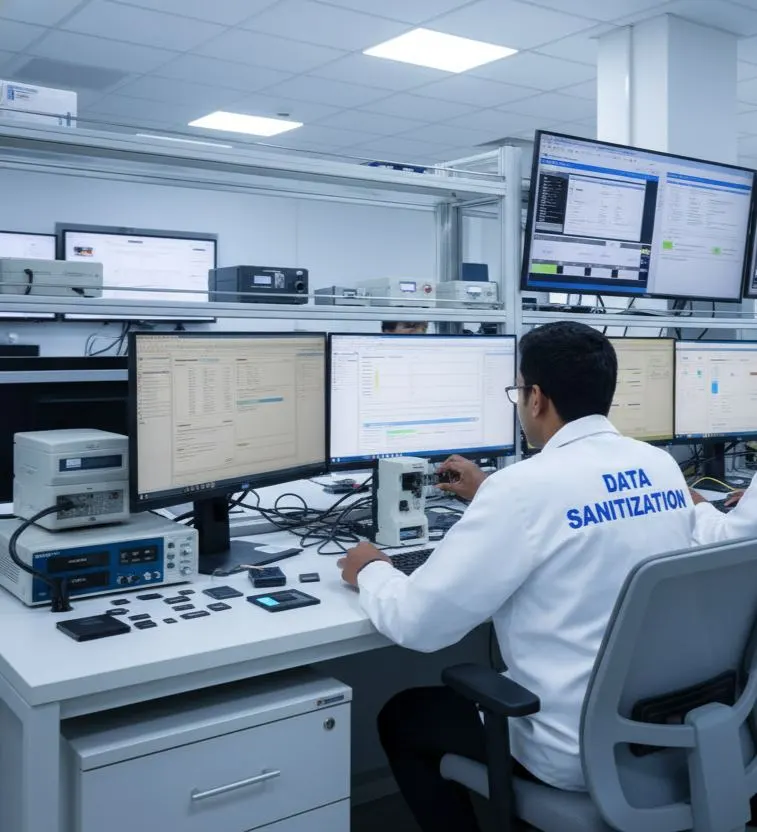
Storage Health & Device Assessment
Data security and hardware condition are two different things.
Where supported, DSP can provide information related to:
- SMART data
- Drive health
- Bad sectors
- Errors
- Device characteristics
This can help teams make separate decisions:
Was the data successfully sanitized?
Is the storage device suitable for reuse?
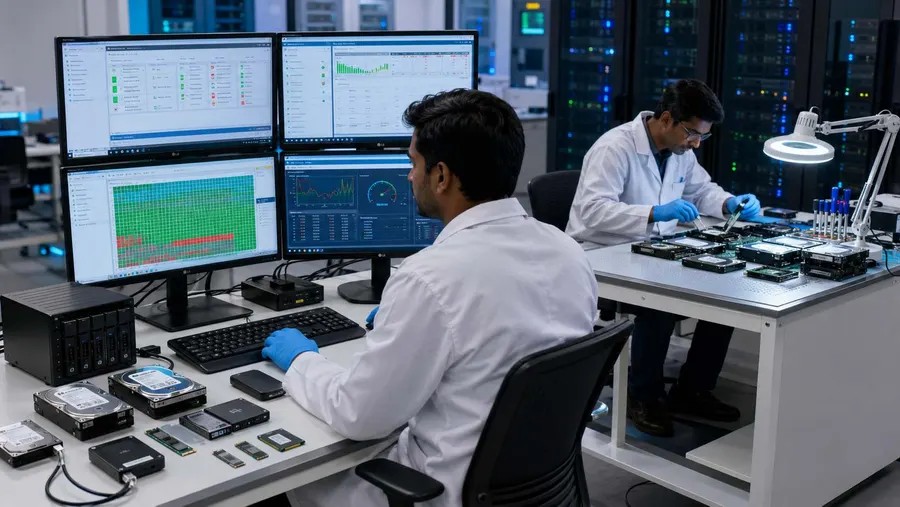
When Software Erasure Is Not Enough
Not every storage device can be reliably sanitized through software.
A drive may have:
- Hardware failure
- Controller problems
- Firmware limitations
- Communication issues
- Verification failure
A failed or incomplete operation should not be reported as a successful erasure.
When physical destruction is required, the media should move through an appropriate destruction process.
DSP performs software-based logical data erasure. It does not physically shred, crush, drill or destroy storage devices.
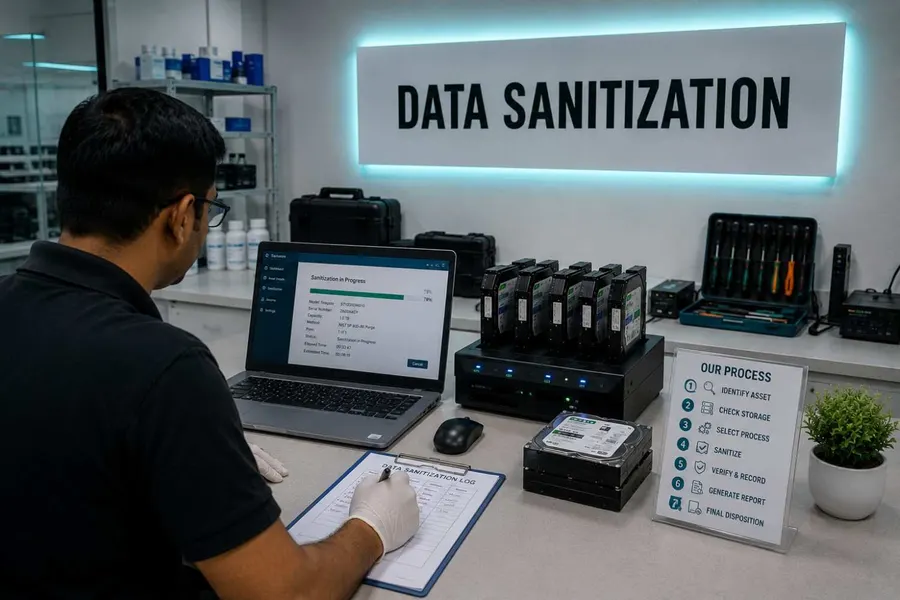
Who We Serve
Data Sanitization Pro supports organizations involved in the complete IT asset lifecycle.
Enterprise IT
For device refresh, redeployment, reuse and retirement.
Read MoreITAD & Recyclers
For secure data wiping, verification and asset documentation.
Read MoreData Centres
For storage sanitization during hardware replacement and decommissioning.
Read MoreGovernment & Defence
For controlled and restricted media-sanitization workflows.
Banking & Finance
For secure storage-media handling during asset retirement.
Read MoreHealthcare
For controlled data sanitization during equipment lifecycle management.
Read MoreEducation & Research
For secure device reuse, replacement and retirement.
Read MoreMSPs & Resellers
For adding professional data erasure capabilities to IT services.
Read MoreRepair & Refurbishment
For wiping supported storage before reuse or resale.
Marketplaces
For trade-in, returned-device and used-electronics workflows.
Read MoreDeveloped in India
Data Sanitization Pro is developed in India with a focus on professional and permanent data erasure, verification and documentation.
Our approach is practical:
Build the right workflow.
Make the result visible.
Keep the evidence useful.
Be clear about the technology.
Our Team
Data sanitization involves more than software.
Different environments require different expertise, from enterprise storage and IT asset retirement to on-site processing and media destruction.
Our team works across:
- Data Erasure
- Media Sanitization
- On-Site Operations
- Enterprise Storage
- Documentation & Reporting
Our Approach to Trust
Clear Device Identification
Know which storage device was processed.
Controlled Erasure
Use an appropriate sanitization workflow.
Verification
Record the result of the completed operation.
Documented Evidence
Generate reports and certificates connected to the processed asset.
Honest Results
A failed or incomplete process should never be presented as successful.
Software or Professional Service?
Different organizations need different approaches.
Use the Software
For teams that want to manage data erasure internally.
Start a 30-Day Free Trial](https://get.datasanitizationpro.com/download)Use Professional Services
For organizations requiring on-site processing or specialist media handling.
Contact Our Team](https://datasanitizationpro.com/contact/)Use Both
Run regular sanitization internally and bring in professional support for larger or specialized projects.
Based in New Delhi, India
Data Sanitization Pro is developed in India, with company operations based in Nehru Place, New Delhi.
We support organizations with software and professional data-sanitization workflows according to their operational requirements.
Phone: +91-852-770-9690Email: support@datasanitization.in
Frequently Asked Questions
What is Data Sanitization Pro?
Data Sanitization Pro is professional data erasure and data sanitization software designed to erase, verify and document supported storage-device sanitization workflows.
Is Data Sanitization Pro a software or a service?
Both software and professional data-sanitization services are available.
What devices does DSP support?
Supported workflows include HDDs, SSDs, NVMe drives and other supported storage configurations.
Does DSP physically destroy drives?
No. DSP performs software-based logical data erasure. Physical destruction is a separate process.
Can DSP verify erasure?
Yes. DSP provides verification for completed erasure operations in supported workflows.
Can DSP generate certificates?
Yes. DSP can generate self-certified, auditable data erasure reports and certificates.
Can DSP work offline?
Yes. Supported offline workflows are available.
Where is Data Sanitization Pro based?
Data Sanitization Pro is developed in India, with company operations based in Nehru Place, New Delhi.
Do you provide on-site data erasure?
Yes. Professional on-site data sanitization is available for suitable projects.
What happens when a drive cannot be reliably erased?
A failed or incomplete process should not be treated as successful. Where required, the media can move to an appropriate physical destruction process.
Secure Your Data Before the Asset Moves On
Before a device is reused, refurbished, resold, returned, recycled or retired, make data sanitization part of the process.
Permanent data erasure, a checked result and a certificate for every drive.