
- Home
- Solutions
- Business And Industry
- Manufacturing Data Erasure
Data Sanitization for Manufacturing Businesses
Secure Data Before IT Assets Move to the Next Lifecycle Stage
Manufacturing companies use computers, laptops, workstations, servers and storage devices across factories, plants, offices, warehouses and engineering facilities.
When IT equipment is reused, redeployed, refurbished, resold, returned or retired, the stored data should be securely erased first.
Data Sanitization Pro (DSP) provides professional data erasure software for manufacturing businesses to sanitize supported HDDs, SSDs and NVMe drives, verify the result and generate data erasure certificates.
- Erase
- Verify
- Certify
- Secure Data Erasure
- Verification
- Certificates
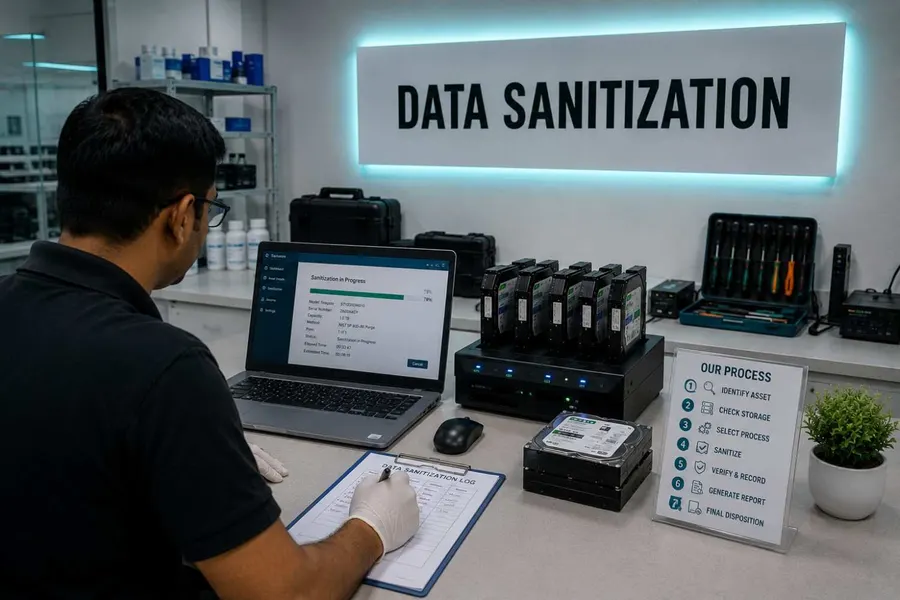
Overview
Data sanitization for manufacturing businesses with secure HDD, SSD and NVMe erasure, verification and certificates for reuse, resale, ITAD and retirement.
Why Data Sanitization Matters in Manufacturing
Manufacturing organizations manage information across multiple locations and IT environments.
This can include:
- Employee and HR information
- Engineering and design documents
- Production records
- Supplier and vendor information
- Business and financial files
- Quality and inspection records
- Operational documentation
- Internal project information
The data security risk does not disappear when a computer or storage device reaches the end of its current use.
A laptop replaced during an employee upgrade, a workstation moved to another department, a server decommissioned during an infrastructure refresh or a storage drive returned to a vendor may still contain information from its previous lifecycle.
Deleting files or formatting a drive should not automatically be considered complete data sanitization.
A controlled data wiping and verification process provides a more structured way to process supported storage and maintain evidence of the completed operation.
What Does Manufacturing Data Sanitization Mean?
Manufacturing data sanitization means securely removing stored information from supported storage devices before the hardware moves to another lifecycle stage.
Reuse
Erase previous user or business data before assigning the device to another employee.
Redeployment
Sanitize equipment before moving it between departments, offices, plants or locations.
Refurbishment
Erase stored information before preparing used equipment for another user or business unit.
Resale
Complete and document data erasure before used equipment changes ownership.
Return
Sanitize leased, rented or vendor-managed equipment before it leaves organizational control.
Retirement
Complete the required logical sanitization process and retain the resulting documentation.
Data Sanitization Pro: Built for Manufacturing IT Asset Lifecycle
Data Sanitization Pro combines secure data erasure, verification and reporting in one controlled software workflow.
25 Data Erasure Methods
DSP supports 25 data erasure methods for different sanitization requirements. The selected method should be matched to the actual storage technology and organizational policy.
Data Erasure Verification
A successful-looking erase command is not the same as a documented verification result.
DSP provides a verification workflow so teams can record the result of the completed sanitization process.
Self-Certified Data Erasure Certificates
DSP can generate self-certified, auditable data erasure certificates and reports.
The record can connect:
- Asset
- Device Identity
- Erasure Method
- Verification
- Result
Depending on the configured workflow, records can include:
- Manufacturer
- Model
- Serial Number
- Capacity
- Interface
- Firmware
- Method
- Verification
- Timestamps
- Operator
- Asset Reference
Multi-Drive Processing
Data Sanitization Pro supports processing up to 8 supported drives simultaneously in suitable configurations.
Offline Data Erasure
DSP supports offline sanitization workflows for controlled environments where internet access is restricted.
USB and PXE Boot
DSP supports USB and PXE boot workflows for suitable system-drive sanitization and larger deployment environments.
From Manufacturing Drive Detection to a Verified Certificate
- 01
Detect
Connect the supported storage device and identify available information.
- Manufacturer
- Model
- Serial Number
- Capacity
- Interface
- Firmware
- 02
Select
Choose an appropriate supported sanitization method based on the storage technology and organizational requirements.
- 03
Erase
Run the selected secure data erasure process.
- 04
Verify
Verify the completed operation and record the result.
- 05
Certify
Generate the corresponding data erasure certificate or report.
This creates a repeatable workflow for manufacturing IT teams, asset managers, refurbishment companies and ITAD partners.
Manufacturing Laptop and Desktop Data Erasure
Manufacturing organizations regularly replace laptops, desktops and engineering workstations.
Common reasons include:
- Employee hardware refresh
- Workstation replacement
- Plant expansion
- Office relocation
- Department transfers
- Technology upgrades
- Refurbishment
- Resale
- Retirement
Before a device moves to another user or leaves company control, stored information should be properly addressed.
DSP supports data erasure workflows for supported HDD, SSD and NVMe storage used in business computers.
A running Windows installation normally cannot erase the physical system drive from which Windows is operating.
For suitable deployments, DSP supports USB and PXE boot workflows so the system can start in the sanitization environment before its target storage is processed.

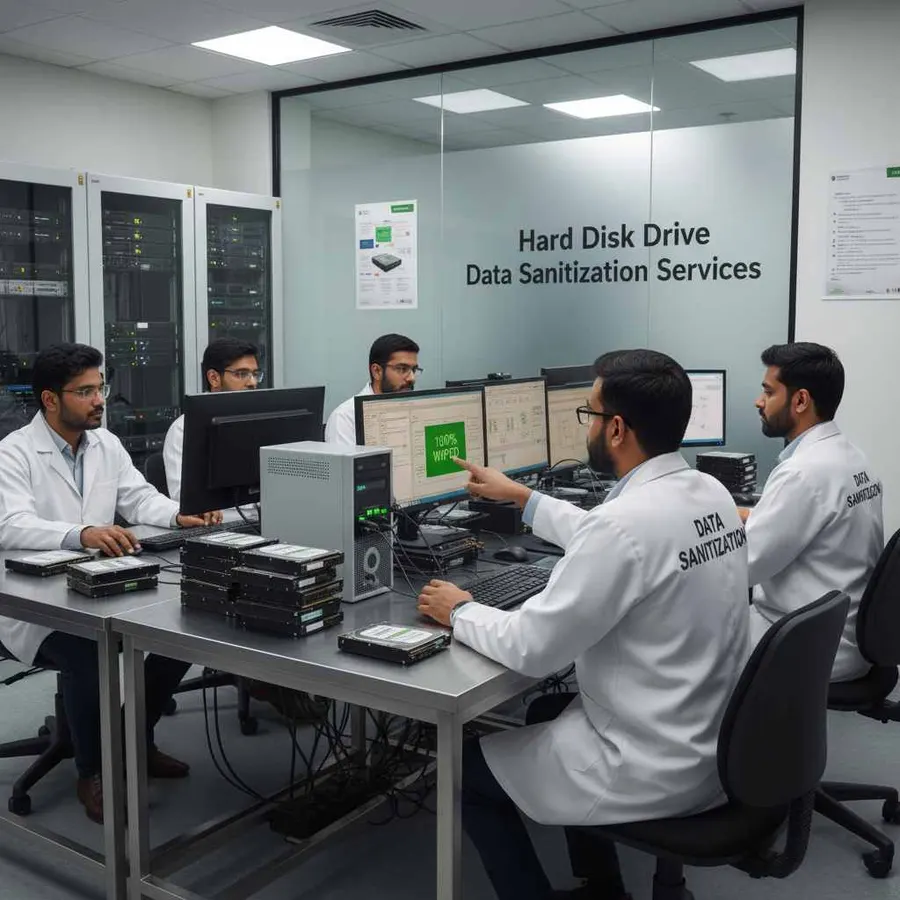
Manufacturing HDD Data Erasure
Hard disk drives may still be used across manufacturing offices, plants, warehouses and server environments.
When an HDD is being reused, resold, refurbished or retired, professional hard drive erasure software can provide a controlled software-based sanitization process.
DSP supports a workflow based on:
- Detect
- Erase
- Verify
- Certify
This allows the organization to maintain a record for the individual processed drive.
Manufacturing SSD and NVMe Data Erasure
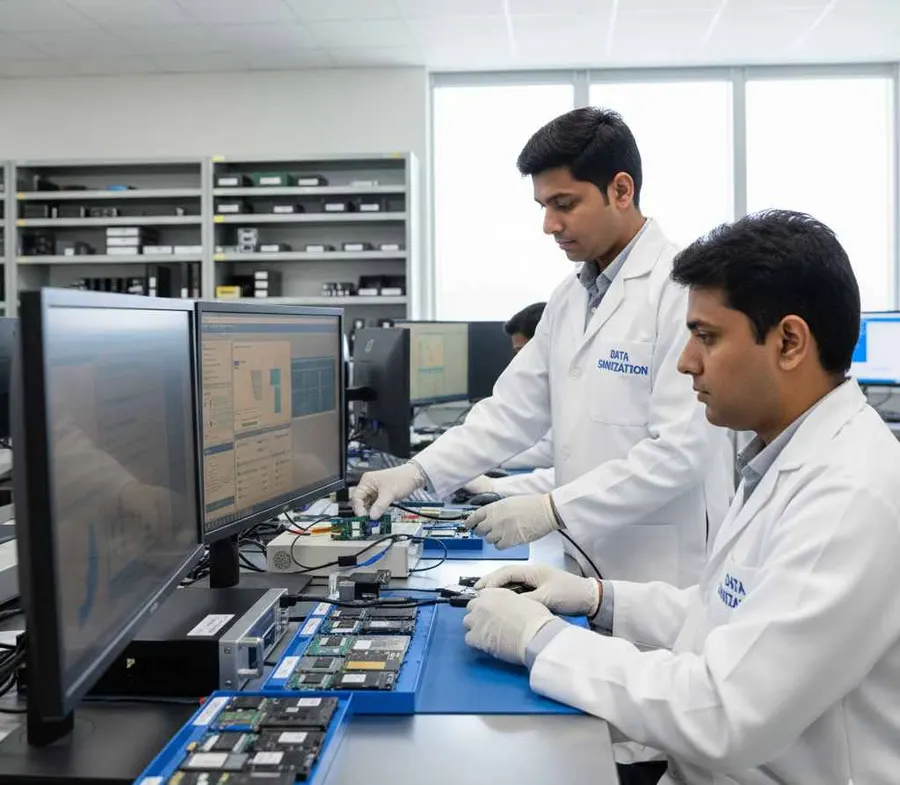
Modern manufacturing environments increasingly use SSD and NVMe storage in laptops, workstations, desktops and servers.
SSD sanitization requires an appropriate method because solid-state storage uses NAND flash and controller-managed storage technologies.
DSP supports supported SSD and NVMe data erasure workflows based on the capabilities available on the actual device.
Depending on the drive, suitable workflows may involve supported technologies such as:
- Secure Erase
- Sanitize functions
- Cryptographic Erase
- Other supported sanitization methods
The correct operation depends on the actual storage device, controller, firmware, interface path and organizational requirements.
Data Sanitization for Manufacturing Plants and Factories
Manufacturing facilities may have large numbers of computers and storage devices distributed across production and administrative areas.
These may include:
- Office desktops
- Employee laptops
- Engineering workstations
- Production-support computers
- Servers
- Storage drives
- Backup devices
- Retired IT equipment
During plant modernization, infrastructure upgrades or site relocation, many devices may move through different lifecycle stages.
A standardized data wiping software workflow can help manufacturing IT teams apply a consistent sanitization process to supported storage devices.
Data Erasure for Engineering and Design Workstations
Engineering teams can work with systems containing large amounts of business-critical information.
Workstations may hold:
- Engineering documents
- CAD-related files
- Product development information
- Technical reports
- Project documentation
- Internal research material
When engineering workstations are replaced or reassigned, their storage should be sanitized before the next lifecycle stage.
DSP can support secure data erasure for supported HDD, SSD and NVMe storage used in these systems.
Manufacturing Server and Storage Data Erasure
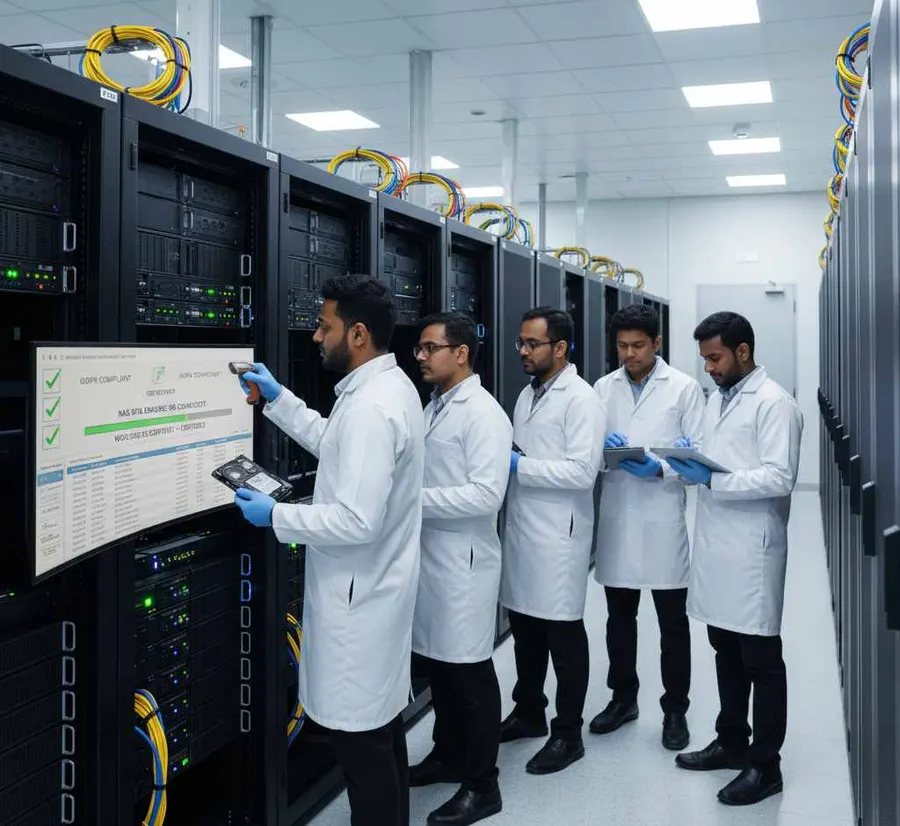
Manufacturing businesses may operate local servers and storage infrastructure at plants, offices and data centres.
When servers or physical storage devices are replaced or decommissioned, the organization may need a controlled data sanitization process for the supported drives removed from those systems.
DSP can support server storage data erasure workflows for compatible physical storage.
For live production systems, shared storage, virtual environments and specialized infrastructure, the sanitization approach should be planned around the actual architecture before any data-bearing hardware is processed.
Data Sanitization for Manufacturing Warehouses
Warehouses and logistics facilities may operate their own workstations, laptops, servers and storage devices.
Equipment may be replaced during:
- Warehouse upgrades
- Hardware refresh
- Site relocation
- Network modernization
- Staff changes
- Infrastructure replacement
Before retired equipment is reused, transferred, resold or returned, the stored information should be securely addressed.
A controlled data erasure software workflow can help standardize this process.
Manufacturing Data Erasure for Multiple Locations
Large manufacturers may operate across multiple plants, offices, warehouses and regional facilities.
A consistent data sanitization process helps central IT and asset-management teams establish the same basic workflow:
- Identify
- Erase
- Verify
- Certify
DSP's offline and PXE-based workflows can support suitable deployment models where environments require controlled processing or fleet-based sanitization.
Multi-Drive Data Erasure for Manufacturing
Manufacturing organizations may need to process multiple drives during:
- Laptop refresh
- Desktop replacement
- Workstation upgrades
- Server replacement
- Plant modernization
- IT asset retirement
- Refurbishment
- ITAD operations
Data Sanitization Pro supports up to 8 supported drives simultaneously in suitable configurations.
Actual processing speed depends on the hardware configuration, storage interfaces, controllers, system resources and drive performance.
Offline Data Sanitization for Manufacturing
Some manufacturing environments have restricted networks or controlled production infrastructure.
DSP supports offline data erasure, which can be useful when devices need to be processed without depending on an active internet connection.
This can help organizations maintain greater control over the sanitization environment during asset processing.
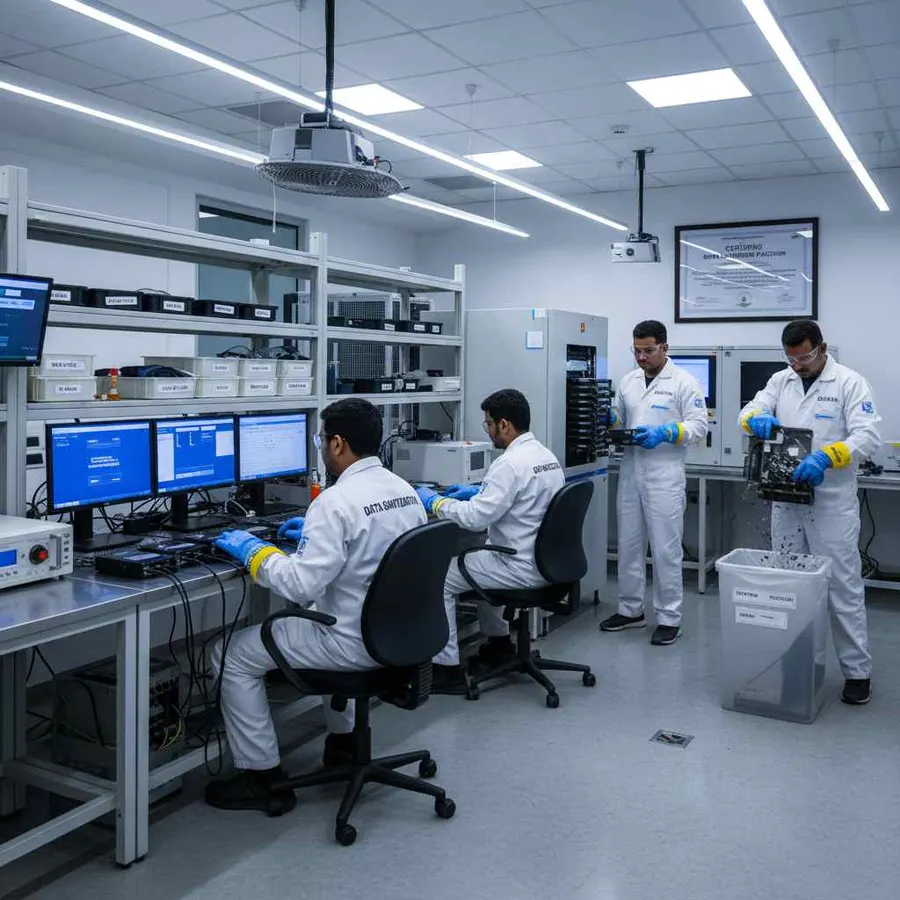
PXE-Based Data Erasure for Manufacturing Fleets
For larger fleets of desktops, laptops and workstations, PXE boot can simplify deployment.
DSP supports PXE deployment for up to 64 computers by default, with configured capacity adjustable for larger environments.
Each machine can boot into the sanitization environment and process its supported storage.
Overall throughput depends on:
- Network Capacity
- Hardware Configuration
- Storage Interfaces
- Processing Resources
Manufacturing Data Erasure Verification and Reporting
For manufacturing asset retirement, simply marking an IT asset as "wiped" may not provide enough operational evidence.
A useful data erasure record should connect the asset with the actual processing result.
DSP reporting can include:
Device Identity
Manufacturer, model, serial number, capacity and interface.
Erasure Details
Selected method and processing information.
Verification
Result of the completed sanitization operation.
Asset Reference
Internal asset number or identifier where applicable.
Processing Record
Relevant timestamps and operator information.
This creates a structured data erasure audit trail for asset lifecycle management.
Data Sanitization Before Reuse, Resale and Refurbishment
Secure erasure is especially important when manufacturing equipment moves between users, departments or organizations.
Reuse
Erase previous information before assigning the device to a new employee.
Redeployment
Sanitize equipment before transferring it between locations.
Refurbishment
Remove stored information before preparing used equipment for another lifecycle stage.
Resale
Complete and document sanitization before equipment changes ownership.
Return
Sanitize leased or vendor-managed devices before returning them.
Retirement
Complete the approved logical sanitization process and retain the resulting certificate.
The objective is to protect stored information while keeping suitable hardware available for its next lifecycle stage.
Manufacturing IT Asset Disposition and Data Erasure
IT Asset Disposition (ITAD) is an important part of the technology lifecycle for manufacturers with large IT estates.
A typical workflow can be:
- Inventory
- Data Sanitization
- Verification
- Documentation
- Reuse / Resale / Recycling / Retirement
Data Sanitization Pro can support the data erasure stage with software-based sanitization, verification and reporting for supported storage devices.
The final disposition should follow the manufacturer's internal security policy and the condition of the hardware.
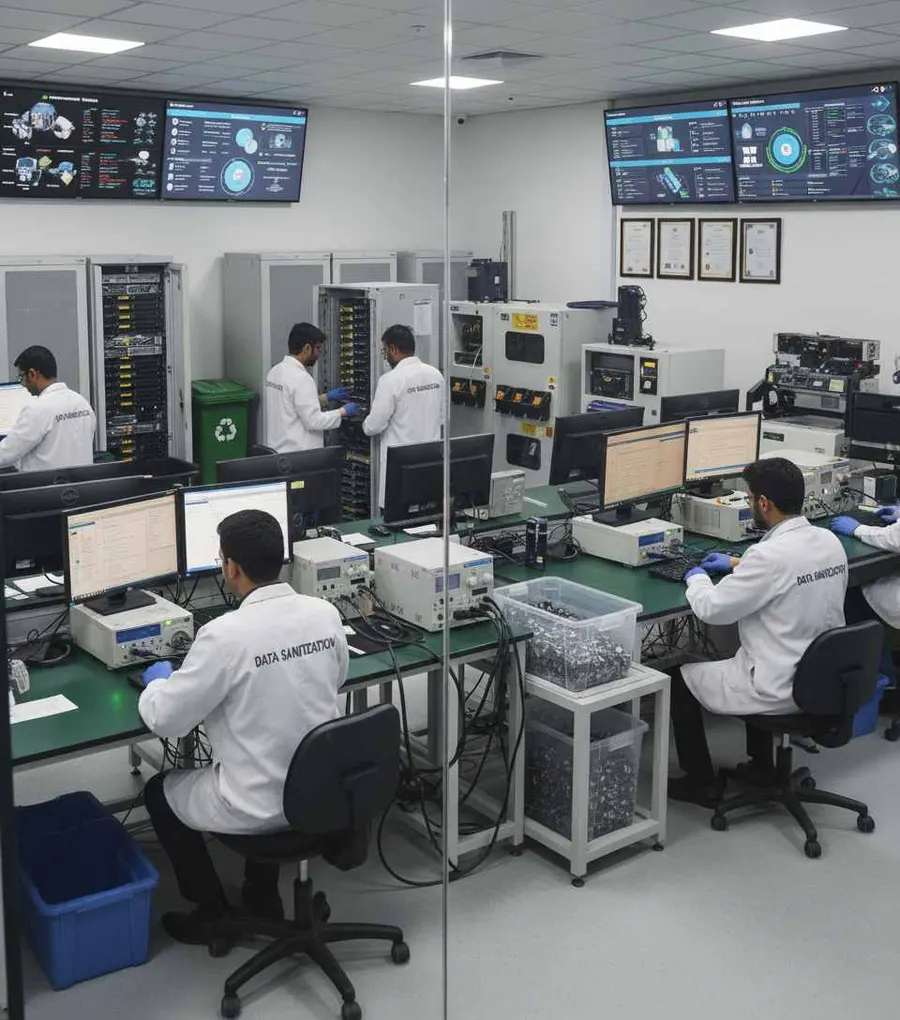
Data Erasure for Manufacturing IT Departments
Manufacturing IT teams can use DSP for recurring asset lifecycle activities such as:
- Laptop replacement
- Desktop refresh
- Engineering workstation replacement
- Server upgrades
- Storage replacement
- Plant modernization
- Warehouse equipment refresh
- Site relocation
- Hardware return
- Resale preparation
- Asset retirement
This helps create a repeatable secure data wiping workflow across supported assets.
Data Sanitization for Manufacturing ITAD and Refurbishment Partners
ITAD companies, refurbishment businesses and resellers handling manufacturing assets may need documented sanitization before equipment is remarketed.
DSP provides a simple workflow:
- Detect
- Erase
- Verify
- Certify
This helps connect the processed storage device with its documented sanitization result.
Manufacturing Data Sanitization Standards
Data sanitization should be based on an appropriate standard or approved organizational process.
NIST SP 800-88 Rev. 2
NIST SP 800-88 Rev. 2 is the current NIST publication for media sanitization. It focuses on establishing an appropriate media-sanitization program and selecting sanitization techniques and controls according to the media and sensitivity of the information.
IEEE 2883
IEEE 2883 provides technology-focused guidance and requirements related to storage sanitization.
Standards should be considered alongside the actual storage technology and organizational security requirements.
A software-generated certificate documents the completed sanitization job. It should not by itself be represented as proof that an organization automatically satisfies every regulatory or compliance obligation.
When Manufacturing Storage Cannot Be Reliably Erased
Software-based data sanitization depends on the storage device being accessible and exposing the functionality required for the selected operation.
Further assessment may be required when a storage device:
- Is not detected
- Has a controller problem
- Has firmware limitations
- Cannot complete the selected operation
- Does not expose the required sanitization functionality
- Uses an unsupported bridge or adapter
- Cannot provide the required verification result
A failed or incomplete process should not be reported as a successful sanitization.
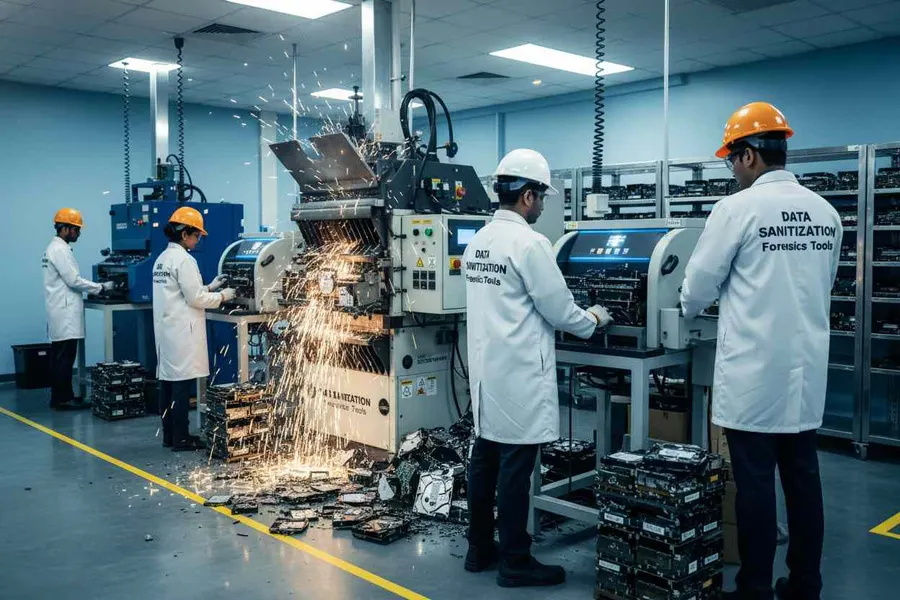
Data Sanitization Pro is software-based logical data destruction software. It does not physically shred, crush or drill storage devices.
Where software erasure cannot reliably achieve the required outcome, the organization should follow its approved alternative media-disposition process.
Storage Health Assessment Before Reuse
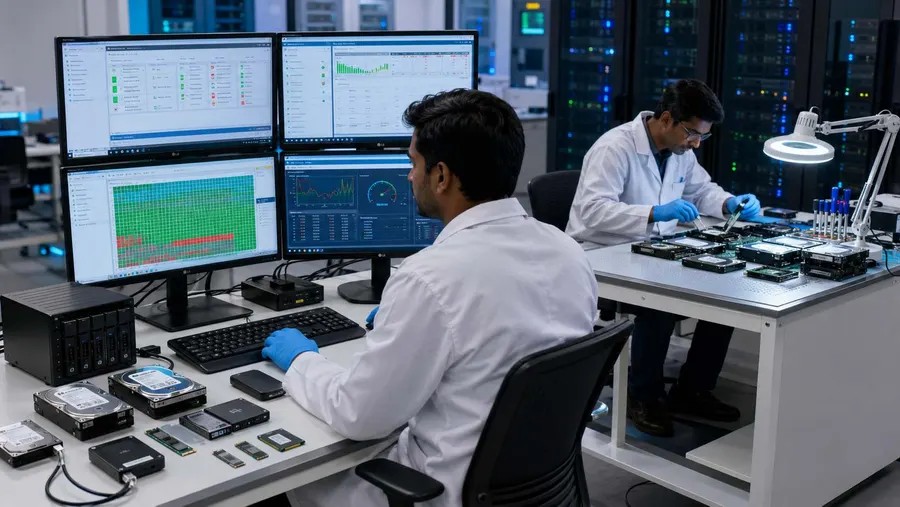
Data sanitization and hardware condition are separate decisions.
A storage device may complete data erasure successfully and still need a technical condition assessment before reuse.
Available device information may help teams review:
- Drive Health
- SMART Information
- Error Conditions
- Storage Status
- Device Information
This separates two important questions:
Sanitization Result: Was the required data erasure completed and verified?
Asset Condition: Is the device suitable for its next lifecycle stage?
Who Uses Manufacturing Data Sanitization Software?
Manufacturing IT Teams
For laptops, desktops, engineering workstations and storage lifecycle management.
Plant IT Teams
For supported storage removed during plant upgrades and infrastructure replacement.
Engineering and R&D Teams
For workstation replacement and secure retirement of supported storage.
Warehouse and Distribution Operations
For computer and storage refresh projects.
ITAD and Refurbishment Companies
For secure wiping, verification and reporting before resale or reuse.
Enterprise Asset Management Teams
For asset-level documentation and lifecycle records.
Why Choose Data Sanitization Pro for Manufacturing?
Secure Data Erasure Software
A controlled logical sanitization workflow for supported storage devices.
25 Erasure Methods
Multiple supported data erasure methodologies for different requirements.
Verification
Record the result of the completed sanitization operation.
Self-Certified Certificates
Generate auditable data erasure certificates and reports.
Up to 8 Drives
Process multiple supported drives simultaneously in suitable configurations.
Offline Operation
Support controlled environments where internet access is restricted.
USB and PXE Boot
Support suitable system-drive and fleet sanitization workflows.
Device-Level Reporting
Connect each processed storage device with its identity, erasure method and verification result.
Lifecycle-Focused Workflow
Secure data before equipment moves to reuse, redeployment, refurbishment, resale or retirement.
Frequently Asked Questions
What is data sanitization for manufacturing companies?
Manufacturing data sanitization is the controlled removal of stored information from supported storage devices before equipment is reused, redeployed, refurbished, resold, returned or retired.
What is manufacturing data erasure software?
Manufacturing data erasure software is used to securely erase data from supported storage devices and document the sanitization result.
Is formatting enough before selling a manufacturing laptop?
Formatting should not automatically be treated as complete media sanitization. A professional data erasure workflow provides a more controlled process for securely processing supported storage.
Can Data Sanitization Pro erase manufacturing HDDs and SSDs?
Yes. DSP supports supported HDD, SSD and NVMe data sanitization workflows using appropriate available methods.
Can multiple drives be erased simultaneously?
Yes. DSP supports up to 8 supported drives simultaneously in suitable configurations.
Can DSP work offline?
Yes. DSP supports offline data sanitization workflows for controlled environments.
Does DSP generate data erasure certificates?
Yes. DSP can generate self-certified, auditable data erasure certificates and reports based on the completed sanitization workflow.
Can DSP erase a Windows system drive?
A running Windows operating system normally cannot erase the physical drive it is currently using. For suitable deployments, DSP supports USB and PXE boot workflows for system-drive sanitization.
Is Data Sanitization Pro a hard drive shredder?
No. DSP is software-based. It performs logical data erasure and does not physically shred, crush or drill storage devices.
Can manufacturers use DSP before IT asset resale?
Yes. Supported storage can be sanitized and verified before equipment moves to resale, refurbishment, reuse or another approved lifecycle stage.
Related Solutions
Enterprise IT
One workflow for laptops, desktops, servers and storage
Read MoreAutomotive
Dealerships, workshops, suppliers and fleet operators
Read MoreFMCG
Offices, warehouses and distribution centres
Read MoreConsulting Firms
Secure client and project data before assets move on
Read MoreITES & BPO
Erase devices before they are reused or replaced
Read MoreSecure Manufacturing Data Before the Next Lifecycle Stage
Before computers and storage devices are reused, redeployed, refurbished, resold, returned or retired, use a controlled and verifiable data erasure process.