
Certified eMMC Data Sanitization Software
Data Sanitization Pro (DSP) is professional eMMC data erasure software designed to securely remove stored information from supported eMMC and embedded flash storage through a controlled software-based sanitization workflow.
Unlike removable storage such as USB drives and memory cards, eMMC is embedded storage that can be integrated directly into the host device. This makes device identification, storage access, supported capabilities and the correct erasure method especially important.
DSP brings together eMMC data erasure, embedded flash sanitization, logical data destruction, verification, reporting and data erasure certificates in one controlled workflow.
The solution is designed for supported eMMC storage, embedded flash, embedded memory and embedded storage configurations used in electronics, computing devices, industrial systems, mobile equipment and other products.
Start Your 30-Day Free Trial
Test Data Sanitization Pro on your supported embedded-storage environment before you buy.

eMMC Data Erasure Software for Secure Reuse
Embedded storage can contain operating-system data, application data, user files, configuration information, credentials, logs, media and other sensitive information.
Deleting visible files does not necessarily provide a complete media-sanitization workflow.
For supported eMMC devices, a professional eMMC data erasure software workflow should begin with identifying the storage device and determining how the embedded media is exposed to the sanitization environment.
The workflow can then follow:
- Identify
- Assess
- Select
- Erase
- Verify
- Certify
This can support storage preparation before:
- Reuse
- Redeployment
- Refurbishment
- Resale
- Equipment return
- Product servicing
- Asset retirement
- ITAD processing
DSP performs software-based logical data erasure. It does not physically shred, crush, drill or destroy the host device or embedded storage.
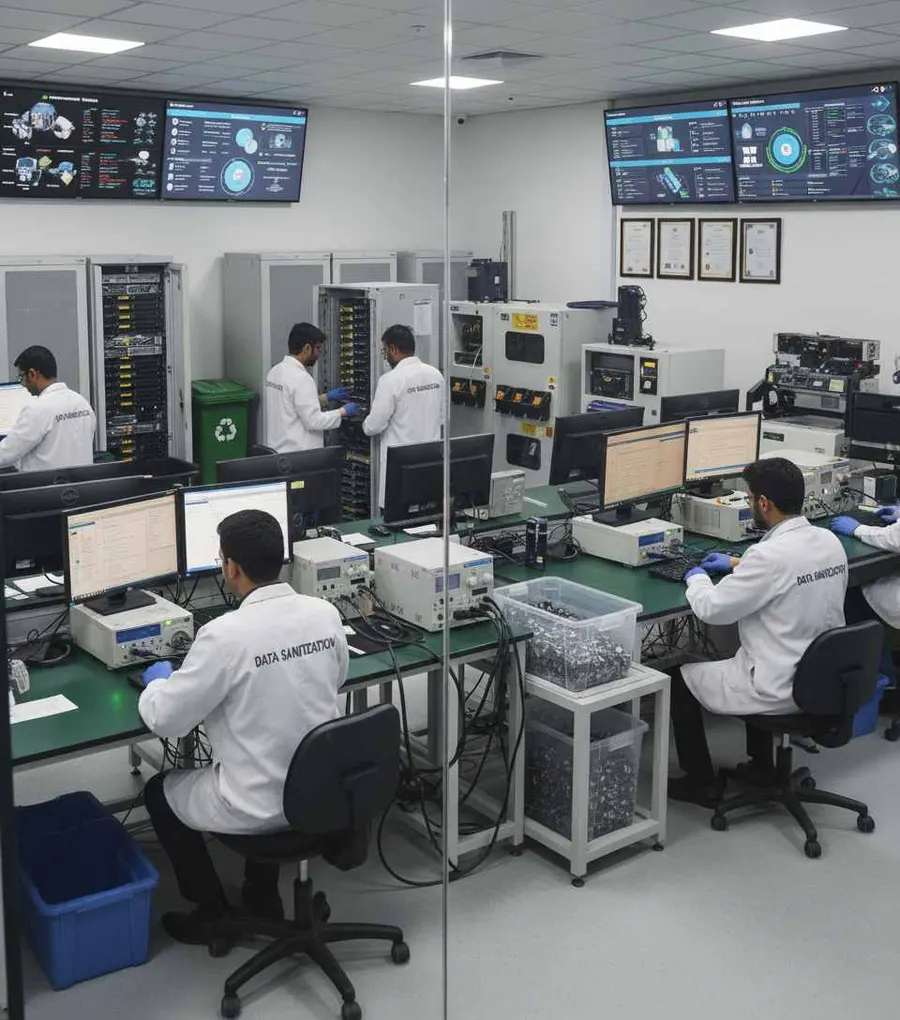
What Is eMMC Data Sanitization?
eMMC data sanitization is the controlled process of removing stored information from supported embedded MultiMediaCard storage using an appropriate erasure technique.
Unlike a removable SD card, eMMC is normally integrated into the host hardware.
The actual storage may include:
eMMC Controller + NAND Flash + Device-Managed Storage
This means that the sanitization workflow should consider the capabilities exposed by the eMMC device and the way it is connected to the host system.
A professional eMMC sanitization software workflow should therefore focus on:
- Device Identification
- Capability Assessment
- Method Selection
- Data Erasure
- Verification
- Documentation
NIST's current media-sanitization guidance is SP 800-88 Rev. 2, finalized September 26, 2025. It emphasizes choosing appropriate sanitization techniques and controls based on the media and sensitivity of the information.
Data Sanitization Pro for eMMC Erasure
Data Sanitization Pro is designed for organizations looking for more than a basic eMMC wipe tool.
eMMC Data Erasure
Process supported eMMC storage through the applicable logical data-erasure workflow.
Embedded Flash Sanitization
Apply a supported sanitization process to embedded flash environments according to the available device capabilities.
25 Data Erasure Methods
DSP supports 25 data erasure methods for different storage technologies and organizational requirements.
Secure eMMC Erasure
Use the applicable supported device or software-based erasure operation rather than assuming that a generic overwrite is suitable for every embedded device.
Verification
Record the applicable result after the erasure operation.
Self-Certified Reporting
Generate self-certified, auditable eMMC data erasure reports and certificates.
Device Identification
Available information may include:
- Manufacturer
- Model
- Capacity
- Device Identifier
- Storage Status
Offline Operation
Use supported offline workflows in controlled environments.
Multi-Drive Processing
DSP supports processing up to 8 selected drives simultaneously in supported configurations. Where an embedded storage device is presented to the system as an independently accessible storage target, processing depends on the host and interface configuration.
How eMMC Data Erasure Works
- 01
Identify the Embedded Storage
Determine how the eMMC device is exposed to the sanitization environment.
- 02
Read Available Device Information
Depending on the host and device, available information can include:
- Manufacturer
- Model
- Capacity
- Device Identifier
- Storage Status
- 03
Assess the Configuration
Review the eMMC device, host interface, firmware, controller path and available storage operations.
- 04
Select the Erasure Method
Choose the appropriate eMMC data erasure method according to the device and organizational requirement.
- 05
Erase the Data
DSP performs the configured logical data-erasure operation where supported.
- 06
Verify the Result
The applicable verification process records the outcome of the operation.
- 07
Generate Documentation
DSP can generate the corresponding report or eMMC data erasure certificate.
The process becomes:
- Identify
- Assess
- Erase
- Verify
- Certify
Why eMMC Erasure Is Different From Removable Flash Storage
A USB flash drive or SD card can normally be removed and inserted into a compatible reader.
eMMC is different because it is typically integrated into the host system.
That can introduce additional considerations such as:
- Host-controller access
- Boot configuration
- Firmware
- Embedded storage visibility
- Device partitions
- Reserved storage areas
- Security settings
- Vendor-specific behavior
For this reason, embedded flash erasure software should not assume that every eMMC device behaves like a standard removable drive.
The actual sanitization workflow depends on how the physical storage is exposed and which operations are available.
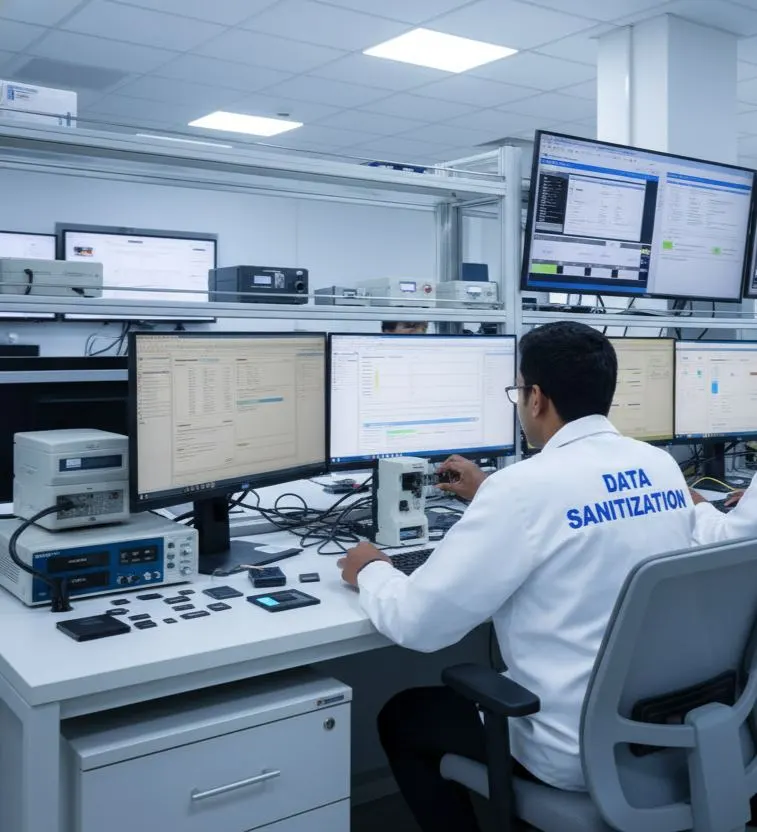
eMMC Secure Erase and Sanitization
eMMC devices can expose storage-management and erase functionality through device commands and controller capabilities.
Linux's mmc-utils, for example, exposes eMMC operations including Erase, secure-erase, secure-trim and Sanitize commands, with the exact behavior depending on the device.
This is important because eMMC secure erase is not necessarily the same as ordinary file deletion.
A professional workflow should consider:
- Device Capability
- Applicable Operation
- Completion
- Verification
Where a required device-level operation is not available or cannot be completed reliably, the result should not be represented as a successful sanitization.
eMMC Secure Erase vs Overwriting
A generic overwrite is not automatically the correct solution for every embedded storage device.
The eMMC controller manages the underlying NAND flash, which means the storage behavior is different from writing directly to raw memory cells.
Where supported, device-level erase or sanitize functionality may provide a more appropriate approach than treating eMMC as a simple block-storage target.
For this reason, eMMC secure erase software should identify the actual storage capabilities before processing.
eMMC Versions and Device Generations
Organizations may encounter eMMC devices from different generations, including:
- eMMC 4.5
- eMMC 5.0
- eMMC 5.1
These terms are useful when identifying existing embedded-storage inventories.
The available sanitization operation depends on the actual device, implementation, firmware, host interface and supported commands—not simply the version number.
For this reason, DSP should process the device according to its available capabilities.
Embedded Flash Data Erasure
The term embedded flash covers storage that is integrated into a host product rather than presented as a removable storage card.
Embedded flash can be found in:
- Embedded computing devices
- Mobile equipment
- Industrial products
- Consumer electronics
- Portable systems
- Specialized hardware
A professional embedded flash data erasure software workflow should account for how the flash storage is presented to the host system.
Where the embedded storage is accessible as a supported target, DSP can be used to apply the applicable logical data-erasure workflow.
Embedded Storage Data Sanitization
Embedded storage is not always exposed as a standard removable disk.
Depending on the hardware, it may include:
- Embedded Controller
- Flash Memory
- Boot Areas
- User Storage
- Device-Managed Regions
This makes device discovery and capability assessment important before erasure.
Data Sanitization Pro is designed to work with supported embedded storage configurations where the storage device is correctly exposed to the sanitization environment.
eMMC Storage Erasure for Embedded Devices
eMMC can be used as primary storage in products where space, integration and power efficiency matter.
During product or equipment retirement organizations may need to address the embedded storage before the hardware moves to another lifecycle stage.
A professional workflow can include:
- Asset Identification
- eMMC Identification
- Data Erasure
- Verification
- Certificate
This makes the process easier to document at the device level.
eMMC Data Erasure for Mobile and Embedded Equipment
Embedded storage may be found in devices such as:
- Mobile equipment
- Industrial controllers
- Embedded computers
- Point-of-sale systems
- Portable electronics
- Field devices
- Specialized appliances
The exact hardware architecture varies between products.
If the eMMC is exposed through a supported storage path, the applicable DSP workflow can be used.
Where the storage is not independently accessible, additional hardware-specific assessment may be required.

Enterprise eMMC and Embedded Flash Erasure
Embedded flash is not limited to consumer electronics.
Enterprise and commercial equipment can also use embedded storage for:
- System software
- Configuration data
- Local application storage
- Logs
- Device credentials
- Operational records
A structured enterprise eMMC erasure process can help organizations incorporate embedded storage into broader media-sanitization policies.
The same process can support:
- Identification
- Erasure
- Verification
- Reporting
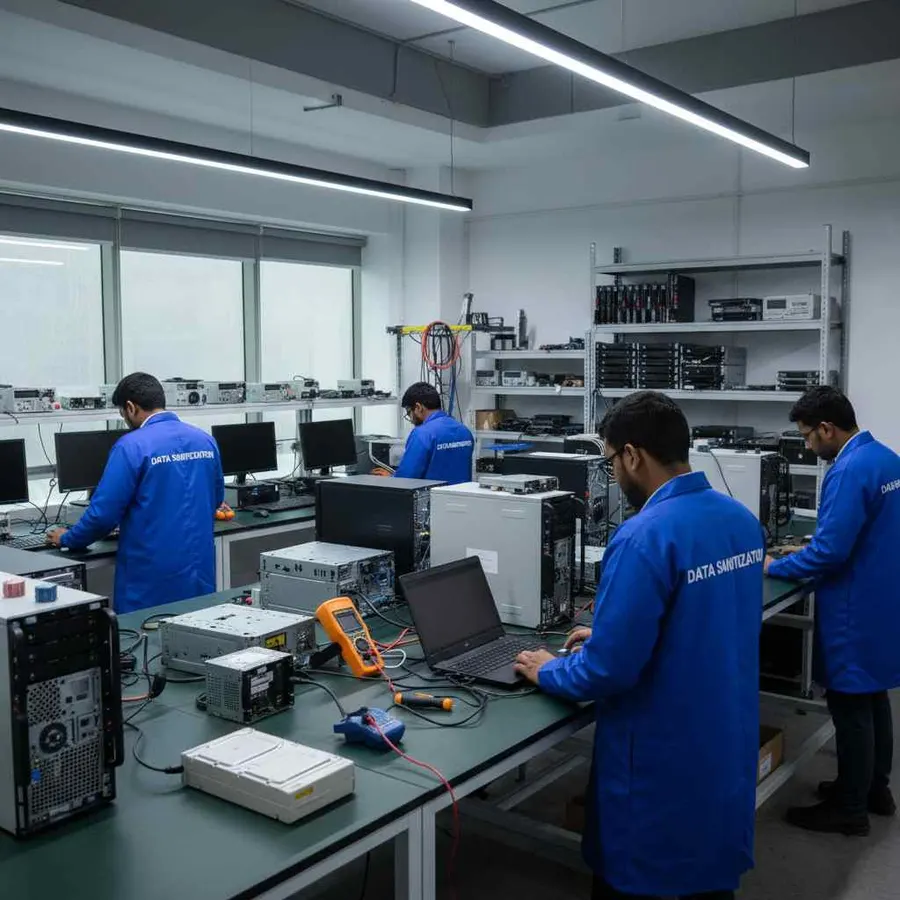
eMMC Data Erasure for ITAD and Asset Lifecycle
Embedded storage can be overlooked during IT asset disposition because it is not always physically removable.
An ITAD workflow may include devices containing:
- eMMC
- Embedded flash
- Embedded storage
- Integrated NAND-based storage
Data Sanitization Pro can support a structured ITAD eMMC erasure workflow where the embedded storage is correctly exposed and accessible.
A completed workflow can support:
- Asset Intake
- Storage Identification
- Data Erasure
- Verification
- Certificate
- Lifecycle Decision
eMMC Erasure for Reuse and Resale
Embedded storage can contain important information even when the host device is being prepared for another user.
Reuse
Remove previous information before redeploying supported embedded devices.
Refurbishment
Sanitize supported embedded storage before preparing equipment for another deployment.
Resale
Complete and document the erasure process before changing ownership.
Retirement
Process the supported storage according to the organization's approved sanitization policy and retain the resulting evidence.
The lifecycle becomes:
- Erase
- Verify
- Certify
- Reuse / Resell
eMMC Data Erasure Verification
A professional eMMC erasure process should establish what happened after the operation was started.
Data Sanitization Pro can maintain available information such as:
- Manufacturer
- Model
- Capacity
- Device identifier
- Storage status
- Selected erasure method
- Processing status
- Verification result
- Start time
- Completion time
- Operator information
- Asset reference
This creates a device-level record where the available identifiers support traceability.

eMMC Data Erasure Certificates
DSP can generate self-certified, auditable eMMC data erasure reports and certificates for completed supported operations.
The documentation can connect:
- Asset
- eMMC Device
- Erasure Method
- Verification
- Final Result
Depending on the reporting workflow, the record may contain:
- Manufacturer
- Model
- Capacity
- Device identifier where available
- Selected method
- Processing details
- Verification status
- Timestamps
- Operator information
- Asset reference
- Report or certificate identification
This can support internal asset records, ITAD processing, refurbishment, resale documentation and audit preparation.
Process Multiple Supported Embedded Storage Devices
Data Sanitization Pro supports up to 8 selected drives simultaneously in supported configurations.
For embedded-storage projects, actual scalability depends on how each device exposes its storage to the processing environment.
Performance can be affected by:
- Host Controllers
- Storage Interfaces
- USB Adapters
- Shared Bandwidth
- Device Performance
- System Resources
A larger batch does not automatically mean identical processing speeds across every device.

Offline eMMC Data Erasure
Some organizations need to process embedded storage in controlled environments.
DSP supports offline data erasure workflows for appropriate deployments.
This can be useful for:
- Restricted networks
- Controlled processing rooms
- Secure asset-processing areas
- ITAD environments
- Embedded-device refurbishment
The exact deployment depends on the host architecture and supported storage access method.
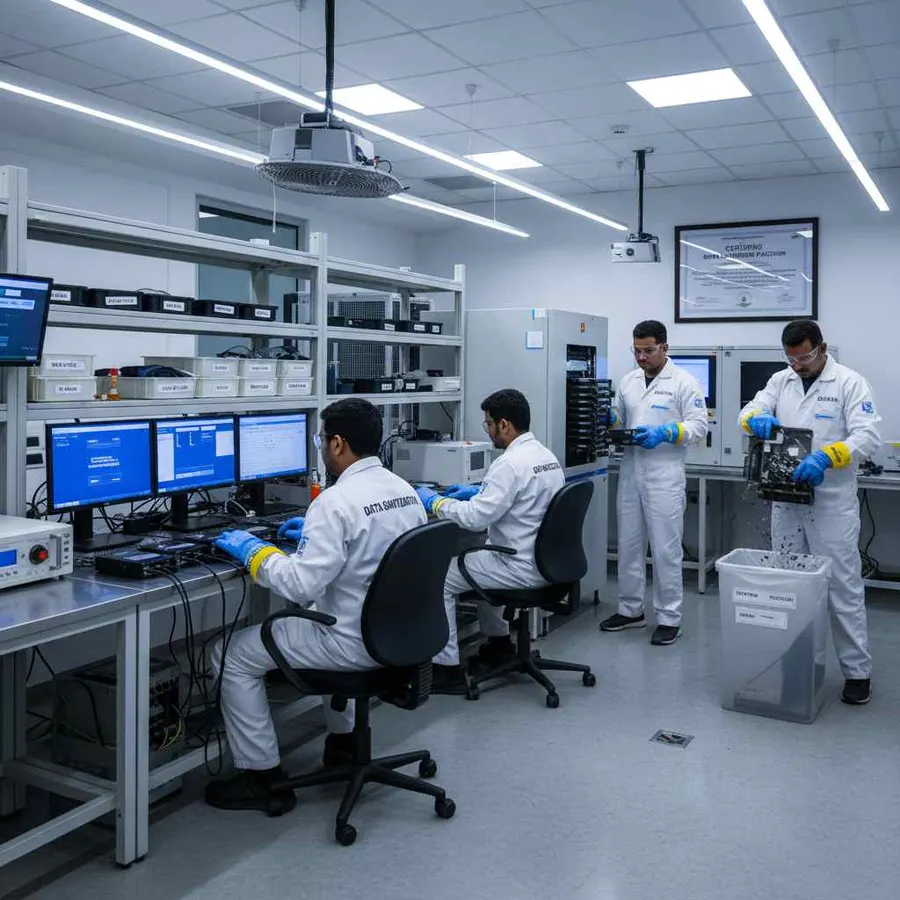
USB and Boot-Based Embedded Storage Processing
Some embedded devices may require a specific boot or host environment before their storage becomes accessible.
For supported configurations, DSP can use boot-based workflows such as:
USB Boot
and
PXE Deployment
The standard PXE configuration supports up to 64 computers by default, with the configured capacity adjustable for larger deployments.
Whether a particular eMMC device can be processed through these environments depends on the device architecture and storage exposure.
When eMMC Requires Additional Assessment
Embedded storage can introduce limitations that are not common with standard removable drives.
Additional assessment may be required when:
- The eMMC is not detected
- The storage is soldered and inaccessible
- The host controller does not expose the device
- Firmware limits available operations
- Security settings restrict access
- The required erase operation is unavailable
- Verification cannot be completed
- The device has hardware failure
A failed or incomplete operation should not be recorded as a successful sanitization result.
Data Sanitization Pro is a software-based logical data erasure solution. Physical destruction of embedded storage or the host device is outside the scope of the software.

eMMC Sanitization Methods
Data Sanitization Pro supports 25 data erasure methods.
Depending on the configured workflow and device capabilities organizations may work with recognized sanitization approaches and methods such as:
- NIST-based sanitization workflows
- IEEE 2883-based methods
- Secure erase operations
- Device-level sanitize operations
- Organization-defined policies
NIST SP 800-88 Rev. 2 is the current NIST media-sanitization publication and emphasizes selecting techniques appropriate to the storage media and sensitivity of the information.
The correct method should be selected based on the actual eMMC or embedded-storage device and its supported capabilities.
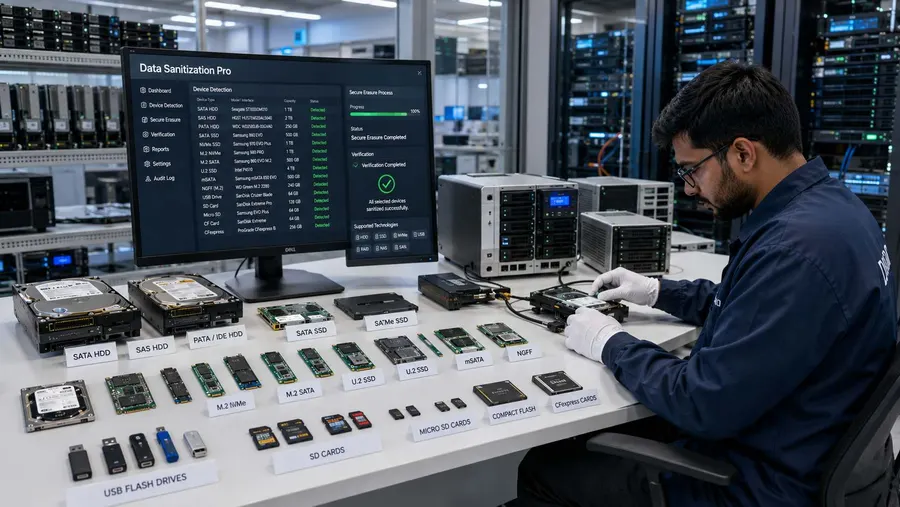
Why Choose Data Sanitization Pro?
eMMC-Focused Workflow
Designed around supported eMMC and embedded-storage configurations.
25 Data Erasure Methods
Multiple methods for different storage and organizational requirements.
Logical Data Erasure
Remove stored information without physically destroying the device.
Verification
Record the applicable result of the completed process.
Self-Certified Certificates
Generate auditable data-erasure reports and certificates.
Device-Level Traceability
Associate available storage information with the processing record.
Offline Processing
Support controlled environments with restricted connectivity.
USB and PXE
Support boot-based deployment where the hardware configuration permits it.
Enterprise and ITAD
Support embedded-storage processing within broader asset lifecycle workflows.
30-Day Free Trial — Test Your eMMC Workflow
You can evaluate Data Sanitization Pro before purchasing.
Test Supported Embedded Storage
Evaluate:
- eMMC Detection
- Embedded Flash Processing
- Erasure Methods
- Verification
- Reports & Certificates
- Offline Workflow
- USB / PXE Deployment
Test Before You Buy
Use the trial to evaluate the software with your supported hardware and actual storage-access workflow.
Start Your Free Trial
- 30 Days
- Test Before You Buy
Start Free Trial
Frequently Asked Questions
What is eMMC data erasure software?
eMMC data erasure software is designed to remove stored information from supported eMMC storage through a controlled logical erasure workflow. The process can include device identification, capability assessment, erasure, verification and reporting.
What is embedded flash sanitization?
Embedded flash sanitization is the controlled process of removing stored information from supported flash storage integrated into a host device. The available approach depends on how the storage is exposed and which device operations are supported.
Can Data Sanitization Pro erase eMMC?
Data Sanitization Pro is designed for supported eMMC and embedded-storage configurations. Actual processing depends on the device, firmware, host controller, connection path and storage capabilities.
Is eMMC the same as an SD card?
No. An SD card is removable storage, while eMMC is typically integrated into the host device and includes embedded storage-management functionality.
Can eMMC be securely erased?
Supported eMMC devices may expose device-level erase or sanitize capabilities. The applicable operation depends on the individual device and its supported commands.
Does DSP generate an eMMC data erasure certificate?
Yes. DSP can generate self-certified, auditable data erasure reports and certificates for completed supported operations.
Can embedded flash be erased for reuse?
Supported embedded flash can be processed when the physical storage is accessible to the sanitization environment and the required operation can be completed and verified.
Can multiple eMMC devices be processed at the same time?
DSP supports up to 8 selected drives simultaneously in supported configurations. For embedded storage, the actual number that can be processed depends on how each device is exposed to the host environment.
Is there a free trial?
Yes. Data Sanitization Pro offers a 30-day free trial so you can test the software with supported hardware before purchasing.
Secure Your eMMC and Embedded Flash Before Reuse, Resale or Retirement
Embedded storage may be hidden inside the device, but the information stored on it still needs to be addressed before the device changes users, ownership or lifecycle stage.