
Professional External Hard Drive Data Sanitization Software
Data Sanitization Pro (DSP) is professional external hard drive data erasure software designed to securely remove stored information from supported external HDDs through a controlled, software-based sanitization process.
It is built for businesses, IT teams, data centres, ITAD companies, refurbishers, recyclers, resellers and organizations that need to erase data before an external hard drive is reused, redeployed, refurbished, resold, returned or retired.
DSP brings togetherexternal hard drive wiping, device identification, verification, reporting and data erasure certificates in one workflow.
It can be used with supported USB external hard drives, portable HDDs, external drive enclosures and other supported external storage configurations.
Start Your 30-Day Free Trial
Test Data Sanitization Pro on your own supported external drives before you buy.
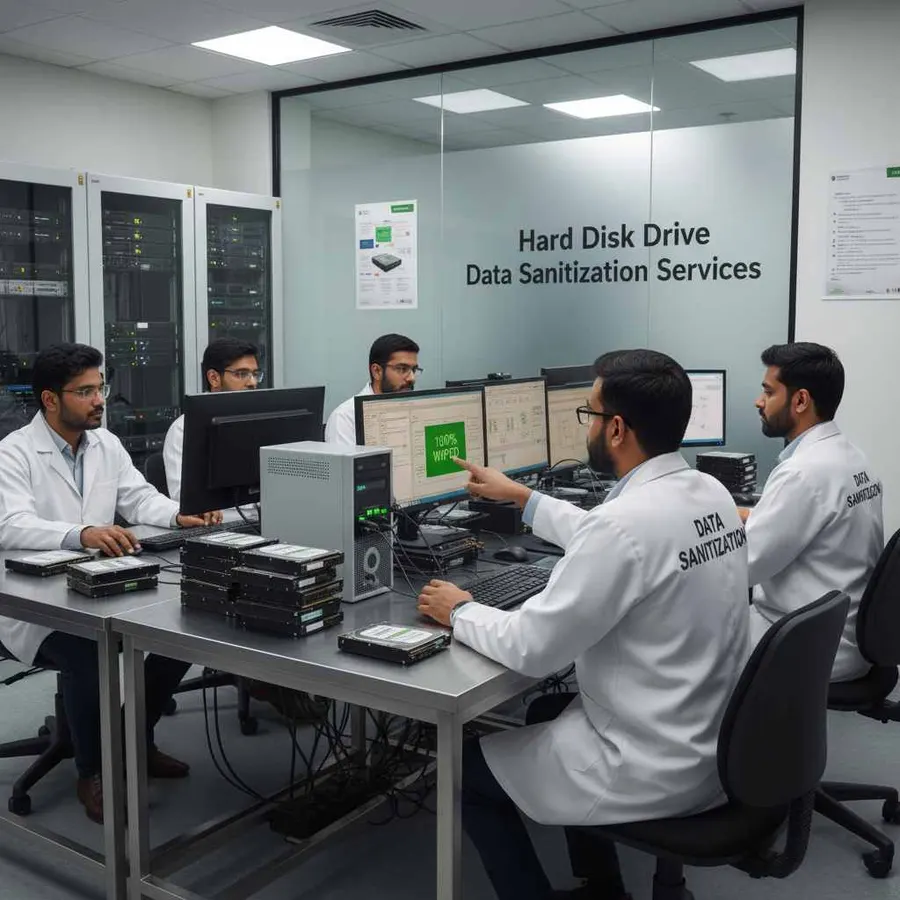
External Hard Drive Data Erasure Software for Secure Reuse
An external hard drive can contain business documents, customer information, backups, project files, personal records, photographs, financial information and other sensitive data.
Deleting those files does not provide the same result as processing the physical storage device through a dedicated external hard drive erasure software workflow.
Formatting the drive or creating a new partition changes the logical structure of the device, but organizations still need a controlled method for data erasure, verification and documentation.
Data Sanitization Pro follows a simple process:
- Identify
- Select
- Erase
- Verify
- Certify
This makes the software suitable for external HDD processing before:
- Reuse
- Resale
- Refurbishment
- Equipment return
- Employee-device replacement
- IT asset retirement
- ITAD processing
- Storage upgrades
The physical external hard drive remains intact. DSP performs software-based logical data erasure, not physical destruction.
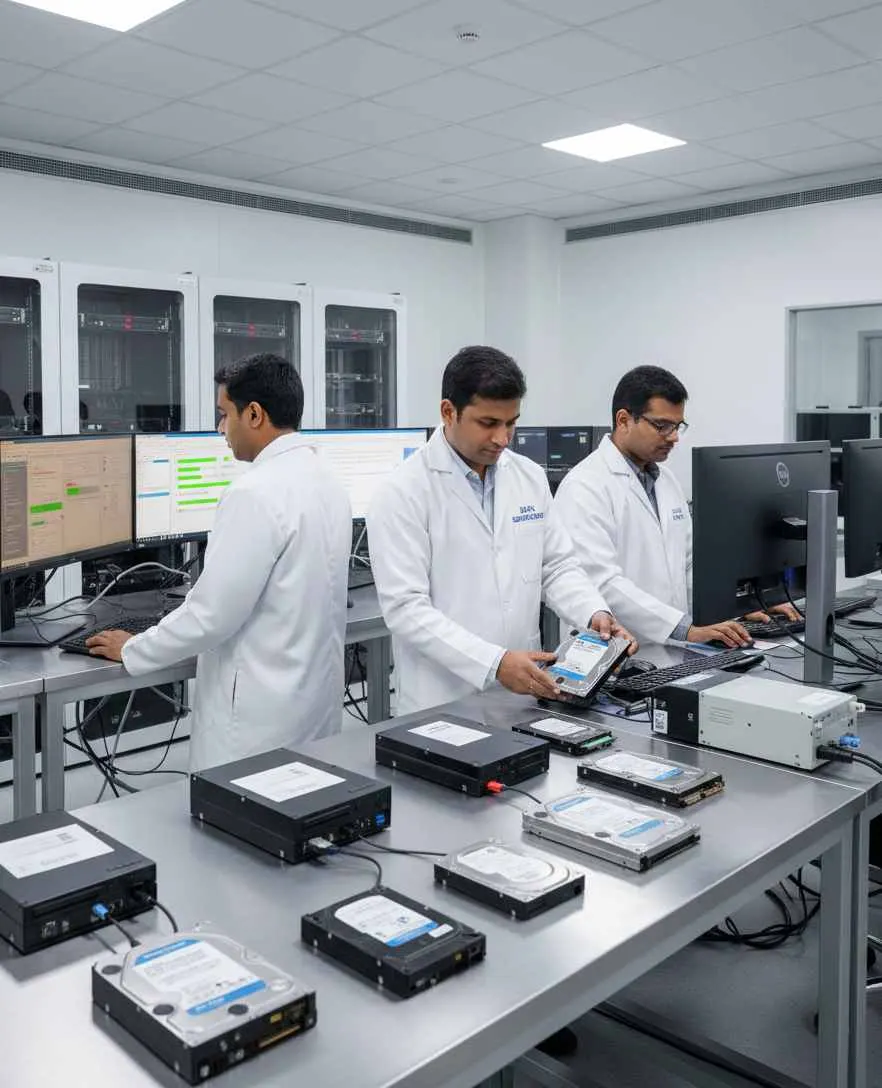
What Is External Hard Drive Data Sanitization?
External hard drive data sanitization is the controlled process of removing stored information from an external storage device using an appropriate technique for the media and the required security outcome.
An external hard drive is usually a physical HDD connected through an enclosure or another supported external interface.
The storage device may appear in the operating system as a removable drive, but the important asset is the underlying physical media.
A professional external HDD sanitization workflow should therefore:
- Detect the physical device
- Identify the asset
- Select the method
- Erase the data
- Verify the result
- Generate evidence
The current NIST media-sanitization guidance is SP 800-88 Rev. 2, finalized in September 2025. NIST describes sanitization as a process that makes access to target data infeasible for a given level of effort and emphasizes selecting appropriate techniques and controls according to the media and information involved.
External Hard Drive Erasure With Data Sanitization Pro
Data Sanitization Pro provides more than a basic external hard drive wipe tool.
External HDD Data Erasure
Process supported external HDDs using the selected logical data-erasure workflow.
25 Data Erasure Methods
DSP supports 25 data erasure methods for different storage technologies and organizational requirements.
Secure External Drive Wiping
Use a controlled workflow instead of relying only on file deletion or quick formatting.
Verification
Check the applicable result after the erasure process.
Self-Certified Data Erasure Certificates
Generate self-certified, auditable reports and certificates for completed erasure jobs.
Device Identification
Available drive information can include:
- Manufacturer
- Model
- Serial Number
- Capacity
- Firmware
- Interface
HDD Health Information
Available SMART, error, bad-sector and health information can help with asset assessment before reuse.
Multi-Drive Processing
Process up to 8 selected drives simultaneously in supported configurations.
Offline Operation
Use supported offline workflows inside controlled environments.
USB and PXE Boot
Support boot-based workflows for systems where the target drive cannot be processed from the active operating system.
How External Hard Drive Erasure Works
- 01
Connect the External Drive
Connect the physical external hard drive through a supported connection path.
- 02
Detect the Drive
DSP identifies the storage device exposed to the sanitization environment.
- 03
Verify the Asset
Available information can include:
- Manufacturer
- Model
- Serial Number
- Capacity
- Firmware
- Interface
Confirming the physical drive before processing is an important operational step.
- 04
Select the Erasure Method
Choose the applicable method based on the storage device organizational policy and intended lifecycle outcome.
- 05
Erase the Data
DSP performs the configured software-based logical data erasure process.
- 06
Verify the Result
The completed operation is checked through the applicable verification workflow.
- 07
Generate the Record
DSP can generate the corresponding external hard drive erasure certificate or report.
This creates a traceable process from physical device identification to final documentation.
USB External Hard Drive Erasure Software
Many portable external hard drives connect through USB.
A supported USB external HDD may be connected through:
- USB-A
- USB-C
- External drive enclosure
- USB storage adapter
- Portable HDD enclosure
For device-level sanitization, the physical drive must be correctly exposed to the operating environment.
Data Sanitization Pro can support a USB external hard drive erasure workflow where the underlying storage device is properly detected and accessible.
The enclosure itself can affect how the internal drive is presented to the system, so device identification should be checked before starting the operation.
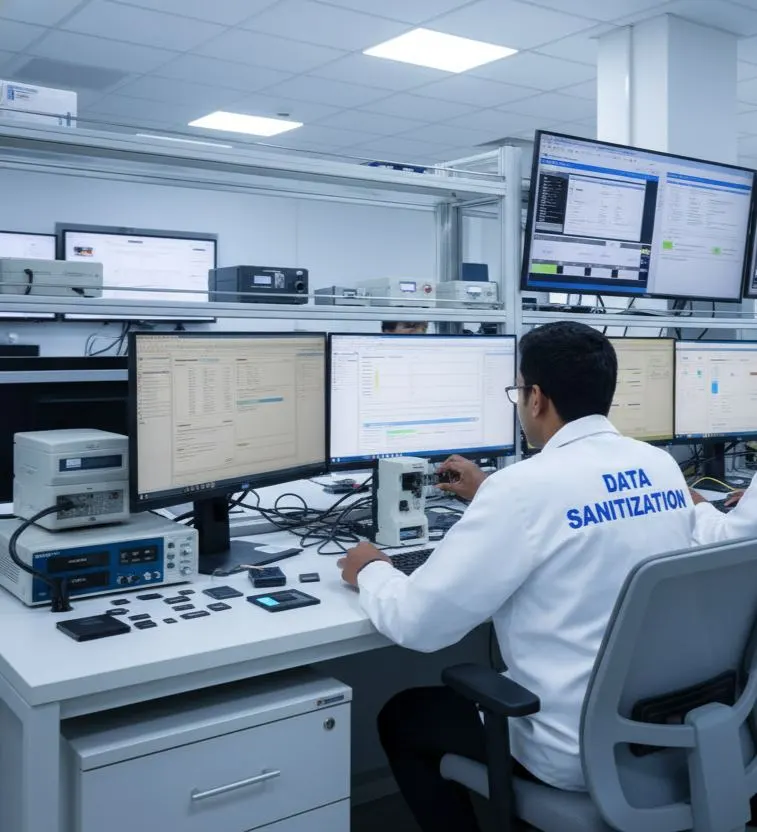
Portable Hard Drive Data Erasure
Portable hard drives are commonly used to move or store data outside a fixed workstation.
They can contain:
- Business backups
- Project files
- Media libraries
- Customer records
- Personal documents
- Archived information
A portable HDD can therefore carry sensitive information outside the organization's primary infrastructure.
Professional portable hard drive erasure software provides a controlled way to process the physical storage before it is handed to another person, reused, sold, refurbished or retired.
External HDD vs Internal HDD
An external HDD and an internal HDD can contain the same underlying magnetic storage technology.
The main difference is how the drive is presented to the computer.
An internal HDD may connect directly through SATA or SAS, while an external HDD may be presented through an enclosure or USB storage path.
The sanitization objective remains the same:
- Identify the physical drive
- erase the stored information
- verify
- document
The connection path should be considered because an enclosure or adapter may affect device visibility and available operations.
For this reason, external hard drive wiping should always begin with confirmation that the intended physical device is actually being processed.
External Hard Drive Types
The external-storage environment can include different physical configurations.
Portable External HDD
Compact drives commonly used with laptops and desktops.
Desktop External HDD
Larger external enclosures often used for backup and high-capacity storage.
USB External HDD
Hard drives presented to the operating system through supported USB connections.
External Drive Enclosures
An internal hard disk can be installed inside a third-party external enclosure.
External Storage From Retired Systems
Business or enterprise HDDs may enter an external enclosure for temporary access during migration, backup, refurbishment or asset processing.
DSP processes the physical device that is correctly exposed to the sanitization environment.
External Hard Drive Brands
External hard drives may contain products from a range of HDD manufacturers.
Common storage brands and manufacturer families include:
- Seagate
- Western Digital (WD)
- Toshiba
- HGST
- Hitachi
- Fujitsu
- Samsung
- IBM
- Maxtor
A branded external drive may use different internal drive models across product generations.
For that reason, compatibility depends on the actual physical drive, enclosure, controller, firmware, interface and system configuration, rather than the external enclosure brand alone.
Brand references are included for storage identification and search relevance and do not imply manufacturer partnership or endorsement.
External HDD Erasure Methods
Organizations may have different requirements for external hard drive wiping, external HDD erasure and data sanitization.
Data Sanitization Pro supports 25 data erasure methods.
Depending on the configured workflow, supported methodologies can include:
- NIST-based sanitization workflows
- IEEE 2883-based methods
- DoD 5220.22-M
- HMG IS5
- Secure Erase
- Enhanced Secure Erase
- Organization-defined policies
NIST SP 800-88 Rev. 2 is the current NIST media-sanitization publication. NIST's current guidance places emphasis on using methods appropriate to the storage media, information sensitivity and organizational sanitization program.
The correct method should be selected based on the actual storage device and organizational requirements.
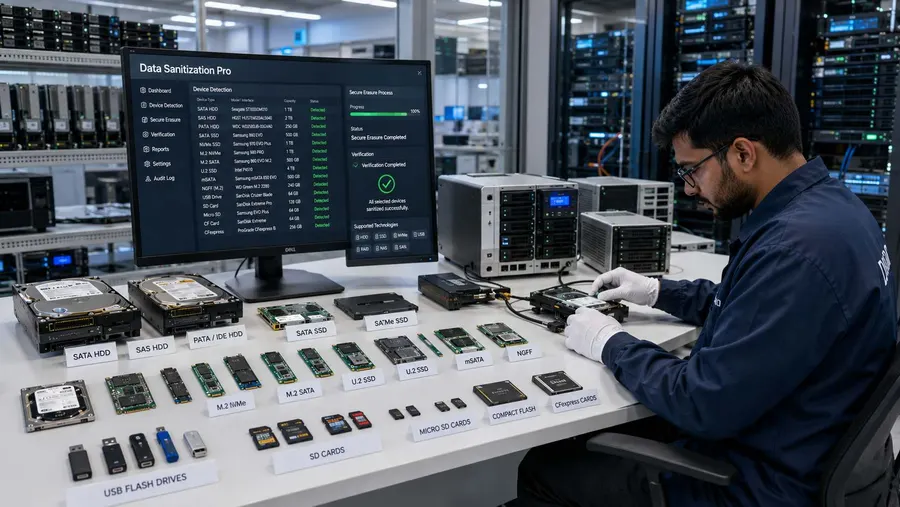
Secure External Hard Drive Erasure
A professional secure external hard drive erasure workflow is more than deleting folders from the drive.
A proper workflow should provide:
Device Identification
Know which physical drive is being erased.
Method Selection
Use the appropriate supported data-erasure process.
Controlled Processing
Perform the configured logical data-erasure operation.
Verification
Record the result after processing.
Documentation
Maintain the information needed to associate the result with the physical asset.
This is especially important when an external hard drive is leaving organizational control.
External Hard Drive Verification
Verification helps distinguish an attempted erase from a completed and documented result.
Data Sanitization Pro can record information associated with the individual drive, including:
- Manufacturer
- Model
- Serial number
- Capacity
- Firmware
- Interface
- Selected method
- Processing status
- Verification result
- Start time
- Completion time
- Operator information
- Asset reference
This creates an auditable record for the individual external hard drive.

External Hard Drive Erasure Certificates
DSP can generate self-certified external hard drive erasure certificates and reports.
The documentation can connect:
- Asset
- Physical Drive
- Erasure Method
- Verification
- Result
Depending on the reporting workflow, a certificate can contain:
- Drive manufacturer
- Model
- Serial number
- Capacity
- Interface
- Firmware
- Selected erasure method
- Processing details
- Verification result
- Processing timestamps
- Operator information
- Asset reference
- Certificate or report identification
This can support:
- Asset-management records
- ITAD documentation
- Refurbishment
- Resale
- Internal audit
- Customer documentation
- Equipment retirement
Data Sanitization Pro also publishes sample reports and certificates so organizations can review the type of evidence generated by the software.
Process Multiple External Hard Drives
External hard drive erasure becomes more useful when several devices need to be processed.
Data Sanitization Pro supports up to 8 selected drives simultaneously in supported configurations.
This can help with:
- External backup-drive retirement
- Office equipment refresh
- ITAD processing
- Refurbishment
- Resale preparation
- Hardware-return programs
Actual processing speed depends on the complete connection path, including:
- USB Controllers
- SATA/SAS Adapters
- Enclosure Hardware
- Bus Bandwidth
- Drive Performance
- System Resources
A shared controller or USB path can affect the speed of individual drives.
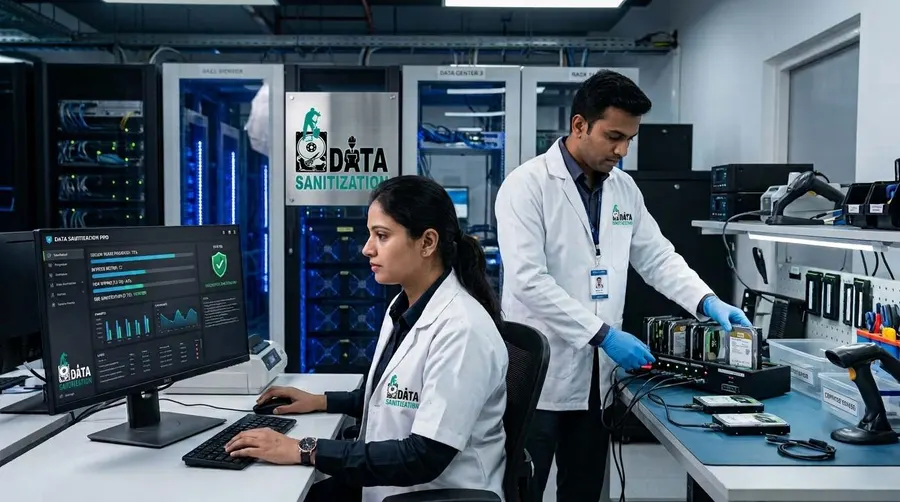
External Hard Drive Erasure for ITAD
External HDDs can enter ITAD workflows from offices, branches, data centres, employees or customers.
A professional ITAD external hard drive erasure process can include:
- Asset Identification
- Data Erasure
- Verification
- Certificate
- Lifecycle Decision
After successful processing, the asset can be prepared for:
- Reuse
- Refurbishment
- Resale
- Retirement
The certificate provides a device-level record rather than only a general statement that a batch was processed.
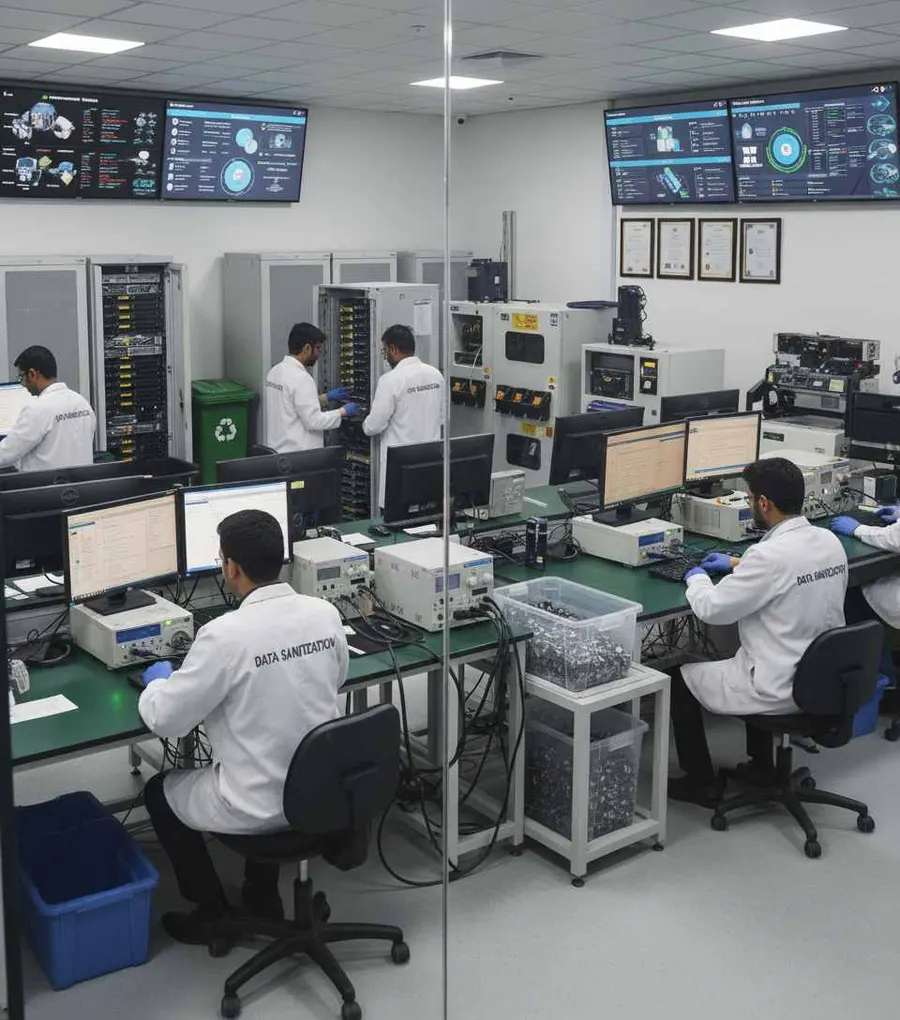
External Hard Drive Erasure for Reuse and Resale
External HDDs often retain hardware value after data removal.
Before reuse or resale organizations can process the drive through a controlled erasure workflow.
Reuse
Erase previous information before assigning the external HDD to another user.
Resale
Complete the erasure process and retain supporting documentation before transferring ownership.
Refurbishment
Process used external hard drives before preparing them for another customer or system.
Return
Sanitize supported drives before leased or returned equipment leaves organizational control.
This creates a repeatable lifecycle:
- Erase
- Verify
- Certify
- Reuse or Resell
External Hard Drive Health Assessment
Data sanitization and hardware condition are two different decisions.
An external hard drive may successfully complete data erasure and still require assessment before reuse.
DSP can provide available information related to:
- SMART Data
- Drive Health
- Bad Sectors
- Read Errors
- Storage Status
This helps organizations answer two separate questions:
Data Security: Was the external HDD successfully processed and verified?
Asset Condition: Is the physical drive suitable for another lifecycle stage?
Keeping those decisions separate is useful in refurbishment and ITAD workflows.
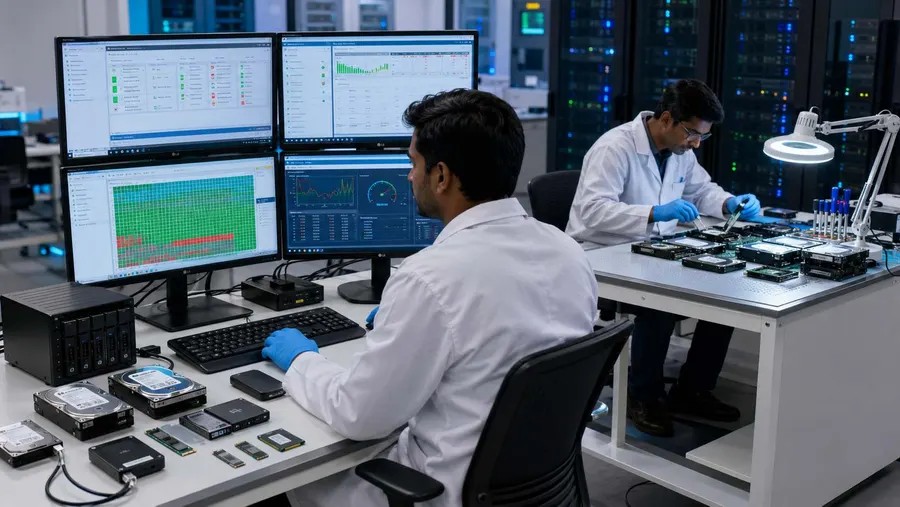
External SSDs in USB Enclosures
Some products sold as external drives contain SSD storage rather than magnetic HDD media.
An external SSD should not automatically be treated as an external HDD.
SSD architecture can involve:
- NAND flash
- Flash Translation Layer
- Wear leveling
- Garbage collection
- Over-provisioning
- Controller-managed storage
Where the external enclosure contains an SSD, the appropriate SSD-specific sanitization workflow should be used according to the underlying storage technology.
For detailed SSD-specific processing, see the SSD Data Erasure page.

External Hard Drive and Windows System Drive Erasure
An external HDD connected to a Windows computer can usually be processed separately from the running system drive when it is correctly detected and not otherwise locked by the operating environment.
The active Windows system disk is different.
A running operating system generally cannot erase the physical drive from which it is currently operating.
For supported system-drive workflows, DSP provides USB and PXE boot environments so the sanitization software can run outside the active operating system.
PXE and Offline Deployment
External hard drives are often processed from a dedicated workstation, but the broader DSP deployment also supports controlled boot workflows.
USB Boot
Start the sanitization environment outside the installed operating system.
PXE
The standard PXE configuration supports up to 64 computers by default, with the configured capacity adjustable for larger environments.
Offline Processing
Supported offline workflows allow organizations to process storage inside controlled environments without continuous internet connectivity.
These deployment options become particularly useful when external drives are being processed alongside laptops, desktops, servers and other storage assets.
When an External Hard Drive Cannot Be Erased
Software-based erasure depends on the physical storage device being accessible and capable of completing the selected operation.
Additional assessment may be required when an external HDD:
- Is not detected
- Has enclosure or adapter communication problems
- Has a failing USB bridge
- Cannot complete the selected erasure operation
- Fails verification
- Has severe hardware failure
- Is inaccessible through the current storage path
A failed or incomplete operation should not be recorded as a successful sanitization result.
DSP provides software-based logical data erasure. Physical shredding, crushing, drilling, degaussing and other physical destruction methods are outside the scope of this software.
Why Choose Data Sanitization Pro?
External Drive-Focused Workflow
Process supported external HDDs through a structured identification, erasure, verification and reporting workflow.
25 Data Erasure Methods
Support multiple methods for different storage and organizational requirements.
Verification
Record the result of the completed erasure process.
Self-Certified Certificates
Generate auditable external hard drive erasure reports and certificates.
Up to 8 Drives
Process multiple selected drives simultaneously in supported configurations.
USB Support
Process supported external hard drives connected through USB storage paths.
Offline Operation
Support controlled local sanitization environments.
USB and PXE Boot
Support boot-based workflows for system drives and larger deployment environments.
Drive Health Information
Review available HDD health and error information before reuse.
30-Day Free Trial — Test Your External Hard Drives
You can evaluate Data Sanitization Pro on supported hardware before purchasing.
The current DSP trial provides 30 days of access to the full product, without requiring a credit card. The live pricing page states that the trial includes the available product functionality rather than a cut-down edition.
Test Your External HDD Workflow
Evaluate:
- External Drive Detection
- USB Hard Drive Erasure
- Erasure Methods
- Verification
- Reports & Certificates
- Drive Health Information
- Multi-Drive Processing
Start Your Free Trial
- 30 Days
- Full Product Trial
- No Credit Card
Start Free Trial
Frequently Asked Questions
What is external hard drive data erasure software?
External hard drive data erasure software is designed to remove stored information from supported external HDDs through a controlled logical erasure process. A professional workflow can include device identification, method selection, verification and reporting.
Is formatting an external hard drive enough?
Formatting changes the logical structure of the drive but should not automatically be treated as a complete media-sanitization process. A dedicated external hard drive erasure workflow provides controlled processing and documentation.
Can Data Sanitization Pro erase a USB external hard drive?
Yes, supported USB-connected external hard drives can be processed when the underlying physical storage device is correctly detected and accessible to the sanitization environment.
Can portable hard drives be securely erased before resale?
Yes. Supported portable HDDs can be processed through the logical erasure workflow, verified and documented before the asset moves to resale or another approved lifecycle stage.
Can an external SSD be erased using this page's workflow?
The storage technology matters. An external SSD should be treated according to its SSD architecture and available device capabilities rather than automatically using an HDD-oriented process.
How many external hard drives can DSP erase at the same time?
Data Sanitization Pro supports up to 8 selected drives simultaneously in supported configurations. Actual speed depends on the drive, controller, enclosure, USB path and system resources.
Does DSP generate an external hard drive erasure certificate?
Yes. DSP can generate self-certified, auditable data erasure reports and certificates containing relevant drive, method, verification and processing information.
Can DSP erase an external hard drive without internet access?
Supported offline workflows allow data sanitization to be performed in controlled environments without continuous internet connectivity.
Is there a free trial?
Yes. Data Sanitization Pro currently offers a 30-day full-product trial with no credit card required.
Secure Your External Hard Drives Before Reuse or Resale
An external hard drive can carry sensitive information long after it leaves the system where the data was originally created.