
- Home
- Solutions
- Regulated Sectors
- Defence Data Erasure
Data Sanitization for Defence Organizations
Secure Sensitive Data Before Storage Devices Leave Your Control
Defence organizations work with sensitive information across laptops, desktops, workstations, servers and storage devices.
When equipment is reassigned, redeployed, refurbished, returned, transferred or retired, the data stored on supported media should be securely sanitized before the next lifecycle stage.
Data Sanitization Pro (DSP) provides professional defence data erasure software for supported HDD, SSD and NVMe storage, with controlled erasure, verification and auditable reporting.
- Identify
- Erase
- Verify
- Certify
- Secure Data Erasure
- Offline Operation
- Verification
- Certificates

Overview
Defence data erasure software for secure HDD, SSD and NVMe sanitization. Work offline, verify results and generate auditable erasure certificates worldwide.
Why Data Sanitization Matters in Defence
Defence organizations can manage information that requires strict protection throughout the entire IT asset lifecycle.
Data may exist on:
- Employee and contractor computers
- Engineering workstations
- Administrative systems
- Servers
- SSDs and HDDs
- Removable storage
- Retired IT equipment
- Systems being upgraded or replaced
The security requirement does not disappear when the device is removed from active use.
A workstation may be transferred to another department.
A laptop may be reassigned to a different user.
A server may be decommissioned.
A storage drive may be sent for refurbishment, return or approved disposal.
If the storage is not properly sanitized, information from the previous lifecycle may remain on the device.
File deletion, quick formatting or operating-system reinstallation should not automatically be treated as complete media sanitization.
A professional secure data erasure process helps organizations select an appropriate method, verify the outcome and retain evidence of what happened to each processed asset.
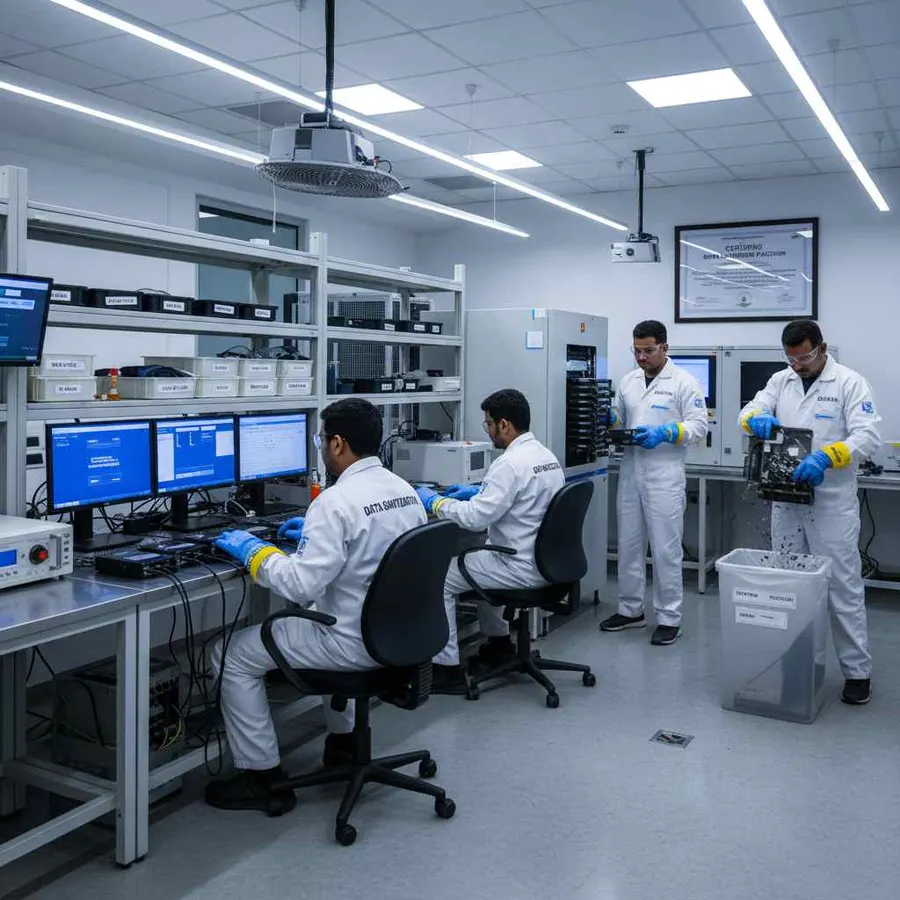
What Does Defence Data Sanitization Mean?
Defence data sanitization is the controlled process of removing stored information from supported media so the device can move through its approved lifecycle without exposing the previous information.
A defence data erasure workflow may be required before:
Reassignment
Erase previous information before the device moves to another authorized user.
Redeployment
Sanitize supported storage before equipment moves between departments or locations.
Refurbishment
Remove stored information before equipment is prepared for another approved use.
Transfer
Sanitize storage before the asset changes organizational control according to the applicable policy.
Return
Erase supported storage before leased or vendor-managed equipment leaves the organization's control.
Retirement
Complete the approved sanitization process and preserve the resulting record.
The correct sanitization method depends on the storage technology, information sensitivity, organizational policy and required disposition.
Data Sanitization Pro: Built for Controlled Defence Data Erasure
Data Sanitization Pro is a software-based logical data destruction solution designed for organizations that need secure erasure plus evidence of the completed process.
25 Data Erasure Methods
DSP supports 25 data erasure methods for different sanitization requirements. The selected method should be matched to the storage technology and applicable policy.
This makes the platform suitable for organizations that need more than a basic disk wipe utility.
Verification
DSP records the result of the completed sanitization operation.
The objective is not simply to start an erase process.
The objective is to know whether the required process completed and what result was recorded.
Self-Certified Data Erasure Certificates
DSP can generate self-certified, auditable data erasure certificates and reports.
The certificate can connect:
- Asset
- Serial Number
- Method
- Verification
- Result
Available device records may include:
- Manufacturer
- Model
- Serial Number
- Capacity
- Interface
- Firmware
- Method
- Verification
- Timestamps
- Operator
- Asset Reference
Offline Data Erasure
Defence environments may have restricted or isolated networks.
DSP supports offline data erasure workflows for controlled environments where internet connectivity is restricted or unavailable.
USB and PXE Boot
For suitable system-drive and fleet workflows, DSP supports USB and PXE boot deployment.
Multi-Drive Processing
DSP supports processing up to 8 supported drives simultaneously in suitable configurations.
From Defence Storage Detection to a Verified Erasure Certificate
- 01
Identify
Connect the supported storage and capture available device information.
- Manufacturer
- Model
- Serial Number
- Capacity
- Interface
- Firmware
- 02
Assess
Review the available storage technology and determine which supported sanitization method is appropriate.
- 03
Erase
Run the selected secure data erasure process.
- 04
Verify
Verify the completed operation and record the result.
- 05
Certify
Generate the applicable data erasure certificate or report.
This creates a traceable process for the individual storage device instead of relying on a simple manual "wiped" status.
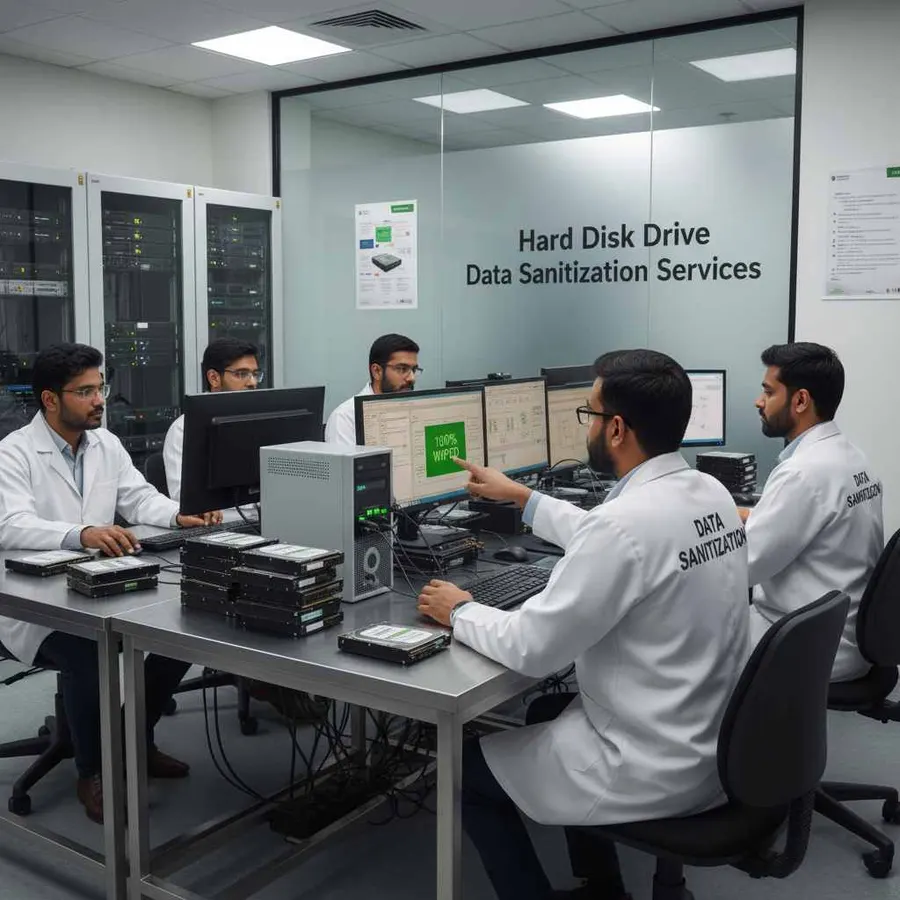
Defence HDD Data Erasure
Hard disk drives can contain sensitive information long after they are removed from active service.
Professional HDD data erasure software can help defence organizations securely process supported drives before reuse, transfer, refurbishment or retirement.
DSP supports a controlled HDD workflow:
- Detect
- Select Method
- Erase
- Verify
- Certify
The physical HDD remains intact because DSP performs software-based logical data destruction rather than physical shredding.
Defence SSD Data Erasure
SSD sanitization is different from traditional HDD wiping because solid-state storage uses NAND flash and controller-managed data placement.
A professional SSD data erasure software workflow should take the actual device capabilities into account.
Depending on the supported SSD, available sanitization technologies may include:
- Secure Erase
- Sanitize functions
- Cryptographic Erase
- Other supported device or organizational methods
The correct process depends on the actual SSD, controller, firmware, interface path and security requirements.

Defence NVMe Data Erasure
Modern defence systems may use NVMe storage in laptops, workstations, servers and other computing platforms.
NVMe devices use the PCIe interface and expose device-level sanitization capabilities that depend on the individual implementation.
DSP supports NVMe data erasure and sanitization workflows for supported devices, with the available operation determined by the drive's capabilities.
For suitable NVMe deployments, the process follows:
- Identify
- Assess Capability
- Select
- Erase
- Verify
- Certify
A generic overwrite should not automatically be assumed to be the correct sanitization operation for every NVMe drive.
Defence Laptop and Workstation Data Erasure
Defence organizations may have large numbers of laptops, desktops and engineering workstations moving through regular technology refresh cycles.
Devices may be:
- Reassigned
- Redeployed
- Upgraded
- Refurbished
- Returned
- Retired
A workstation can contain large amounts of information from the previous user or project.
Before the device enters its next lifecycle stage, supported storage should be processed through the approved sanitization workflow.
For Windows system-drive sanitization, the running operating system normally cannot erase the physical drive from which it is currently operating.
DSP supports USB and PXE boot workflows for suitable system-drive sanitization deployments.

Defence Server and Storage Data Erasure
Defence organizations may operate servers and storage infrastructure across offices, secure facilities, command-support environments and data centres.
When physical storage is removed during an infrastructure upgrade or decommissioning project, the supported drives may require secure sanitization before they move to their next approved stage.
DSP can support server storage data erasure for compatible physical media.
For live systems, shared storage, virtual environments and specialized infrastructure, the sanitization workflow should be planned around the actual architecture before any data-bearing media is processed.
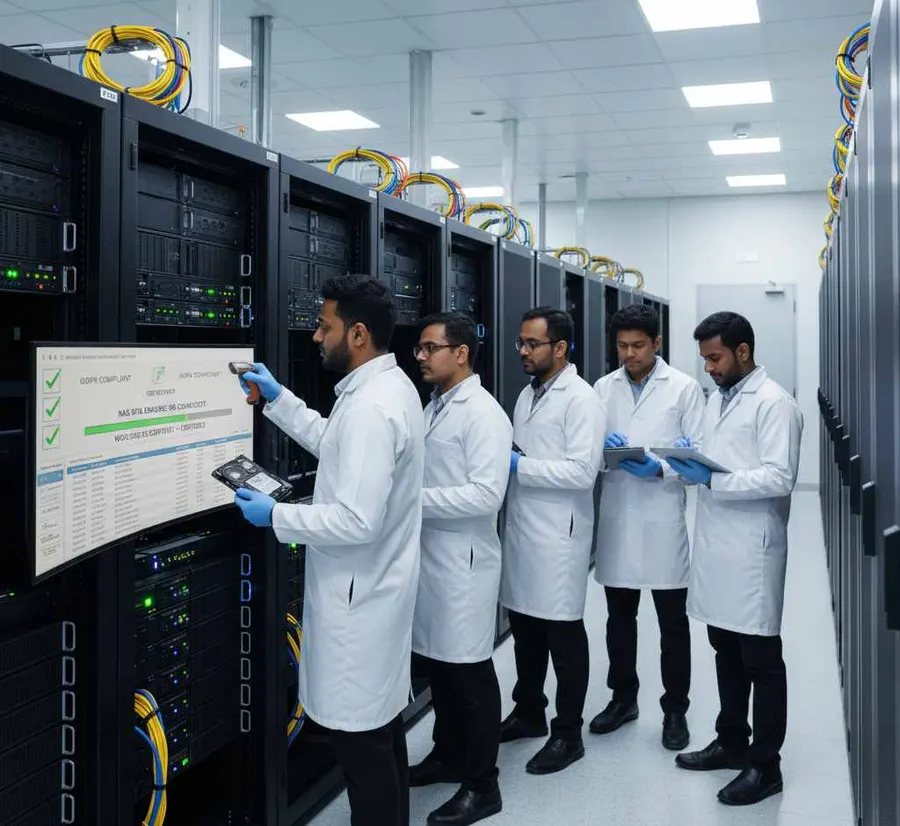
Defence Data Erasure for Secure Facilities
Some defence environments require storage processing to happen within tightly controlled locations.
A software-based offline data sanitization solution can be useful where the sanitization workstation should operate without depending on an internet connection.
DSP's offline workflow supports controlled processing environments where external connectivity is restricted.
This helps organizations keep the sanitization process within their own operational perimeter.
Air-Gapped Data Erasure for Defence Environments
Air-gapped and restricted environments require careful handling of data-bearing devices.
DSP supports offline operation for suitable deployments, allowing the sanitization process to run without requiring an active internet connection.
A controlled workflow can include:
Local Device Detection
Local Data Erasure
Local Verification
Local Certificate Generation
This approach is useful for environments where external network access is intentionally restricted.
Defence Data Erasure With USB Boot
USB-based boot workflows can be useful when a system's primary storage needs to be sanitized before the operating system starts.
For suitable deployments:
- Insert Boot Media
- Boot Into Sanitization Environment
- Detect Storage
- Erase
- Verify
- Certify
This avoids trying to erase an active Windows system drive while that operating system is still running.
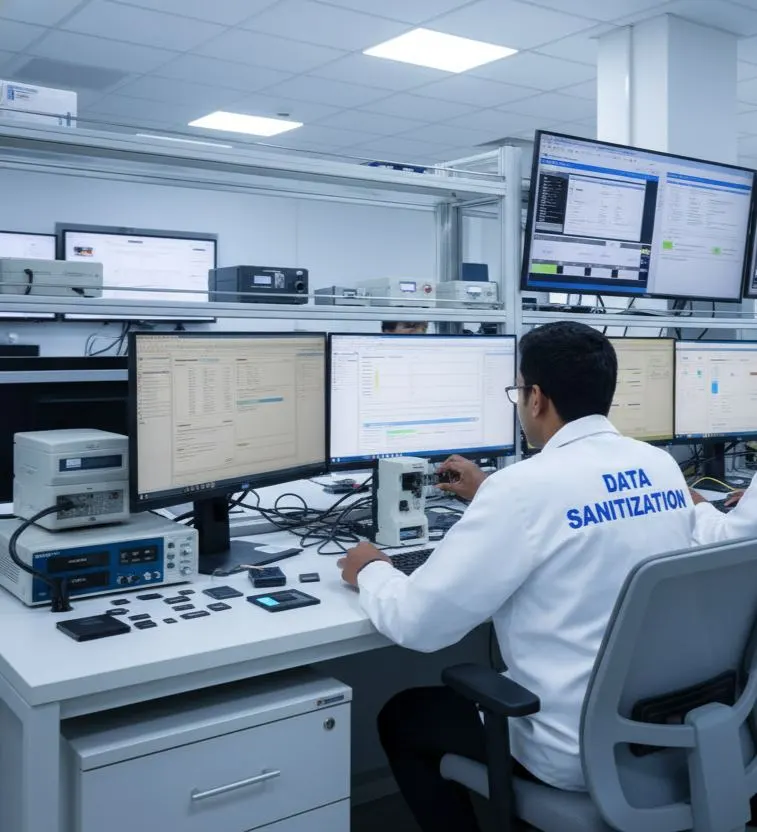
PXE Data Erasure for Defence Computer Fleets
Large defence organizations may manage many computers across controlled IT environments.
DSP supports PXE deployment for up to 64 computers by default, with configured capacity adjustable for larger environments.
PXE deployment can simplify fleet-based sanitization by allowing supported systems to boot into the sanitization environment.
Actual processing capacity depends on:
- Network Capacity
- Hardware Configuration
- Storage Interfaces
- System Resources
Defence Data Erasure Verification
For sensitive environments, knowing that an erase command was issued is only one part of the process.
Verification provides a separate record of the completed sanitization operation.
DSP supports a workflow in which:
- Erase Result
- Verification Result
- Certificate
This makes the processing outcome easier to document for individual assets.
A failed or incomplete process should not be treated as a successful sanitization result.
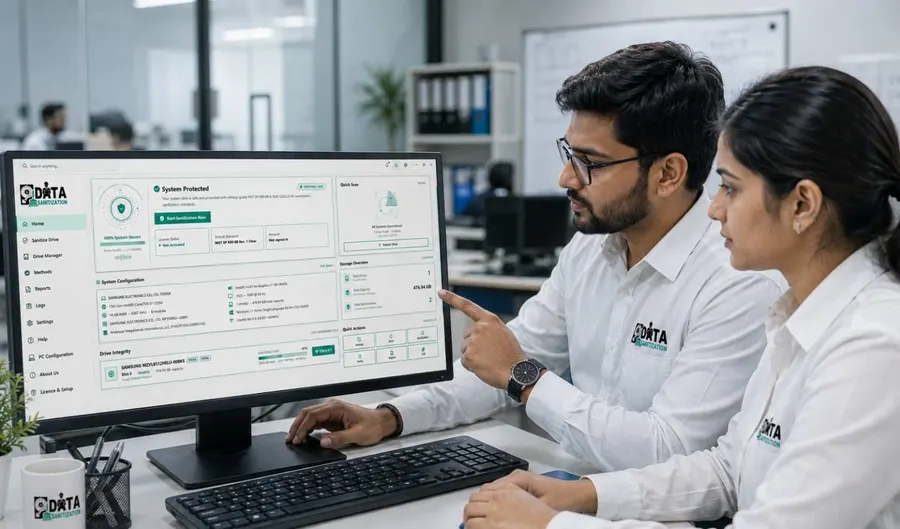
Defence Data Erasure Certificates and Audit Records
Every storage device has its own identity.
For that reason, data erasure documentation should be linked to the actual asset being processed.
DSP certificates and reports can include relevant information such as:
Serial Number
Manufacturer and Model
Capacity
Interface
Selected Erasure Method
Verification Result
Processing Time
Operator Information
Asset Reference
This creates a stronger data erasure audit trail than a manually maintained spreadsheet without device-level processing evidence.
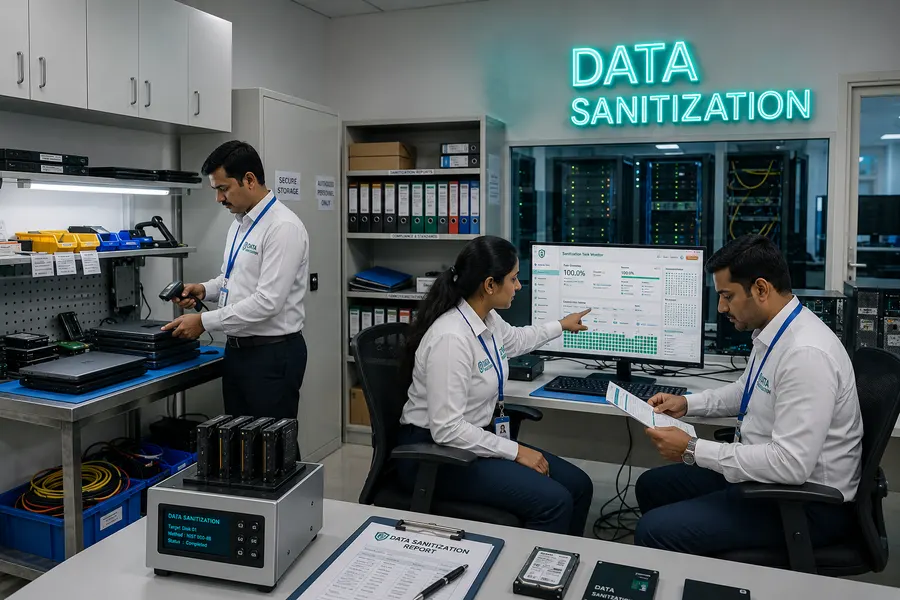
Defence Data Sanitization for Asset Reuse
Secure erasure does not always mean destroying the physical storage device.
Where organizational policy permits reuse, successful sanitization can allow a suitable asset to continue through its lifecycle.
Reuse
Erase previous information before an approved reassignment.
Redeployment
Sanitize before moving the device to another location or user.
Refurbishment
Erase stored information before preparing the equipment for another approved use.
Transfer
Complete the required sanitization before the asset changes control.
Retirement
Sanitize the supported media and preserve the resulting documentation.
The final lifecycle decision should always follow the organization's security policy.
Defence IT Asset Disposition and Data Erasure
IT Asset Disposition (ITAD) becomes especially important when large numbers of devices are retired.
A typical workflow can be:
- Asset Inventory
- Data Sanitization
- Verification
- Documentation
- Approved Disposition
Data Sanitization Pro can support the data erasure stage for compatible storage media.
For assets that cannot be reliably sanitized, the organization's approved alternative disposition process should be followed.
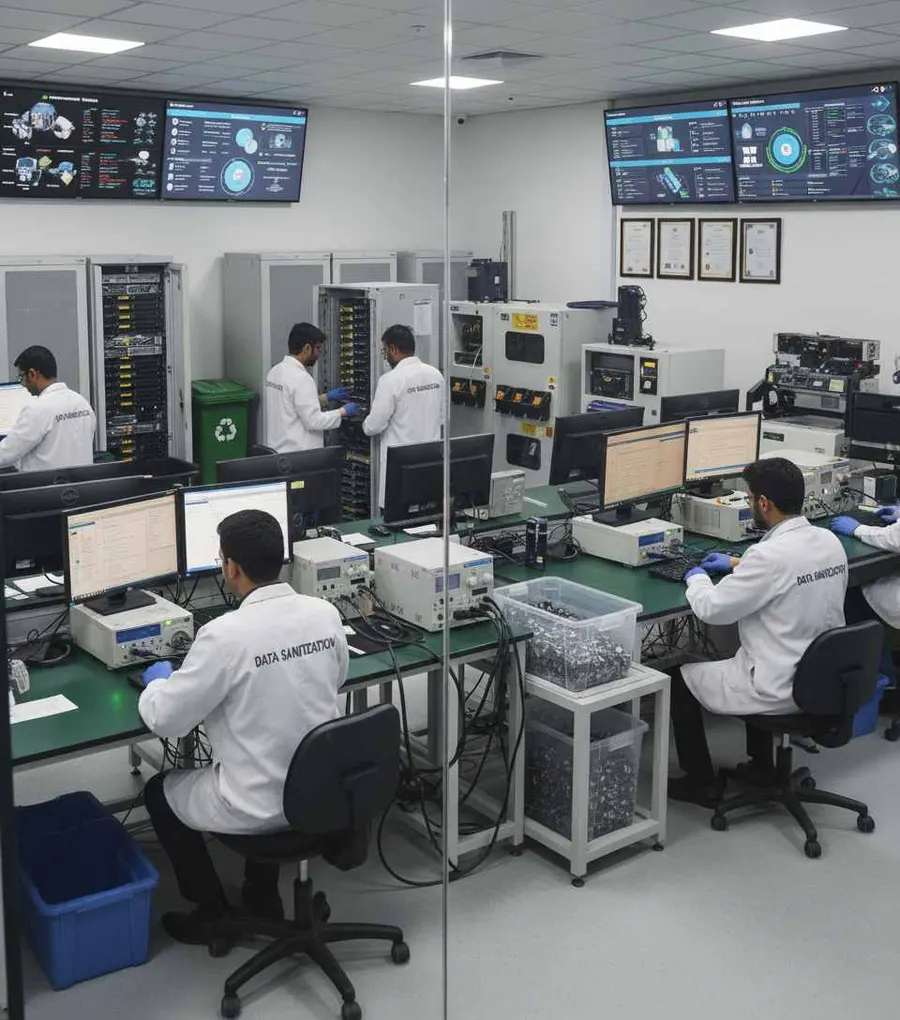
Defence Data Erasure for Contractors and Support Teams
Defence organizations may work with authorized contractors, support providers and equipment service partners.
Devices can move between:
- Organization
- Authorized Support
- Repair / Upgrade
- Organization
Whenever a data-bearing device leaves its current operational control, the applicable sanitization and asset-handling process should be considered.
DSP can support the secure erasure and documentation stage for supported storage when the asset reaches an approved sanitization workflow.
Multi-Drive Defence Data Sanitization
Defence IT teams and asset-processing facilities may need to sanitize multiple drives during a refresh or retirement project.
DSP supports up to 8 supported drives simultaneously in suitable configurations.
This can support:
- Laptop fleet refresh
- Desktop replacement
- Server storage retirement
- HDD processing
- SSD retirement
- NVMe sanitization
- Refurbishment
- ITAD workflows
Actual throughput depends on hardware, storage controllers, interfaces and system resources.
Defence Data Sanitization Standards
The appropriate sanitization standard depends on the storage technology, information sensitivity, organizational policy and final disposition.
NIST SP 800-88 Rev. 2
NIST SP 800-88 Rev. 2 is the current NIST publication for media sanitization. It focuses on establishing an appropriate media-sanitization program and selecting applicable techniques and controls according to the media and information involved.
IEEE 2883
IEEE 2883 provides technology-focused guidance and requirements related to storage sanitization.
DoD 5220.22-M
Some organizations may still maintain policies or contracts that specifically reference DoD-style erasure methods. Where such a policy applies, the selected process should follow the organization's actual requirement.
Other Organizational Requirements
Defence organizations may also have internal policies, contractual requirements or national standards governing media sanitization and disposal.
The important point is:
The standard should match the media, security requirement and approved disposition process.
A software-generated certificate documents the sanitization job performed by the software. It should not automatically be represented as proof of every regulatory, contractual or security requirement.
Defence Data Sanitization Worldwide
Data security requirements exist across defence organizations globally.
Data Sanitization Pro can support organizations worldwide, subject to deployment requirements, licensing, project scope and applicable service availability.
The same core workflow can be adapted to different environments:
- Identify
- Erase
- Verify
- Certify
This makes DSP suitable for organizations that need a controlled global data erasure software workflow while maintaining their own policies and operational requirements.
Global Defence Use Cases
Defence Ministries
Secure supported storage during approved IT asset lifecycle activities.
Military Organizations
Process supported storage before reuse, transfer or retirement.
Defence Contractors
Sanitize business and project devices according to contractual requirements.
Aerospace & Defence
Secure supported storage used in offices, engineering environments and corporate IT.
Defence Research Organizations
Sanitize supported devices used for research and technical projects.
Secure Facilities
Use offline workflows where internet connectivity is restricted.
When Defence Storage Cannot Be Reliably Erased
Software-based sanitization depends on the storage device being accessible and exposing the required functionality.
Further assessment may be required when a device:
- Is not detected
- Has a controller problem
- Has firmware limitations
- Cannot complete the selected operation
- Does not expose the required sanitization functionality
- Is connected through an unsupported bridge or adapter
- Cannot provide the required verification result
A failed or incomplete operation should not be treated as successful data sanitization.
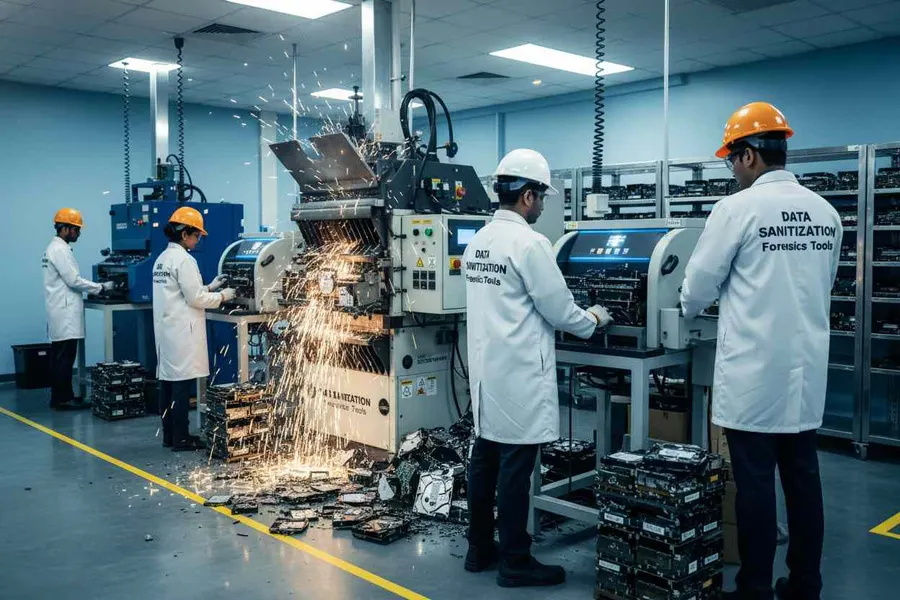
Data Sanitization Pro is software-based logical data destruction software. It does not physically shred, crush or drill storage devices.
Where software erasure cannot reliably meet the required outcome, the organization's approved alternative media-disposition process should be followed.
Defence Storage Health Assessment Before Reuse
Sanitization and hardware condition are two separate decisions.
A drive can complete its data erasure successfully and still require a technical condition assessment before reuse.
Available device information can help teams review:
- Drive Health
- SMART Information
- Error Conditions
- Storage Status
- Device Information
This separates:
Sanitization Result: Was the required data erasure completed and verified?
Asset Condition: Is the storage device suitable for its next lifecycle stage?
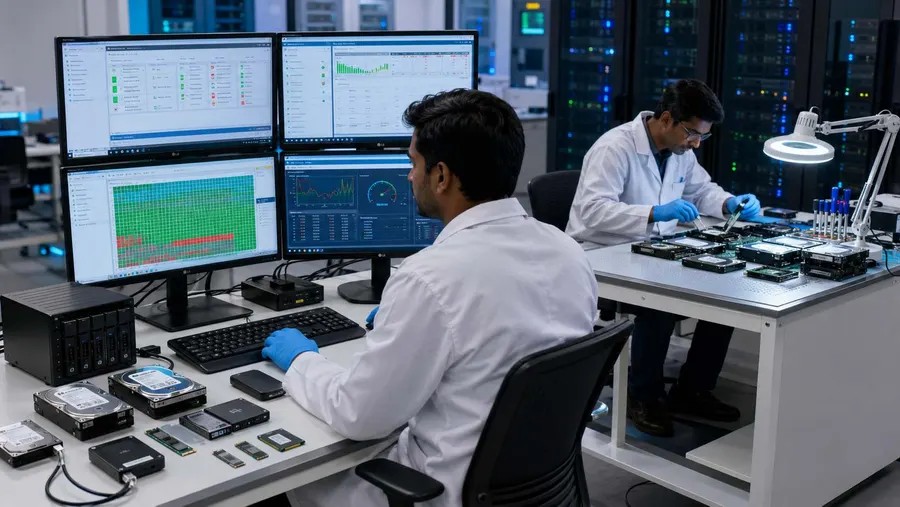
Who Uses Defence Data Erasure Software?
Defence Organizations
For controlled IT asset reuse, transfer and retirement workflows.
Military IT Teams
For supported storage sanitization during equipment lifecycle management.
Government Defence Departments
For secure media handling and documented data erasure.
Defence Contractors
For laptops, workstations, servers and storage used for approved projects.
Aerospace & Defence Companies
For enterprise IT hardware and engineering systems.
Defence Research Organizations
For secure retirement and reassignment of supported computing assets.
ITAD and Refurbishment Partners
For sanitization and documentation before approved reuse or resale.
Why Choose Data Sanitization Pro for Defence?
Secure Data Erasure Software
Professional software-based logical data destruction for supported storage.
25 Erasure Methods
Multiple supported sanitization methods for different requirements.
Offline Operation
Suitable for controlled environments where internet access is restricted.
Verification
Record the completed sanitization result.
Self-Certified Certificates
Generate auditable data erasure certificates and reports.
Up to 8 Drives
Process multiple supported drives simultaneously in suitable configurations.
USB and PXE Boot
Support system-drive and larger fleet sanitization workflows.
Device-Level Records
Connect each drive with its device identity, method and verification result.
Controlled Deployment
Use the deployment model that fits the organization's network and operational environment.
Global Use
Support defence organizations and contractors worldwide, subject to deployment and service requirements.
Frequently Asked Questions
What is defence data sanitization?
Defence data sanitization is the controlled removal of stored information from supported media before equipment is reused, transferred, refurbished, returned or retired.
What is defence data erasure software?
Defence data erasure software securely processes supported storage devices using an approved sanitization method and provides verification and documentation of the result.
Can Data Sanitization Pro work in offline defence environments?
Yes. DSP supports offline data erasure workflows for controlled and restricted environments.
Does DSP support NIST SP 800-88 Rev. 2?
DSP supports NIST-based sanitization workflows, while the exact method selected should be matched to the storage media and the organization's applicable policy. NIST SP 800-88 Rev. 2 is the current NIST media-sanitization publication.
Can defence organizations sanitize HDD, SSD and NVMe drives?
Yes. DSP supports supported HDD, SSD and NVMe sanitization workflows based on the capabilities of the actual storage devices.
Can we process multiple drives at the same time?
Yes. DSP supports up to 8 supported drives simultaneously in suitable configurations.
Can DSP erase a Windows system drive?
A running Windows installation normally cannot erase the physical drive it is currently using. For suitable deployments, DSP supports USB and PXE boot workflows for system-drive sanitization.
Does DSP generate data erasure certificates?
Yes. DSP can generate self-certified, auditable data erasure certificates and reports containing relevant device, sanitization, verification and processing information.
Is Data Sanitization Pro a physical destruction solution?
No. DSP is a software-based logical data destruction solution. It does not physically shred, crush or drill storage devices.
Can defence contractors use DSP?
Yes. Defence contractors can use DSP for supported storage sanitization where it fits their contractual, organizational and security requirements.
Can DSP be used worldwide?
Yes. The solution can support organizations worldwide, subject to deployment requirements, licensing, project scope and applicable service availability.
Can a failed drive be certified as successfully erased?
No. A failed or incomplete sanitization operation should not be reported as a successful result.
Related Solutions
Government
Erase, verify and certify before assets leave your control
Read MoreBanking & Finance
Secure financial data before assets change hands
Read MoreInsurance
For insurers, brokers and TPAs retiring IT assets
Read MoreHealthcare
Secure patient data before devices move on
Read MoreEducation & Research
For schools, colleges, universities and research centres
Read MoreSecure Defence Data Before the Next Lifecycle Stage
Before supported storage is reassigned, redeployed, transferred, refurbished, returned or retired, use a controlled and verifiable data erasure process.