
Secure Mobile Phone Data Sanitization Services in India
Professional mobile phone and tablet data sanitization services for organizations retiring, reselling, recycling, returning or redeploying mobile devices. We provide secure and permanent mobile data erasure, tablet data wiping, verification, IMEI-based tracking, certificates and physical destruction for supported devices across India and worldwide.
Mobile phones and tablets can contain emails, contacts, photographs, messages, documents, credentials, application data and other sensitive information.
Before a device leaves your organization, secure data erasure should be treated as part of the asset retirement process—not simply as a factory reset.
Our mobile data erasure services help organizations process devices systematically, verify the outcome and maintain a record for every handset.

Why Mobile Phone Data Sanitization Matters
Mobile devices often contain a large amount of personal and business information in a very small physical device.
A company phone may contain:
- Business emails
- Customer information
- Contacts
- Messages and chat data
- Photos and videos
- Documents
- Saved credentials
- Application data
- Browser information
- Location-related information
- Corporate data
When phones are upgraded, returned to a supplier, traded in, resold, refurbished or recycled, the stored information needs to be properly addressed.
Mobile phone data sanitization provides a controlled process for removing information before the device moves to its next stage.
Our Mobile Phone Data Erasure Services
We provide professional mobile phone data erasure and tablet data wiping for organizations managing individual devices as well as large batches.
Mobile Phone Data Erasure
Securely process supported smartphones before reuse, resale, recycling, return or redeployment.
Android Data Erasure
Process supported Android smartphones and tablets using an appropriate device sanitization method.
iPhone Data Erasure
Process supported iPhones according to the device's available security, encryption and reset capabilities.
Tablet Data Erasure
Secure supported Android tablets, iPads, enterprise tablets and other mobile computing devices.
Corporate Mobile Data Wiping
Process company-issued phones and tablets during employee replacement programs and IT asset retirement.
Bulk Mobile Data Erasure
Process large numbers of mobile devices while maintaining individual device records.
Mobile Device Destruction
Where reliable electronic erasure cannot be completed or verified, physical destruction can be considered according to the required security process.
Mobile Data Sanitization Process
- 01Identify
- 02Assess
- 03Erase
- 04Verify
- 05Report
- 06Reuse or Destroy
- 01
Identify Every Device
Each phone or tablet is recorded using available information such as:
- IMEI
- Serial number
- Manufacturer
- Model
- Storage capacity
- Device condition
- Asset number
This creates a connection between the physical device and its processing record.
- 02
Check Device Status
Before erasure, supported devices can be assessed for conditions that may affect processing or future reuse.
This can include:
- Account locks
- Activation status
- Device management enrollment
- Security restrictions
- Device accessibility
- Storage availability
- 03
Select the Appropriate Erasure Method
The available sanitization approach depends on the mobile platform, device security architecture, encryption capabilities and organizational requirements.
- 04
Erase the Data
The appropriate supported device erasure or sanitization process is performed.
- 05
Verify the Result
The result is checked after processing instead of relying only on a displayed “reset complete” message.
- 06
Certify the Device
A device-level record documents the processing outcome.
The phone can then be:
- Reused
- Redeployed
- Resold
- Returned
- Recycled
If the required result cannot be achieved, physical destruction may be considered.
Mobile Phone Data Wiping & Verification
Don't Just Reset the Device. Verify the Result.
A factory reset is designed to return a phone to an initial setup state, but organizations handling large numbers of devices also need asset-level traceability and documentation.
Our process adds verification and reporting to the mobile data erasure workflow.
The basic process is:
- ERASE
- VERIFY
- DOCUMENT
A device that does not meet the required outcome should not simply be marked as successfully erased.
This is particularly important for:
- Enterprise mobile fleets
- ITAD operations
- Device trade-in programs
- Refurbishment companies
- Government equipment
- Healthcare devices
- Financial organizations

Android & iPhone Data Erasure
Secure Mobile Data Erasure Across Major Platforms
We support workflows for supported:
Android Devices
- Android smartphones
- Android tablets
- Enterprise Android devices
- Dual-SIM phones
- Rugged Android handhelds
- Barcode and industrial terminals
Apple Devices
- iPhone
- iPad
- Cellular-enabled iPad
- Enterprise Apple devices
The appropriate process depends on the specific device, operating system, security configuration, encryption capabilities and processing requirements.
Mobile Device Sanitization for Locked Phones
Identify Locks Before Resale or Redeployment
Account and management locks can create problems when mobile devices are transferred to another user or organization.
Examples include:
- Apple Activation Lock
- Google account-related protection
- Mobile Device Management (MDM)
- Enterprise enrollment
- Security restrictions
- Device passcodes
These conditions should be identified during processing.
A locked phone should not simply be marked as ready for resale when the organization has not legitimately removed the applicable management or account restriction.
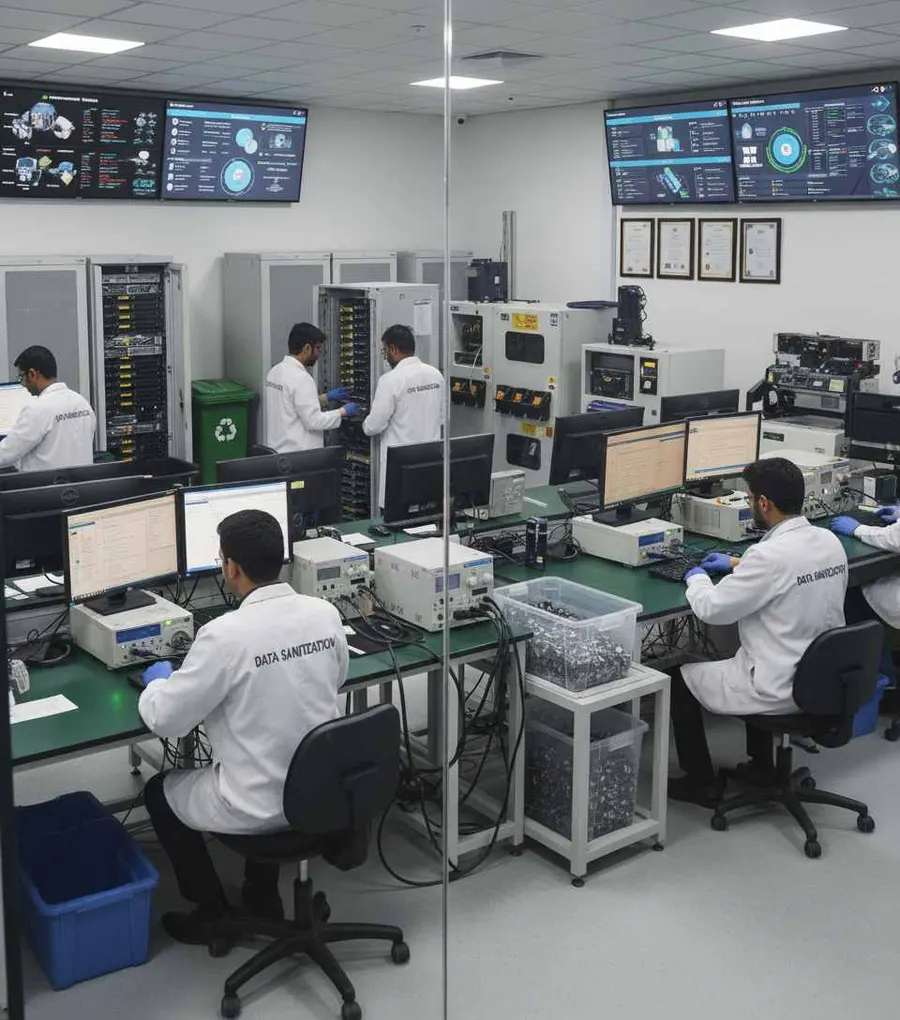
Mobile Data Erasure for IT Asset Disposition
Secure Phones Before Reuse, Resale or Recycling
Mobile devices are a major part of modern IT asset disposition (ITAD) programs.
Organizations may need mobile data erasure when:
- Employees receive replacement phones
- Corporate devices reach end of life
- Leased devices are returned
- Devices are sold to secondary markets
- Phones are refurbished
- Tablets are redeployed
- Mobile fleets are upgraded
- Equipment is sent for recycling
Professional mobile phone data wiping helps protect information while supporting the continued lifecycle of suitable hardware.
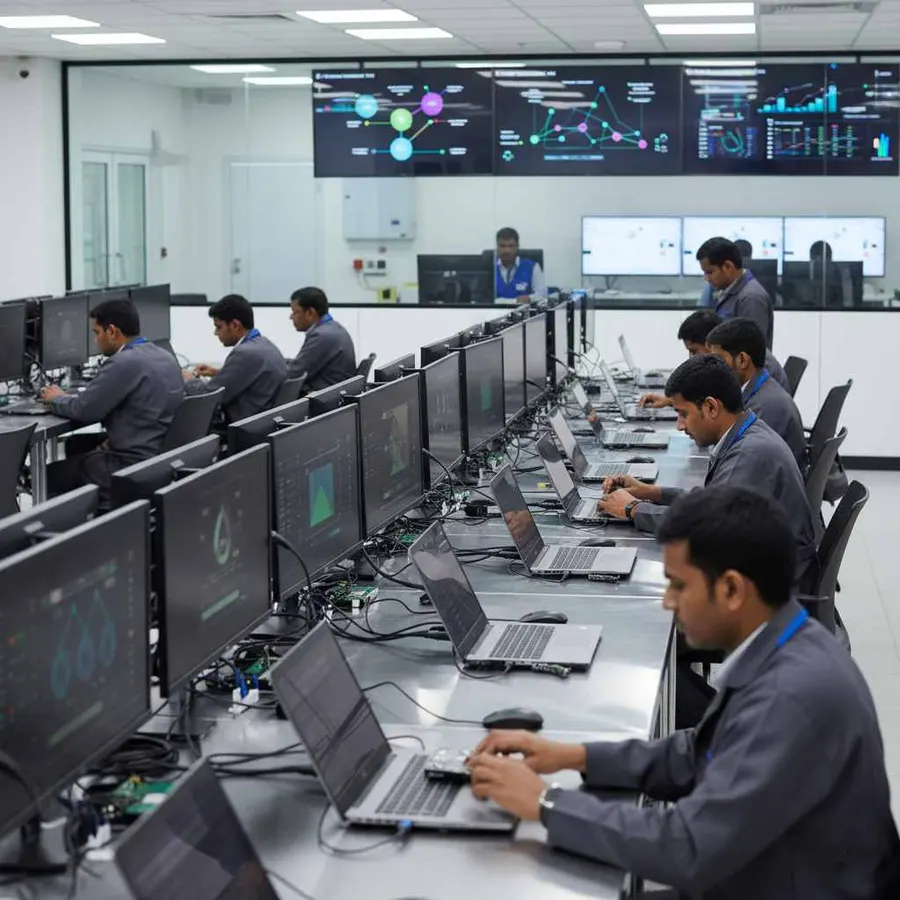
Bulk Mobile Phone Data Erasure
Process Hundreds of Devices With Individual Records
Large mobile refresh projects should not rely on a single batch-level statement saying that all phones were wiped.
Our workflow is designed to maintain device-level information throughout the process.
For each handset, available records can include:
- IMEI
- Serial number
- Model
- Storage
- Processing status
- Erasure method
- Verification result
- Operator
- Processing time
- Certificate information
This allows organizations to reconcile the devices received with the devices processed.
Mobile Phone Data Erasure Certificates
One Device. One Record. Clear Evidence.
A mobile phone data erasure certificate provides documentation for the specific handset processed.
Depending on the device and workflow, documentation can include:
- Manufacturer
- Model
- IMEI
- Serial number
- Storage capacity
- Erasure method
- Sanitization result
- Verification status
- Device status
- Processing timestamps
- Operator information
- Asset reference
- Certificate or report information
This provides useful evidence for internal asset records, ITAD workflows, security reviews and compliance documentation.
What Happens to Locked or Failed Mobile Devices?
Not Every Device Can Be Erased Electronically
A mobile phone may require additional handling if it:
- Cannot power on
- Cannot be accessed
- Remains account locked
- Remains under unauthorized management control
- Has damaged storage or hardware
- Cannot complete the required erasure process
- Fails verification
A device that cannot meet the required sanitization outcome should not be incorrectly certified as erased.
Where electronic erasure cannot be reliably completed, mobile device destruction may be considered.
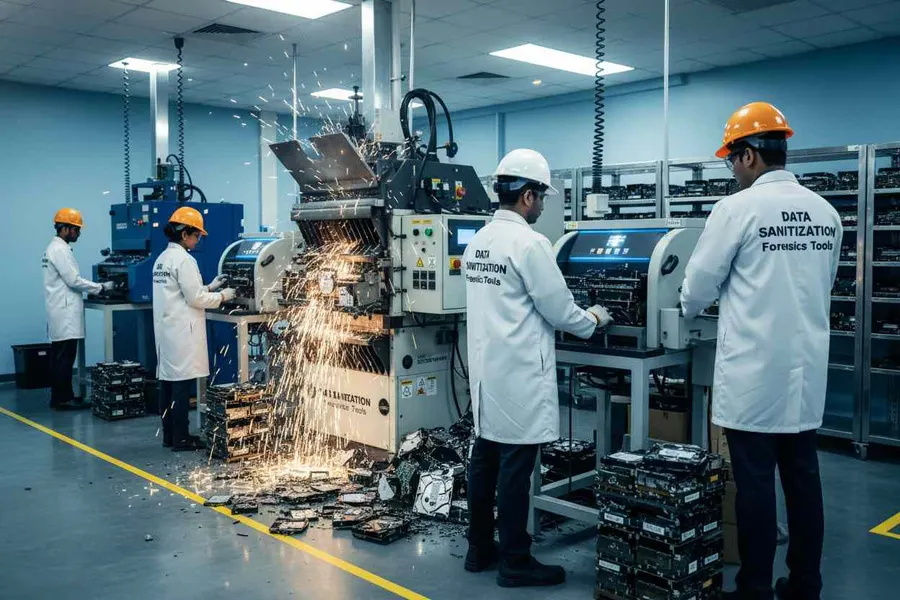
Mobile Phone & Tablet Destruction
Physical Destruction When Secure Erasure Is Not Possible
Physical destruction may be appropriate for devices that cannot be securely processed electronically or where organizational policy requires destruction.
This can include:
- Damaged smartphones
- Non-booting devices
- Failed devices
- Locked devices that cannot legitimately be released
- Devices containing sensitive information
- Storage that cannot be reliably erased
The final outcome can be documented as destroyed rather than erased, providing a clearer record of what happened to the asset.
SIM Card & Memory Card Data Sanitization
Don't Forget Removable Storage
Mobile devices may contain additional storage that should be handled separately.
This can include:
- SIM cards
- microSD cards
- SD cards
- Removable flash storage
Where removable storage is present, it should be identified and processed according to the applicable data security requirements.
SIM cards and memory cards should not simply remain inside a phone that is being transferred or recycled.
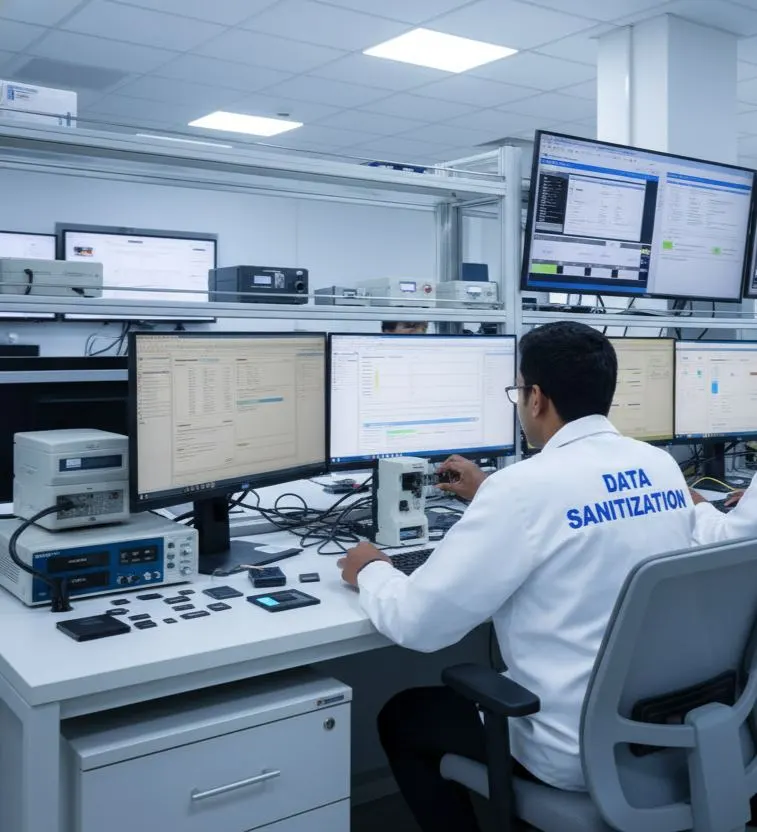
Mobile Data Sanitization for Enterprise Fleets
Secure Corporate Phones During Device Refresh
Enterprise mobile fleets can contain hundreds or thousands of devices.
A structured enterprise mobile data erasure process can help organizations manage:
- Employee device upgrades
- Fleet replacement
- Contractor devices
- BYOD-related assets
- Leased phones
- Tablet fleets
- Field devices
- Rugged handhelds
Each device can remain connected to its individual processing record instead of disappearing into a generic batch.
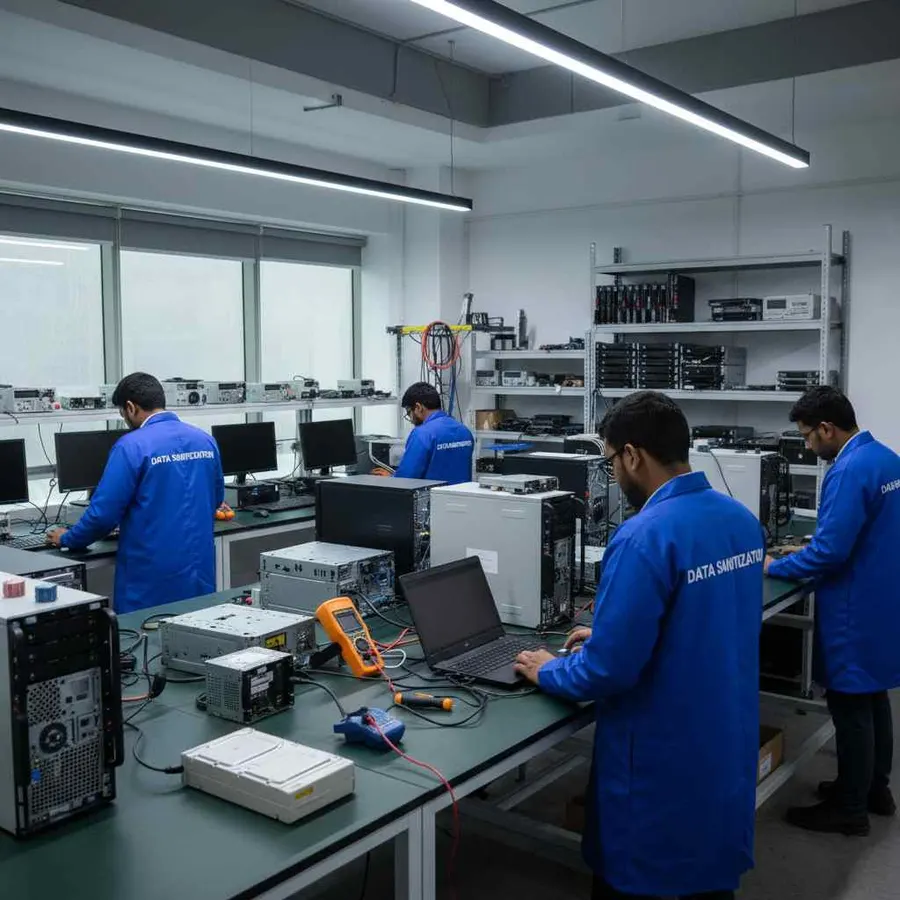
Mobile Data Erasure for Government & Regulated Organizations
Organizations handling sensitive information may require controlled processes when mobile devices are retired.
Our mobile data erasure workflows can support:
- Government organizations
- Defence environments
- Banking and finance
- Healthcare
- Education
- Enterprise IT
- ITAD and recycling
- Service providers
The exact sanitization method should always be selected according to the device and applicable organizational policy.
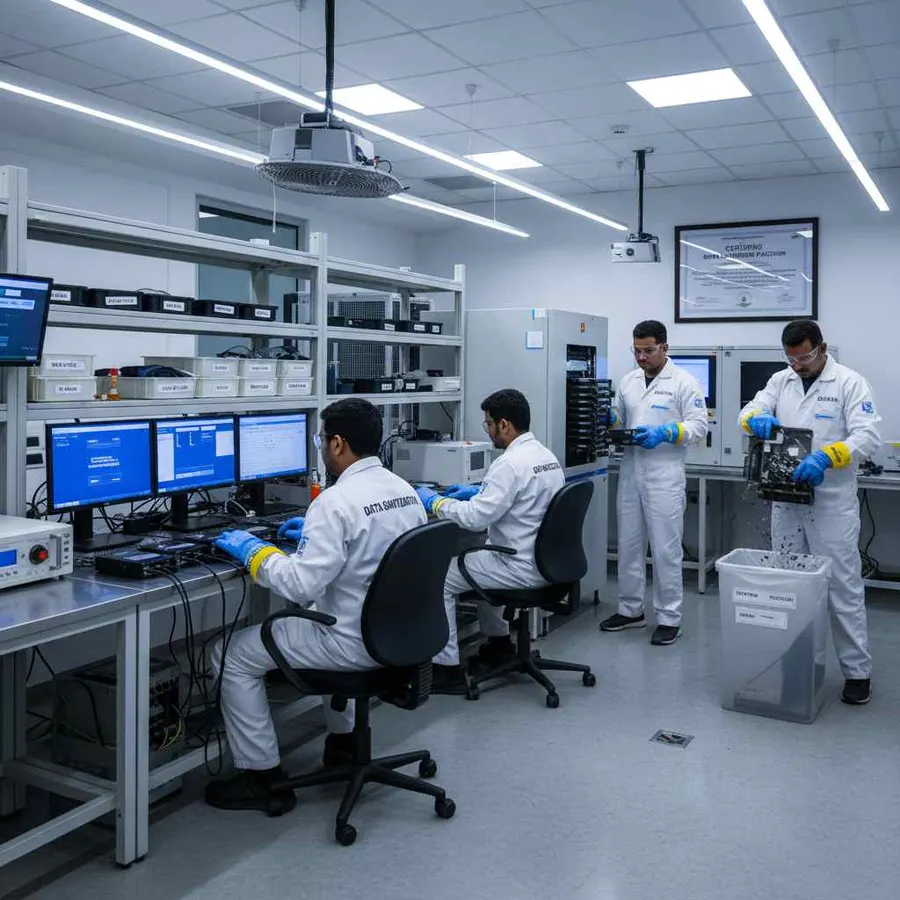
Mobile Data Sanitization Standards
Standards for Secure Mobile Device Erasure
Relevant data sanitization frameworks and requirements can include:
- NIST SP 800-88
- IEEE 2883
- DPDP Act, 2023
- GDPR
- ISO/IEC 27001
- Applicable organizational data retention and disposal policies
These frameworks help organizations establish controlled processes for secure media sanitization and information disposal.
They should not be interpreted as requiring one identical erasure technique for every smartphone or tablet.
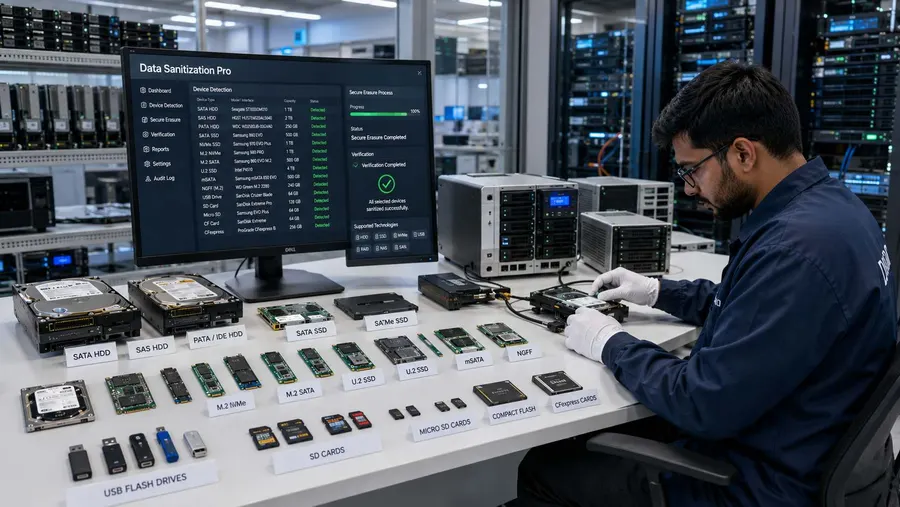
NIST SP 800-88 for Mobile Devices
A Practical Framework for Media Sanitization
NIST SP 800-88 provides guidance for sanitizing information stored on media and recognizes different sanitization approaches depending on the technology.
For modern mobile devices, encryption and device-specific sanitization capabilities can be important factors when determining the appropriate method.
A professional process therefore considers the device, security architecture, available erasure capabilities, verification and documentation.
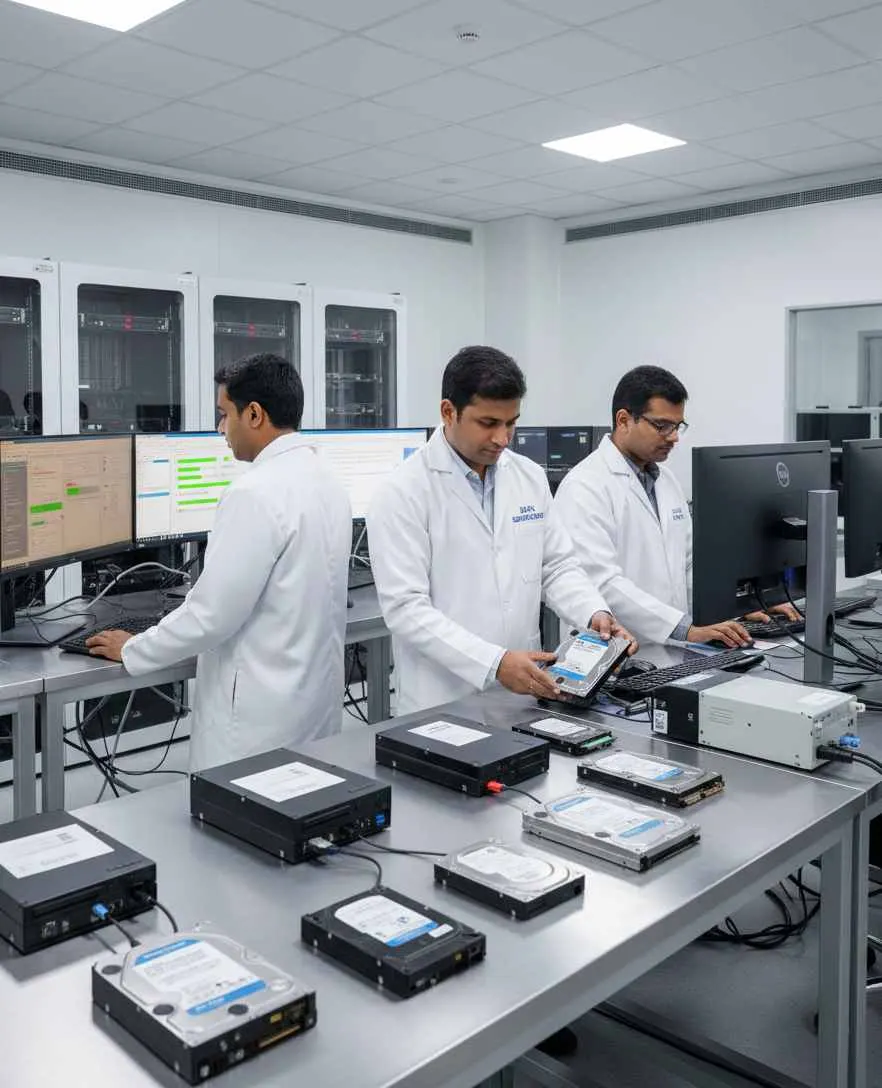
Mobile Data Erasure Services in India
Secure Mobile Phone Data Erasure Across India
We provide professional mobile phone data erasure services in India for organizations managing corporate smartphones, tablets and handheld devices.
Our services can support projects in:
- New Delhi
- Delhi NCR
- Other locations across India
- Enterprise facilities
- ITAD facilities
- Data centres
- Government organizations
On-site processing can be considered for suitable projects based on location, device volume, equipment, security requirements and project scope.
We also support organizations worldwide, subject to service availability and project logistics.
Who Uses Our Mobile Data Erasure Services?
Enterprise IT Teams
Secure company smartphones and tablets during employee device refreshes and asset retirement.
ITAD Companies
Process mobile devices before resale, refurbishment, recycling or disposal.
Government & Defence
Maintain controlled handling of mobile devices containing sensitive information.
Banks & Financial Institutions
Protect confidential information during mobile equipment replacement.
Healthcare Organizations
Secure mobile devices used to access sensitive organizational information.
Education & Research
Process tablets and smartphones before redeployment, resale or recycling.
Read MoreRefurbishers & Recyclers
Secure devices before they enter the secondary market.
Why Choose Our Mobile Phone Data Sanitization Services?
Secure. Traceable. Verifiable. Documented.
IMEI-Based Tracking
Where available, the IMEI connects the physical handset with its processing record.
Device-Level Processing
Each device can be tracked individually, even when hundreds of phones are processed together.
Verification
The result is checked instead of relying only on the device's displayed reset status.
Certificates & Reports
Receive documentation showing the processing outcome and relevant device information.
Read MoreBulk Processing
Suitable for corporate mobile fleet refreshes and large ITAD projects.
Reuse or Destruction
Successfully processed devices can move toward reuse, resale or recycling. Failed devices can be directed for destruction where required.
India & Worldwide Support
Professional mobile data erasure services for organizations across India and international projects.
What You Receive After Mobile Data Erasure
Complete Device-Level Documentation
Depending on the project, your final documentation can include:
- Device make and model
- IMEI or serial number
- Storage capacity
- Erasure method
- Verification result
- Device status
- Processing date and time
- Operator information
- Asset reference
- Certificate details
- Destruction status where applicable
- Batch reconciliation
This gives your organization a documented record instead of simply relying on a completed factory reset.
Mobile Phone Data Sanitization for Secure Reuse
Protect the Data. Keep the Hardware Useful.
Secure data erasure does not automatically mean destroying the phone.
When a supported device has been successfully processed and the required result has been verified, it may continue through its asset lifecycle:
- Erase
- Verify
- Reuse
- Redeploy
- Resell
- Recycle
This can help organizations protect sensitive information while retaining value from suitable mobile hardware.
Frequently Asked Questions
Is a Factory Reset Enough to Erase a Phone?
On modern encrypted devices, a factory reset can be an effective way to remove access to user data. However organizations managing retired devices may also need verification, device traceability and documentation.
Can You Erase Android Phones?
Yes. Supported Android smartphones and tablets can be processed according to their platform, security configuration and available sanitization capabilities.
Can You Erase iPhones and iPads?
Yes. Supported Apple devices can be processed according to the device's security architecture and available reset or sanitization capabilities.
Do You Provide Mobile Phone Data Erasure Certificates?
Yes. Device-level documentation can include the IMEI or serial number, processing method, verification result and other relevant information.
Can You Process Hundreds of Mobile Phones?
Yes. Bulk mobile data erasure is suitable for enterprise fleet refreshes, ITAD projects, refurbishment operations and large device retirement programs.
What Happens If a Phone Is Activation Locked?
The applicable account or management lock should be legitimately removed before the device is prepared for resale or redeployment. If the device cannot be legitimately released and the data cannot otherwise be reliably sanitized, destruction may be considered.
Can You Erase Company Tablets?
Yes. Supported Android tablets, iPads and enterprise tablets can be processed according to their device capabilities.
What About microSD Cards Inside Phones?
Removable storage should be identified and processed separately where required. It should not simply be left inside a phone being retired.
Can You Process Damaged Phones?
Damaged devices can be assessed. If the required electronic erasure cannot be reliably completed or verified, physical destruction may be considered.
Do You Provide Mobile Data Erasure Services in India?
Yes. We provide professional mobile phone and tablet data erasure services across India, with support for projects in New Delhi and other locations depending on requirements.
Do You Support International Projects?
Yes. Worldwide support is available depending on project scope, location, logistics and service requirements.
Where People Go from Here
A Factory Reset Does Not Always Erase a Phone
What a reset actually does, when it is enough, and when it is not.
Read MoreFlash Storage Sanitization
The memory cards and SIMs that come out of the handsets, handled as their own devices.
Read MoreEnterprise IT
Handset refresh as part of a wider asset retirement programme.
Read MoreSecure Your Mobile Devices Before They Leave Your Control
Erase. Verify. Document.
Protect sensitive information with professional mobile phone data sanitization android data erasure, iPhone data erasure, tablet data wiping, verification, certificates and destruction options.
Permanent data erasure, a checked result and a certificate for every drive.