- Home
- Company
- Our Staff
Our Staff
Meet the Experts Behind Data Security
At Data Sanitization, our team combines technical expertise, operational discipline and data security knowledge to help organizations securely and permanently erase, reuse, recycle or dispose of data-bearing devices.
We support secure data erasure, data wiping, IT asset disposition (ITAD), data destruction, verification and compliance reporting for businesses, government organizations, healthcare, education, ITAD providers and technology partners.
From HDDs and SSDs to NVMe drives, servers, NAS/SAN storage, laptops, mobile devices and removable media, our specialists focus on accurate processing, secure handling and reliable documentation.
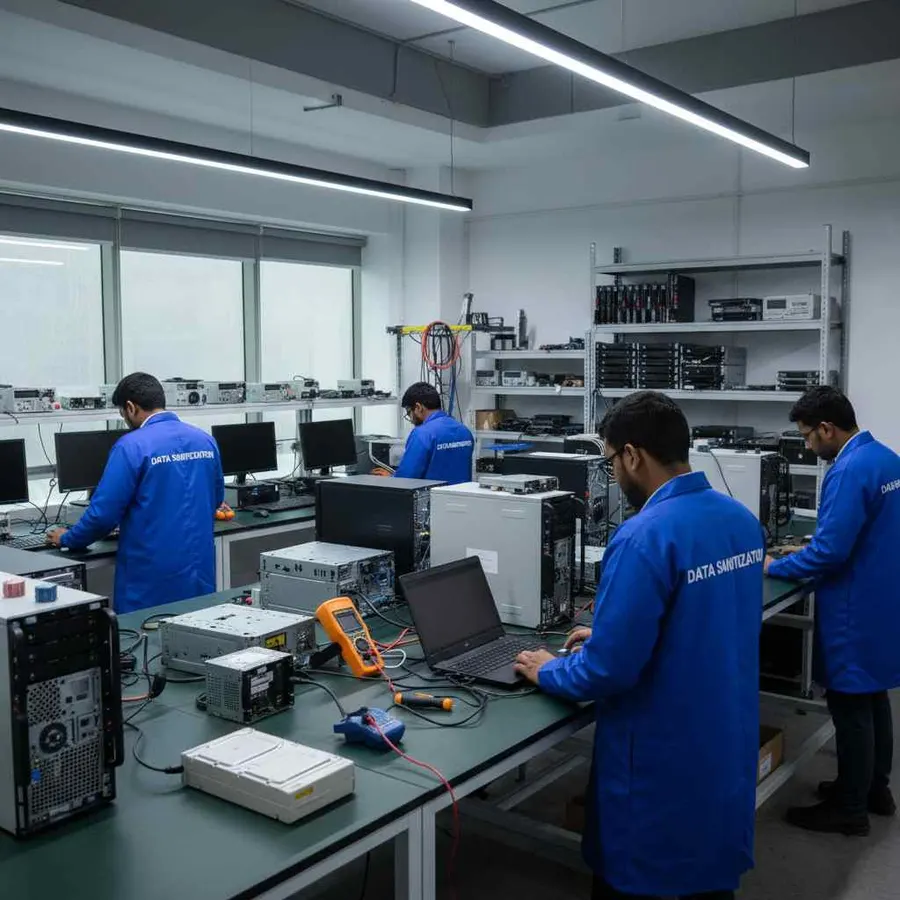
A Team Built Around Security and Trust
Technology is only part of secure data erasure. The people handling your assets matter just as much.
Our operational team is focused on:
- Secure Data Erasure & Wiping
- IT Asset Disposition (ITAD)
- HDD, SSD & NVMe Processing
- Enterprise Storage Handling
- Chain of Custody
- Verification & Quality Checks
- Data Erasure Certificates & Reports
- Client Coordination & Project Management
Every project is handled with attention to asset identification, processing, verification and documentation—helping organizations maintain a clear record from intake through completion.
Meet Our Team
Our team brings together leadership, technical operations, compliance, marketing, logistics and customer support to deliver dependable data security services.
Ajay Kumar Agarwal
CEOLeads business strategy, operations, resources and organizational direction.
Shubham Singhal
IT Security & Compliance OfficerSupports technical projects, team coordination, IT security and compliance requirements.
Sandeep Saraswat
VP – MarketingLeads marketing strategy and helps strengthen the company’s market presence.
Kartikeya
TechnicianSupports technical operations and practical data erasure and media-processing activities.
Vinod Tayde
Transport ManagerCoordinates secure movement and timely delivery of equipment and assets.
Expertise Across the IT Asset Lifecycle
Our team supports organizations throughout the lifecycle of data-bearing equipment:
- Identify
- Collect
- Erase
- Verify
- Report
- Reuse / Resell / Recycle / Destroy
This approach helps reduce data exposure while giving organizations the documentation they need for internal records, audits and asset disposition.
Data Erasure Expertise for Modern Storage
Our specialists work with a wide range of storage technologies, including:
- Hard Disk Drives (HDDs)
- Solid State Drives (SSDs)
- NVMe and M.2 drives
- Servers and enterprise storage
- NAS, SAN and RAID systems
- Laptops and desktops
- USB and removable media
- SD, microSD and memory cards
- Mobile devices
- CCTV, DVR/NVR and embedded storage
Where a device cannot be securely erased, the appropriate physical data destruction option can be considered based on the asset and security requirements.
Who We Serve
We work with organizations that need dependable data erasure and IT asset disposition solutions, including:
- Enterprises and corporations
- Government organizations
- Data centers
- Banks and financial institutions
- Healthcare organizations
- Schools, colleges and universities
- ITAD companies and recyclers
- MSPs and IT resellers
- Technology and infrastructure providers
Why Organizations Choose Our Team
Technical Expertise
Practical experience across HDD, SSD, NVMe and enterprise storage environments.
Secure Processing
Structured handling designed to reduce unauthorized data exposure.
Verification & Documentation
Erasure results can be supported with verification records, certificates and reports.
ITAD Knowledge
Support for organizations managing equipment through reuse, resale, refurbishment, recycling or disposal.
Professional Support
Clear communication and coordinated project execution from start to finish.
Made in India
Our data erasure software and expertise are developed to support organizations in India and worldwide.
Protect Your Data Before Your Devices Leave Your Control
The right technology needs the right people behind it. Our team helps organizations turn data erasure, verification and IT asset disposition into a controlled and documented process.
Permanent data erasure, a checked result and a certificate for every drive.
FAQs
Who handles data erasure projects?
Our technical and operational teams manage device processing, verification, documentation and project coordination.
What storage devices can your team handle?
We support HDDs, SSDs, NVMe drives, servers, NAS/SAN systems, laptops, mobile devices and removable storage, subject to device and service requirements.
Do you provide data erasure certificates?
Yes. Data Sanitization provides data erasure certificates and reports to document completed processing and verification.
Do you support ITAD companies and recyclers?
Yes. Our solutions are designed for enterprises, ITAD providers, recyclers, MSPs, resellers and other organizations handling data-bearing assets.