
Identify The Storage Device
The device is identified before sanitization.
DSP can record available information including:
- Manufacturer
- Model
- Serial number
- Capacity
- Interface
- Device type
- Storage technology
CertifiedNIST SP 800-88 Rev. 2 · DoD 5220.22-M · IEEE 2883
German BSI-GSE Data Erasure Method
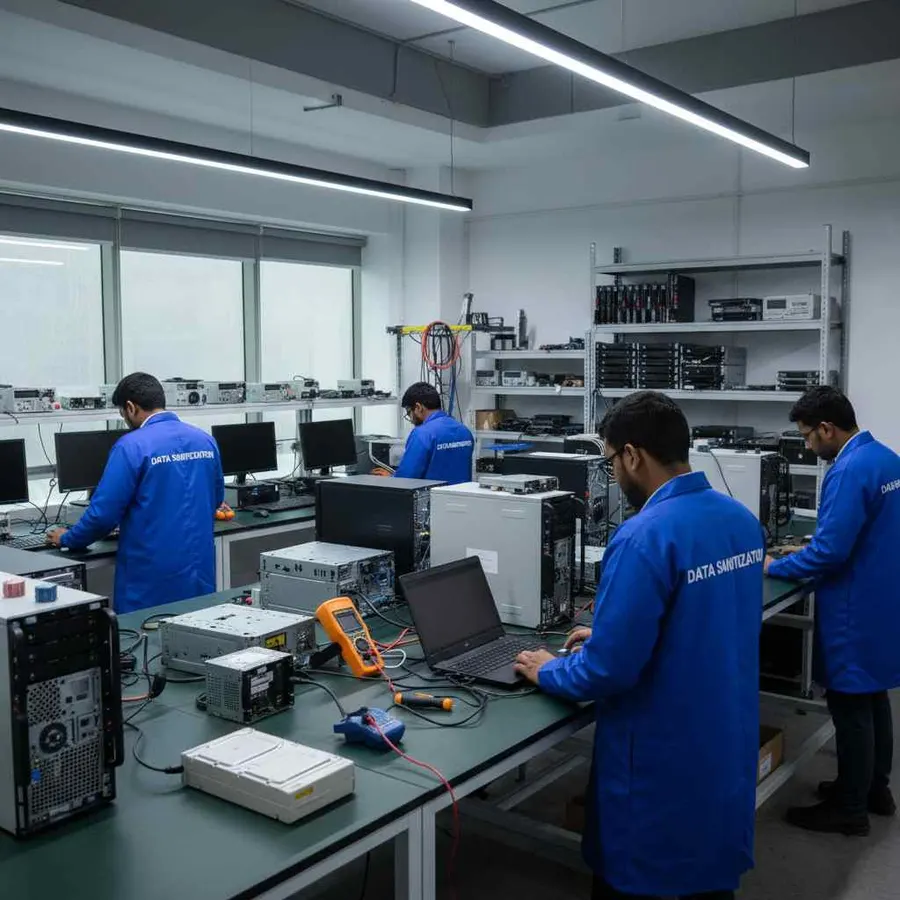
BSI-GSE is a German BSI-associated extended data erasure methodology used in secure media sanitization workflows. The GSE profile is commonly described as an extended version of BSI-GS, adding an additional overwrite with aperiodic random data before the subsequent device-specific erasure and verification stages.
Data Sanitization Pro (DSP) provides a dedicated BSI-GSE Sanitization Method through the DSP Sanitization Engine, enabling method-specific execution, device monitoring, verification and audit-ready certification.
BSI-GSE is a German data erasure profile associated with the Bundesamtfür Sicherheit in derInformationstechnik(BSI).
It is commonly listed alongside other German BSI-associated sanitization profiles such as:
BSI-GSE is generally described as a two-overwrite-round profile. The additional overwrite differentiates it from BSI-GS. After the overwrite stages, the process proceeds to the applicable firmware-based operation and verification.
The methodology is primarily relevant to secure erasure workflows for storage devices where a defined German BSI-associated sanitization profile is required.
The commonly described BSI-GSE process consists of the following logical stages:
The device is identified before sanitization.
DSP can record available information including:
Where applicable, the process considers hidden drive areas such as:
Removing or addressing hidden storage areas is part of the documented BSI-GS/GSE process description.
The first overwrite uses aperiodic random data rather than a fixed repeating pattern.
BSI-GSE adds another overwrite with aperiodic random data.
This additional overwrite is the principal distinction between BSI-GS and BSI-GSE.
The subsequent stage uses an applicable firmware-based command according to the storage device type and supported capabilities.
The write/erasure result is verified and documented.
| Feature | BSI-Gs | BSI-GSE |
|---|---|---|
| German BSI-Associated Profile | ✓ Yes | ✓ Yes |
| Aperiodic Random Overwrite | 1 round | 2 rounds |
| Additional Overwrite | No | ✓ Yes |
| Device-Specific Firmware Operation | ✓ Yes | ✓ Yes |
| Verification | ✓ Yes | ✓ Yes |
| Primary Distinction | Standard profile | Extended profile |
BSI-GSE therefore should not simply be described as "BSI-GS with more passes." Its process also incorporates the subsequent device-specific and verification stages.
DSP provides BSI-GSE as a dedicated sanitization method rather than as a generic random-overwrite option.
The operator selects BSI-GSE, selects the target device and starts the sanitization process.
The DSP Sanitization Engine then executes the configured method while monitoring the device and recording relevant process information.
During execution, DSP can provide operational visibility into:
This creates a controlled workflow from device identification through final verification.
A key characteristic of the BSI-GS/GSE profiles is the use of aperiodic random data rather than a simple fixed value such as all zeros.
This approach is particularly relevant to traditional magnetic storage where software-based overwriting is performed across addressable storage.
For BSI-GSE, the overwrite component is commonly represented as:
followed by the applicable device-level operation and verification.
BSI-GSE is particularly relevant to conventional HDD data wiping and magnetic storage sanitization workflows.
DSP can provide device-level processing for supported HDD configurations while maintaining information about:
This is useful for:
Modern SSD and NVMe storage requires additional consideration.
Flash storage incorporates technologies such as:
A software overwrite through the normal logical interface therefore cannot automatically be assumed to address every physical NAND location.
Consequently organizations should not treat BSI-GSE's historical overwrite profile as a universal SSD or NVMe sanitization mechanism.
For modern solid-state storage, the appropriate sanitization technique should be selected according to:
Where supported, device-native sanitization techniques may be more appropriate for modern flash storage.
BSI-GSE is fundamentally different from ordinary file deletion.
| Operation | Purpose |
|---|---|
| File Deletion | Removes filesystem references |
| Quick Format | Recreates filesystem structures |
| Factory Reset | Reinitializes data according to device implementation |
| Single Overwrite | Replaces addressable data |
| BSI-GSE | Executes a defined German BSI-associated extended sanitization profile |
| Physical Destruction | Makes media physically unusable |
A formatted or deleted drive should not automatically be treated as securely sanitized.
A professional data erasure process requires a defined sanitization method, appropriate execution and verification.
Verification is an integral part of the documented BSI-GS/GSE process.
DSP records the outcome of the sanitization operation and can document:
If the device reports errors or areas that cannot be reliably processed, the result can be documented rather than silently treating the operation as successful.
Storage health can affect the reliability of software-based sanitization.
DSP can provide available device-health information including:
For ITAD operations, this allows sanitization results to be considered together with the actual condition of the storage device.
A drive with inaccessible sectors or serious media errors requires appropriate handling rather than an assumption that a completed software process automatically means every physical location was successfully addressed.
BSI-GSE can be incorporated into structured ITAD workflows where a German BSI-associated sanitization profile is required.
Typical applications include:
Sanitize retired employee computers, workstations and storage devices before reuse or resale.
Process decommissioned HDDs and supported storage devices through a standardized workflow.
Prepare storage devices for controlled reuse after verified sanitization.
Document the sanitization status of devices before they enter downstream recycling processes.
Maintain device-level evidence linking the physical asset to the sanitization operation.
DSP generates an audit-ready sanitization certificate documenting the BSI-GSE operation performed by the software.
Certificate information can include:
The certificate provides documented evidence of the sanitization operation actually executed by DSP.
It should not be represented as an external certificate issued by BSI.
BSI-GSE is commonly described in data-erasure software documentation as a German BSI-associated extended sanitization profile. Independent technical references consistently describe the profile as adding a second aperiodic-random overwrite to the BSI-GS process before the subsequent firmware-based operation and verification.
For current deployments organizations should distinguish between:
and
current BSI information-security guidance and current technology-specific sanitization practices.
This distinction becomes especially important for SSD, NVMe and other flash-based storage.
Both are associated with German data erasure practices, but they represent different approaches.
| Method | Typical Profile | General Context |
|---|---|---|
| BSI-Gs | 1 overwrite round + device operation + verification | German BSI-associated profile |
| BSI-GSE | 2 overwrite rounds + device operation + verification | Extended German profile |
| BSI-2011-Vs | 4-pass historical profile | German BSI-associated methodology |
| VSITR | Commonly represented as 7-pass | Historical German multi-pass methodology |
The methods should not be treated as interchangeable simply because they are all associated with Germany.
Modern storage sanitization increasingly focuses on the actual characteristics of the storage technology.
| Method / Standard | General Context | Approach |
|---|---|---|
| BSI-GSE | German BSI-associated profile | Extended overwrite + device operation + verification |
| BSI-Gs | German BSI-associated profile | Overwrite + device operation + verification |
| VSITR | Historical German methodology | Multi-pass overwrite |
| NIST SP 800-88 Rev. 2 | Current NIST guidance | Media-specific Clear, Purge and Destroy |
| IEEE 2883-2022 | Active IEEE standard | Technology-specific storage sanitization |
| DoD 5220.22-M | Legacy U.S. methodology | Historical overwrite profile |
A historical multi-pass method should not automatically be considered superior simply because it uses more overwrite operations. The appropriate sanitization technique depends on storage architecture, information sensitivity, intended disposition and applicable policy.
DSP supports offline sanitization workflows for environments where internet connectivity is restricted or undesirable.
This can be valuable for:
The BSI-GSE process can be executed locally while the sanitization result and certificate remain available for audit documentation.
Enterprise and ITAD environments frequently require the processing of multiple storage devices.
DSP provides a structured workflow for supported multi-device operations:
Operators can monitor individual device status and sanitization progress while maintaining device-level reporting.
A specific BSI-GSE sanitization profile is available within the DSP Sanitization Engine.
The selected method is executed as its own sanitization workflow.
Device information is recorded for traceability.
Progress, rate, elapsed time and status are visible during execution.
The sanitization result is verified and documented.
Available SMART and storage-health information can be reviewed.
Device errors and inaccessible areas can be identified.
DSP produces an audit-ready sanitization certificate.
Suitable for disconnected or restricted environments.
Designed for structured storage-device processing at scale.
BSI-GSE provides organizations with a defined German BSI-associated extended sanitization profile for supported storage workflows.
With Data Sanitization Pro, the selected BSI-GSE method is executed through the DSP Sanitization Engine, monitored throughout the operation, verified after execution and documented through an audit-ready sanitization certificate.
The result is a structured and traceable secure data erasure workflow suitable for enterprise, ITAD, refurbishment and controlled media-disposition environments.
BSI-GSE is a German BSI-associated extended data erasure profile involving two aperiodic-random overwrite rounds followed by the applicable device operation and verification.
BSI-GSE is commonly documented as using **two overwrite rounds**, with an additional aperiodic-random overwrite compared with BSI-GS.
No. BSI-GSE and VSITR are different German-associated sanitization methodologies. VSITR is commonly represented as a seven-pass historical overwrite method, while BSI-GSE is generally described as a two-round overwrite profile followed by device-level processing and verification.
BSI-GSE is particularly relevant to software-based sanitization workflows for supported magnetic storage and other compatible devices.
The historical overwrite component should not automatically be treated as complete physical sanitization of modern SSD/NVMe media. Flash architecture requires technology-appropriate sanitization techniques.
Yes. DSP provides a dedicated BSI-GSE Sanitization Method through the DSP Sanitization Engine.
Yes. DSP generates an audit-ready certificate documenting the BSI-GSE sanitization operation actually performed by DSP.
No. The DSP certificate documents the software's sanitization operation. It is not an external BSI-issued certification or endorsement.
Data Sanitization Pro runs all 25 standards offline and verifies the result.