CertifiedNIST SP 800-88 Rev. 2 · DoD 5220.22-M · IEEE 2883

Standard 14 Of 25 · Government And Defence

CSEC ITSG-06 Canadian — Secure Data Erasure & Media Sanitization Software

CSEC ITSG-06 — Canadian Electronic Data Storage Sanitization

Canada3 PassesVerification Required
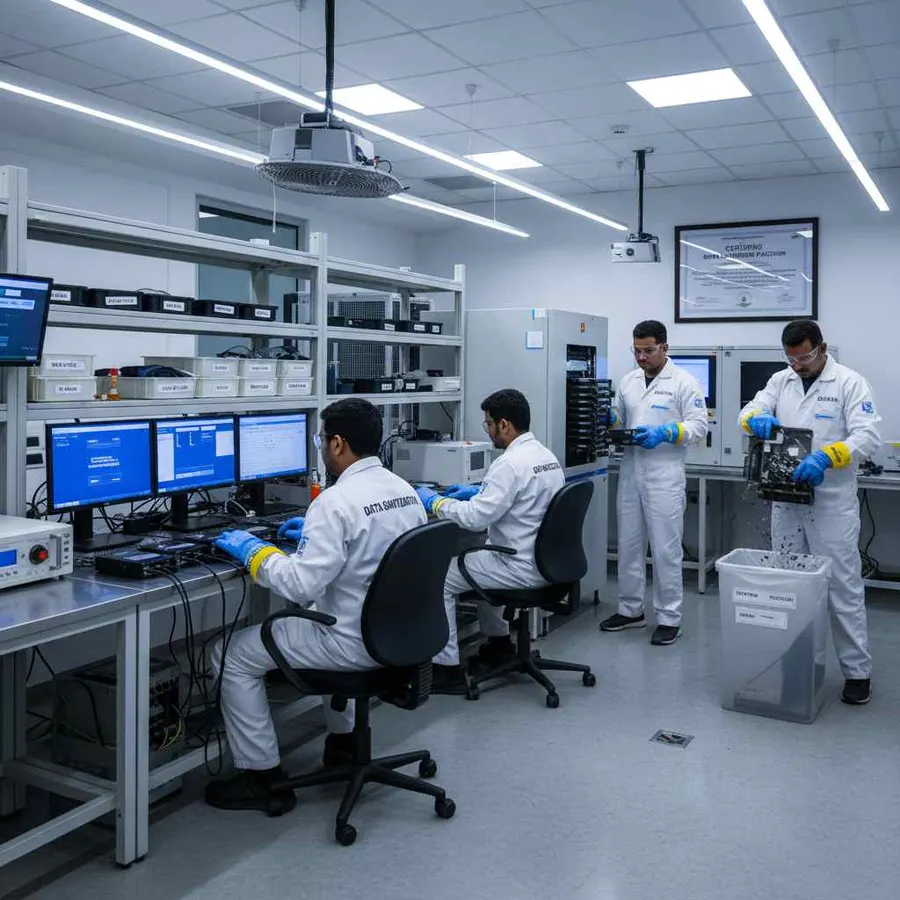
Canadian government IT asset being erased to CSEC ITSG-06

At A Glance

Published By
Communications Security Establishment Canada
Reference
ITSG-06, Clearing and Declassifying Electronic Data Storage Devices, 2006
Region
Canada
Passes
3
Verification
Required By The Standard, Locked On
Relative Run Time
4× a single pass

What The Software Writes

  1. Pass 1 Random data
  2. Pass 2 Bitwise complement of the previous pass
  3. Pass 3 Random data
  4. Verify Required by the standard. Every sector is read back and compared.
  5. Certify Signed certificate with device, method, result and operator

CSEC ITSG-06, formally known as Clearing and Declassifying Electronic Data Storage Devices, was a Canadian Communications Security Establishment (CSE/CSEC) publication addressing the clearing, sanitization and declassification of electronic data storage devices.

ITSG-06 is historically important in Canadian media sanitization and is referenced within Canadian security-control documentation. However, it has been superseded by ITSP.40.006 v2 — IT Media Sanitization, which took effect on July 7, 2017.

For organizations that specifically require the historical CSEC ITSG-06 methodology, Data Sanitization Pro (DSP) provides a dedicated CSEC ITSG-06 Sanitization Method through the DSP Sanitization Engine, with controlled execution, verification and audit-ready documentation.

Important: ITSG-06 should be presented as a historical/superseded Canadian sanitization publication, not as the current Government of Canada media-sanitization standard.

01

What Is CSEC ITSG-06?

ITSG-06 — Clearing and Declassifying Electronic Data Storage Devices provided Canadian guidance for removing residual information from electronic storage devices before reuse, release or disposal.

Its central objective was to prevent sensitive information remaining on storage media from being recovered after the media left organizational control.

The guidance addressed concepts including:

  • Data Clearing
  • Media Sanitization
  • Declassification
  • Overwriting
  • Secure Erase
  • Cryptographic Approaches
  • Physical Destruction
  • Storage-Media Characteristics
  • Data Sensitivity
  • Threat Level
  • Verification
  • Controlled Disposal

ITSG-06 was therefore broader than a simple disk-wiping algorithm.

02

ITSG-06 And The Canadian Security Model

A key characteristic of the historical ITSG-06 approach was that sanitization decisions were related to:

  1. 01Data Sensitivity
  2. 02Threat Level
  3. 03Storage Technology
  4. 04Sanitization Capability

rather than simply selecting one universal overwrite pattern.

The Canadian guidance distinguished broad sensitivity levels such as:

  • Low
  • Medium
  • High

and considered the deliberate threat level associated with the media when determining an appropriate clearing, sanitization or destruction process.

This risk-based approach is one of the important characteristics to preserve when representing ITSG-06 on a professional data-sanitization website.

03

ITSG-06 Clearing vs Sanitization

ITSG-06 distinguishes between different levels of media treatment.

Clearing

Clearing is intended to remove information using logical techniques while leaving the media potentially reusable.

Examples can include:

  • Logical overwriting
  • Device-native erase functions
  • Secure erase capabilities
  • Factory-reset procedures where applicable

Sanitization

Sanitization uses validated techniques intended to prevent recovery of information according to the applicable security requirement.

Depending on the storage technology, techniques can include:

  • Overwriting
  • Secure Erase
  • Cryptographic Erase
  • Other validated sanitization techniques

Destruction

Where effective sanitization cannot be achieved or verified, physical destruction may be required.

This distinction remains highly relevant to modern storage because not every device can be reliably sanitized through conventional software overwriting.

CSEC ITSG-06 And Data Sanitization Pro

DSP provides a dedicated CSEC ITSG-06 Sanitization Method through the DSP Sanitization Engine.

04

DSP Workflow

IDENTIFY Identify the storage device.

CLASSIFY Determine media type and relevant storage characteristics.

ASSESS Evaluate sensitivity requirements, device condition and sanitization capability.

SELECT Select the CSEC ITSG-06 method.

EXECUTE Execute the applicable sanitization operation.

VERIFY Verify the completed operation.

VALIDATE Determine whether the resulting condition satisfies the applicable requirement.

DOCUMENT Record device, method, operator and verification information.

CERTIFY Generate an audit-ready sanitization certificate.

05

ITSG-06 For Hard Disk Drives

Traditional magnetic HDDs are one of the principal storage technologies addressed by historical Canadian sanitization guidance.

DSP can identify and document:

  • Manufacturer
  • Model
  • Serial Number
  • Capacity
  • Interface
  • Firmware
  • SMART Information
  • Temperature
  • Power-On Hours
  • Read/write Errors
  • Reallocated Sectors
  • Bad Sectors
  • Sanitization Status
  • Verification Status

For an HDD capable of being reliably addressed and sanitized, an applicable logical sanitization method can be executed and verified.

The actual technique should be selected according to the applicable security requirement rather than assuming that one overwrite profile is appropriate for every situation.

06

SSD And Flash Storage

Modern flash storage creates substantially different sanitization challenges.

Examples include:

  • SSD
  • NVMe
  • USB Flash Drives
  • SD Cards
  • CompactFlash
  • Embedded Flash
  • Smartphones And Tablets

Flash-based devices may contain:

  • Flash Translation Layers
  • Wear-Leveling Systems
  • Spare Cells
  • Over-Provisioned Storage
  • Remapped Blocks
  • Controller-Managed Areas
  • Garbage-Collection Regions

Because of these characteristics, conventional host-level overwriting cannot automatically be assumed to sanitize every physical storage location.

Historical ITSG-06 guidance recognized the difficulty of sanitizing modern flash and solid-state technologies. The later ITSP.40.006 guidance explicitly addresses SSD and flash sanitization and provides technology-specific considerations.

07

Secure Erase And Cryptographic Erase

Canadian media-sanitization guidance recognizes techniques beyond conventional overwriting.

Secure Erase

Device-native secure erase capabilities can be used where supported and appropriately validated.

Cryptographic Erase

For encrypted media, destroying or securely erasing the cryptographic key can make the encrypted data inaccessible.

Current Canadian guidance specifically recognizes Crypto Erase (CE) and notes that encryption throughout the media lifecycle can facilitate faster and more effective sanitization.

DSP can document the selected sanitization technique and its result rather than treating all devices as conventional overwrite targets.

ITSG-06 And Data Sensitivity

A major characteristic of the Canadian approach is that sanitization is linked to the sensitivity of the information.

Low Sensitivity

Historical Canadian guidance allowed approaches such as logical clearing/overwriting for appropriate media, with consideration of reuse and residual-data risk.

Medium Sensitivity

For medium-sensitive media, including certain Protected B or Confidential information, the guidance provides for stronger sanitization measures such as:

  • Logical overwriting
  • Secure Erase
  • Cryptographic Erase

Where an acceptable sanitization method cannot be satisfactorily verified, destruction may be required.

High Sensitivity

Higher-sensitivity media can require sanitization followed by destruction depending on the applicable requirements and storage technology.

This illustrates why ITSG-06 should not be reduced to a single fixed pass count.

08

Verification Of Sanitization

Verification is a central component of professional media sanitization.

DSP records the outcome of the selected operation, including where applicable:

  • Sanitization Completion
  • Verification Status
  • Read/write Errors
  • Failed Sectors
  • Device-Health Information
  • Operation Timestamps
  • Operator
  • Selected Method

The purpose is to establish whether the intended sanitization operation actually completed successfully.

Canadian security-control guidance also emphasizes reviewing, approving, tracking, documenting and verifying media sanitization and disposal actions.

09

Bad-Sector Intelligence

A storage device with inaccessible or damaged areas presents a significant sanitization problem.

DSP can detect and report:

  • Logical Bad Sectors
  • Physical/read Errors
  • Unreadable Areas
  • Reallocated Sectors
  • Write Failures
  • Verification Failures
  • Device-Health Anomalies

If a device cannot be successfully sanitized and verified, the organization should follow its applicable media-disposition procedure, which may require physical destruction.

Current Canadian guidance specifically recognizes destruction for media that cannot be effectively sanitized.

10

ITSG-06 And Declassification

Declassification is an important concept within the historical Canadian framework.

The objective is not simply to make files disappear from the operating system.

The objective is to process the storage media so that the information previously contained on it no longer presents the applicable information-security risk, allowing the media to be reused, released or disposed of according to organizational controls.

This makes ITSG-06 particularly relevant to:

  • Government IT Assets
  • Enterprise Equipment
  • Data-Center Hardware
  • Government Contractors
  • Secure Refurbishment
  • IT Asset Disposition
  • Controlled Equipment Release
11

Media Sanitization For IT Equipment

ITSG-06 addressed electronic storage beyond conventional internal HDDs.

Storage-bearing equipment can include:

  • Computers
  • Servers
  • Network Equipment
  • Removable Storage
  • USB Devices
  • Flash Storage
  • Mobile Devices
  • Embedded Storage
  • Other Electronic Equipment Containing Persistent Data

Current Canadian guidance similarly recognizes that media can exist within devices such as smartphones, tablets, printers, routers, cameras and other equipment.

12

Factory Reset Is Not Universal Sanitization

A factory reset should not automatically be treated as equivalent to professional media sanitization.

The effectiveness of a reset depends on:

  • Device Architecture
  • Encryption State
  • Storage Technology
  • Manufacturer Implementation
  • Security Requirements
  • Verification Capability

Current Canadian guidance distinguishes ordinary device reset from more robust sanitization techniques and recognizes multiple sanitization approaches depending on the device.

13

Destruction When Sanitization Fails

One of the most important principles of professional media sanitization is:

If the required sanitization cannot be reliably achieved and verified, the media may need to be destroyed.

This is particularly relevant to:

  • Damaged HDDs
  • Failed SSDs
  • Flash Storage With Inaccessible Areas
  • Sanitization-Resistant Devices
  • Media Containing Higher-Sensitivity Information

Current Canadian guidance provides destruction options including crushing, shredding and disintegration for applicable situations.

14

ITSG-06 vs Current Canadian ITSP.40.006

AreaCSEC ITSG-06ITSP.40.006 V2
StatusSupersededCurrent Canadian guidance
Issuing OrganizationCSE/CSECCSE
Primary FocusClearing & declassificationIT media sanitization
Risk-Based Approach✓ Yes✓ Yes
Media-Specific Considerations✓ Yes✓ Yes
OverwritingSupportedSupported
Secure EraseAddressedAddressed
Cryptographic EraseAddressedExpanded/current guidance
SSD/FlashAddressedMore developed current guidance
DestructionIncludedIncluded
Current UseHistorical / legacy requirementCurrent federal guidance

ITSP.40.006 v2 explicitly states that it supersedes ITSG-06.

ITSG-06 vs RCMP TSSIT OPS-II

These two Canadian references should not be treated as identical.

AreaCSEC ITSG-06RCMP TSSIT OPS-II
NatureCanadian CSE security guidanceHistorical RCMP sanitization methodology
Primary ConceptClearing, sanitization & declassificationMulti-pass overwrite
Risk-Based✓ YesMore method-specific
Fixed Pass SequenceNot defining characteristicCommonly represented as 7-pass
Storage TechnologyMultiple technologiesHistorically associated with magnetic media
Secure Erase / CEAddressedNot the defining method
DestructionConsideredSeparate disposition consideration
Current StatusSupersededHistorical

The distinction is useful for organizations that maintain legacy Canadian sanitization profiles.

15

ITSG-06 vs NIST SP 800-88 Rev. 2

Both emphasize technology-aware media sanitization, but they are separate frameworks.

AreaCSEC ITSG-06NIST SP 800-88 Rev. 2
CountryCanadaUnited States
OrganizationCSE/CSECNIST
StatusSupersededCurrent
Main ConceptClearing & declassificationMedia sanitization program
Risk-Based✓ Yes✓ Yes
Media-Specific✓ Yes✓ Yes
Cryptographic EraseAddressedAddressed
DestructionIncludedIncluded
Current Canadian ReferenceNoNo

For current Canadian federal requirements, ITSP.40.006 v2 should be consulted rather than relying on ITSG-06 alone.

16

ITSG-06 For ITAD

Historical Canadian sanitization requirements can remain relevant when an organization, contract or legacy procedure specifically calls for ITSG-06.

DSP can support controlled ITAD workflows involving:

  • Enterprise HDDs
  • SSDs
  • NVMe Drives
  • USB Media
  • Memory Cards
  • Server Storage
  • Removable Media
  • Other Supported Storage Devices

Each device can retain its own:

  1. 01Device ID
  2. 02Method
  3. 03Operation
  4. 04Verification
  5. 05Result
  6. 06Certificate

This provides individual traceability throughout the sanitization process.

17

Offline Data Sanitization

DSP supports controlled offline operation for environments where storage devices must be processed without Internet access.

Potential environments include:

  • Government
  • Defense
  • Law Enforcement
  • Secure Laboratories
  • Data Centers
  • ITAD Facilities
  • Enterprise Disposal Centers
  • Restricted Environments

The sanitization process can be executed locally while maintaining device and operation records.

18

Multi-Device Processing

Professional ITAD and enterprise environments may require simultaneous processing of multiple devices.

DSP can maintain device-level records for each target:

Storage Device → ITSG-06 Method → Sanitization Progress → Verification → Result → Certificate

This provides traceability without combining separate devices into an ambiguous batch-level result.

19

Audit-Ready ITSG-06 Certificate

DSP can generate an audit-ready sanitization certificate documenting the actual operation performed by the DSP Sanitization Engine.

Device Information

  • Manufacturer
  • Model
  • Serial number
  • Capacity
  • Media type
  • Interface

Sanitization Information

  • CSEC ITSG-06 method
  • Selected technique
  • Start time
  • Completion time
  • Software version
  • Sanitization status

Verification Information

  • Verification result
  • Errors
  • Failed areas
  • Device-health observations

Operator Information

  • Operator
  • Workstation/system
  • Date/time
  • Audit metadata
  • Case/reference information where configured

Final Result

Sanitization Completed — Verified — Documented

The certificate documents the operation performed by DSP. It is not a certificate issued by CSE/CSEC or the Government of Canada.

20

DSP Sanitization Engine — ITSG-06

The DSP implementation provides a structured workflow around the historical Canadian methodology:

IDENTIFY Identify the storage device.

CLASSIFY Determine storage technology and device characteristics.

ASSESS Assess media condition, sensitivity requirements and applicable sanitization capability.

SELECT Select CSEC ITSG-06.

EXECUTE Perform the configured sanitization operation.

VERIFY Check the resulting operation.

VALIDATE Determine whether the result meets the applicable requirement.

DOCUMENT Record all relevant device and sanitization information.

CERTIFY Generate the audit-ready certificate.

21

Why Use A Dedicated ITSG-06 Method?

A dedicated ITSG-06 method is useful when an organization's:

  • Legacy Security Procedure
  • Contract
  • ITAD Workflow
  • Government Requirement
  • Internal Sanitization Policy
  • Historical Compliance Record

specifically references CSEC ITSG-06.

DSP provides a controlled method selection rather than forcing users to recreate the historical workflow through a generic disk-wipe option.

22

Modern Canadian Data Sanitization

ITSG-06 remains useful as a historical Canadian reference, but modern storage environments require more than traditional overwriting.

A professional sanitization decision should consider:

  1. 01Data Sensitivity
  2. 02Threat Level
  3. 03Media Technology
  4. 04Sanitization Capability
  5. 05Verification
  6. 06Validation
  7. 07Reuse / Release / Destruction

Current CSE guidance continues this technology-aware approach through ITSP.40.006 v2.

23

CSEC ITSG-06 — Secure Canadian Data Erasure With DSP

CSEC ITSG-06 represents an important historical Canadian approach to clearing and declassifying electronic data storage devices.

DSP preserves the methodology as a dedicated, documented sanitization method for organizations that specifically require ITSG-06 while adding modern device identification, monitoring, verification and audit reporting.

CSEC ITSG-06 Canadian Electronic Data Storage Sanitization Executed through the DSP Sanitization Engine Verified and Documented with an Audit-Ready Sanitization Certificate

FAQ

CSEC ITSG-06 Questions

What Is CSEC ITSG-06?

ITSG-06 was a Canadian CSE publication titled **Clearing and Declassifying Electronic Data Storage Devices**, providing guidance for clearing, sanitizing and declassifying electronic storage media.

Is ITSG-06 Still The Current Canadian Standard?

No. CSE's **ITSP.40.006 v2 — IT Media Sanitization** explicitly supersedes ITSG-06.

Is ITSG-06 A Seven-Pass Wiping Method?

No. ITSG-06 is broader than a fixed overwrite algorithm. Its approach considers data sensitivity, threat level, media type and appropriate sanitization or destruction techniques.

Does ITSG-06 Cover SSDs?

Yes, historical Canadian guidance addressed solid-state and flash storage, but modern SSD/NVMe sanitization requires consideration of controller-managed storage, spare areas and the ability to verify sanitization. Current ITSP.40.006 provides the applicable updated Canadian guidance.

Does DSP Provide An ITSG-06 Certificate?

DSP can generate an audit-ready certificate documenting the ITSG-06 operation performed by the DSP Sanitization Engine. It is **not a CSE/CSEC-issued certificate**.

Can ITSG-06 Be Used For ITAD?

Yes, where an organization's documented procedure or contractual requirement specifically calls for the historical methodology. For current Canadian federal requirements organizations should use the current applicable CSE guidance.

What If A Device Cannot Be Sanitized?

The applicable security and disposition policy should determine the next step. Canadian guidance recognizes physical destruction where effective sanitization cannot be achieved or verified.

Run CSEC ITSG-06 With A Certificate For Every Drive

Data Sanitization Pro runs all 25 standards offline and verifies the result.